I’ve been doing SEO for years and providing SEO services in Pakistan via THESEOSPOT, and for sure I can say that the fundamentals haven’t changed—yes, you need fast page speeds, clean meta titles, and mobile optimization. Everyone knows that. But when nonprofits ask me what actually gets them traffic without waiting six months to “build authority,” I don’t give them the usual advice.
Google’s pushing AI Overviews hard now. ChatGPT is citing sources directly. Your nonprofit doesn’t just need to rank anymore—you need to show up in AI-generated answers and get referenced when people ask ChatGPT or Perplexity about causes in your area. That changes how you approach SEO in 2026.
I’m going to share three strategies that work for nonprofits specifically. These aren’t theory. I’ve used them with organizations that had zero budget for big campaigns and still needed to get in front of donors, volunteers, and the people they serve.
Strategy 1: Use PR Packages to Piggyback on Sites That Already Rank
Most nonprofits can’t compete with big charity aggregators or news sites that have been around for 20 years. Your domain authority is low. Your backlink profile is thin. You’re not going to outrank them by writing better blog posts.
So don’t try.
Instead, get your nonprofit mentioned in articles that already rank for searches people are doing. I’m not talking about generic press releases nobody reads. I’m talking about PR distribution services that place your organization in listicles and roundups that target specific keywords.
Here’s how it works:
You find a keyword people actually search for. Let’s say you run an animal rescue in California. You’re not ranking for “best animal shelters California”—that’s dominated by big national directories and Yelp listings. But what if an article titled “5 Leading Animal Welfare Organizations Making Impact in California 2026” ranked for those searches, and your nonprofit was #2 on that list with a backlink?
That’s what you’re aiming for.
Services on Fiverr, PressReleaseJet, and similar platforms offer PR distribution packages for $50-$300. They’ll publish your content across networks that include:
- Digital Journal
- AccessWire
- Yahoo Finance (via syndication)
- Benzinga
- Sometimes even AP News distribution
These sites have domain authority. Google already trusts them. When they publish an article mentioning your nonprofit, that article can rank within days or weeks, not months. You get indirect traffic and a backlink without needing to rank your own site.
The trick is using searchable keywords in the PR content itself. Don’t write a boring press release about your annual fundraiser. Write it as a resource piece: “Top 5 Food Banks Serving [Your County] Families in 2026” and make sure your organization is featured prominently.
You’re not waiting for your site to build authority. You’re borrowing authority from sites that already have it.
Strategy 2: Build Landing Pages for Low-Competition Local Searches
I pulled data from SEMrush for search terms that nonprofits can actually rank for. Most organizations waste time chasing competitive keywords they’ll never win. Instead, you want specific, local, intent-driven searches where you can create a dedicated landing page.
Here are four real examples with volume and difficulty:
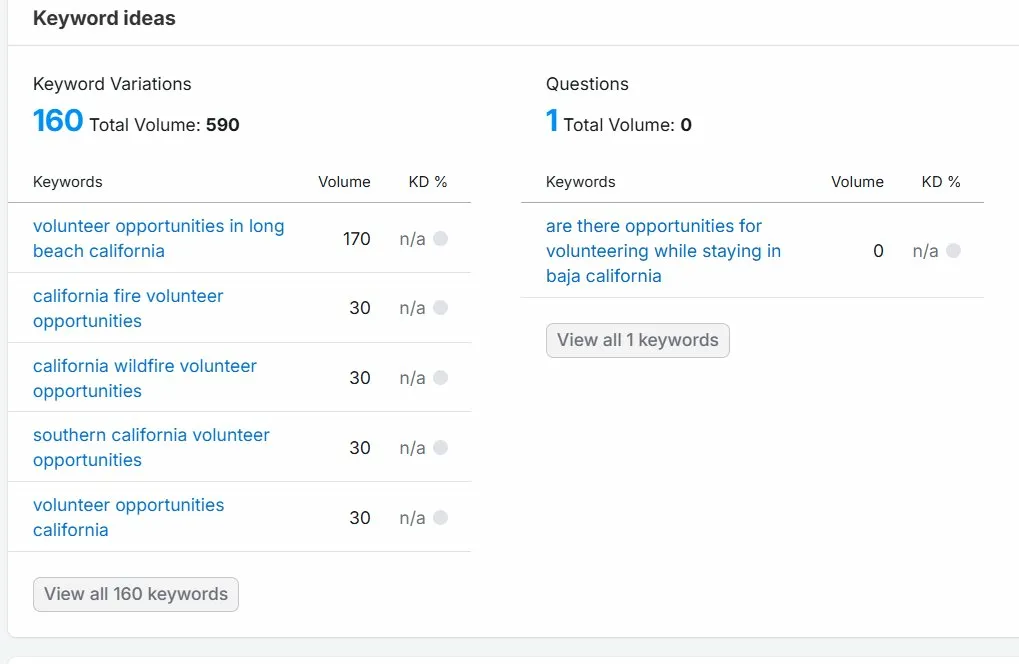
This shows local volunteer searches. “Volunteer opportunities in Long Beach California” gets 170 searches monthly with no keyword difficulty data, which usually means low competition. Create a page specifically for this: “Volunteer Opportunities with [Your Nonprofit Name] in Long Beach” with details on what volunteers do, how to sign up, and what times you need help.
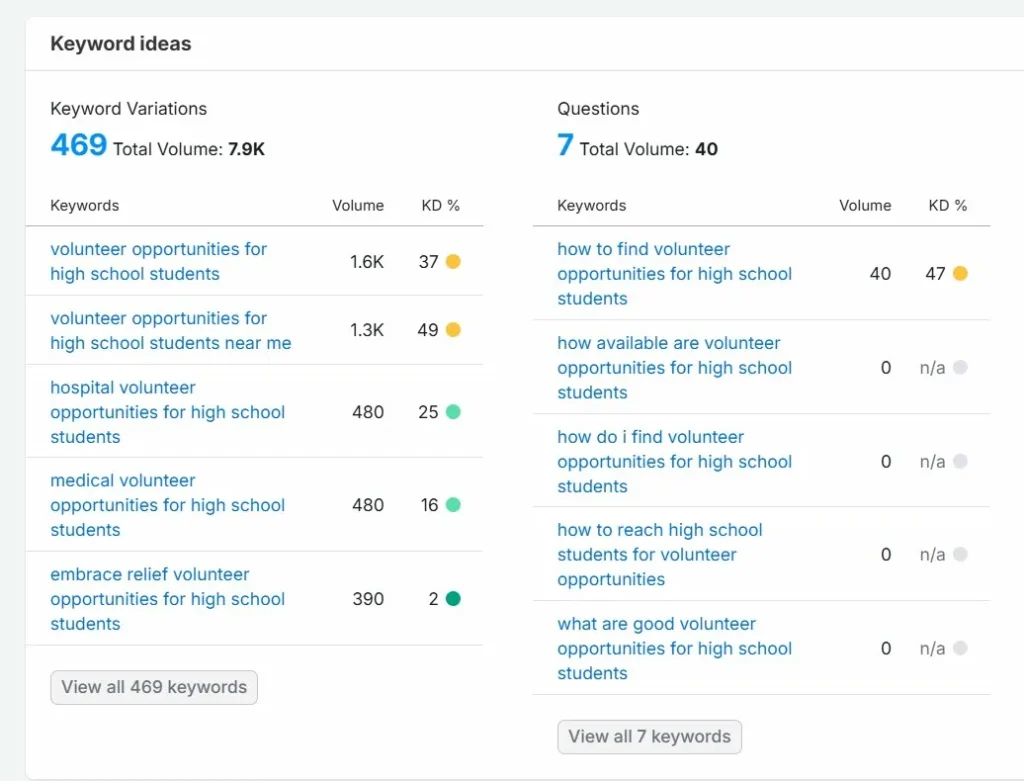
Look at this one. “Volunteer opportunities for high school students” gets 1,600 searches monthly with 37% difficulty. “Volunteer opportunities for high school students near me” gets 1,300 searches at 49% difficulty.
Now, SEMrush shows these as medium difficulty. But here’s what SEMrush doesn’t account for: if you’re actually located in the area someone is searching from, Google gives you a ranking boost for “near me” queries. A national site with high authority might show 49% difficulty, but if you’re a local nonprofit in that searcher’s city, you’re competing with way fewer sites.
I’ve seen local organizations rank for these within 2-3 months by creating comprehensive pages that answer:
- What volunteer work is available
- How high school students get community service hours
- Which programs count for college applications
- How parents can sign their kids up
Don’t just list your volunteer opportunities. Make it a resource that actually helps the searcher.
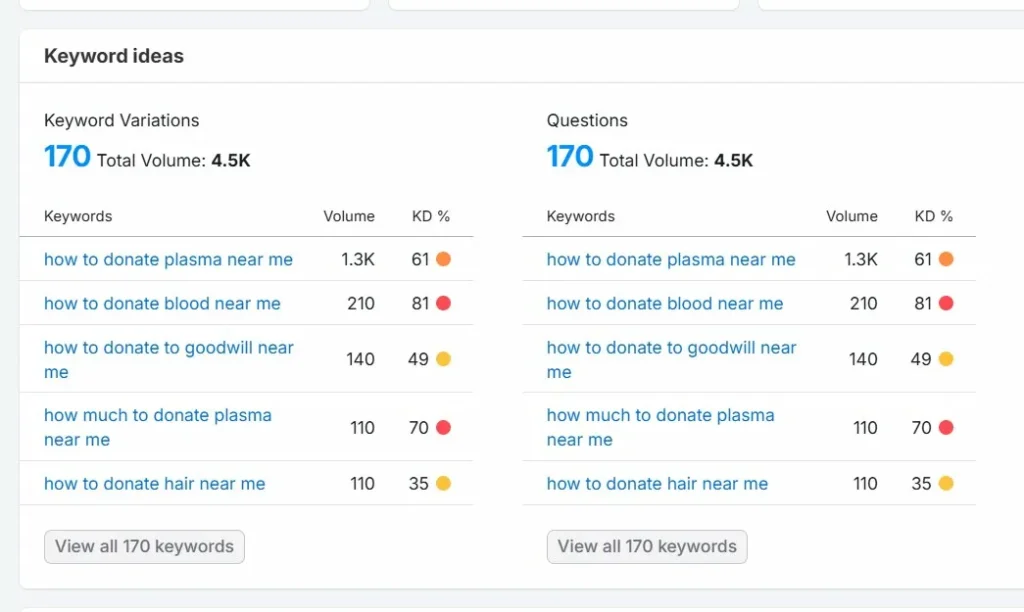
This is gold for certain types of nonprofits. “How to donate plasma near me” gets 1,300 searches monthly. “How to donate blood near me” gets 210 searches. “How to donate hair near me” gets 110 searches at only 35% difficulty.
If your nonprofit handles blood drives, plasma donations, or works with medical donations, create specific pages for each. Don’t combine them into one generic “donation” page. Make separate landing pages:
- “How to Donate Plasma in [Your City]” – Step-by-step process, your locations, eligibility requirements
- “How to Donate Blood Through [Organization Name]” – Upcoming blood drives, what to expect, FAQs
- “Hair Donation Guide for [Your City] Residents” – Which hair donations you accept, where to mail them, preparation instructions
These are transactional searches. People are ready to take action. They’re not browsing—they want to know how to do something specific. Give them a clear answer with your nonprofit as the solution.
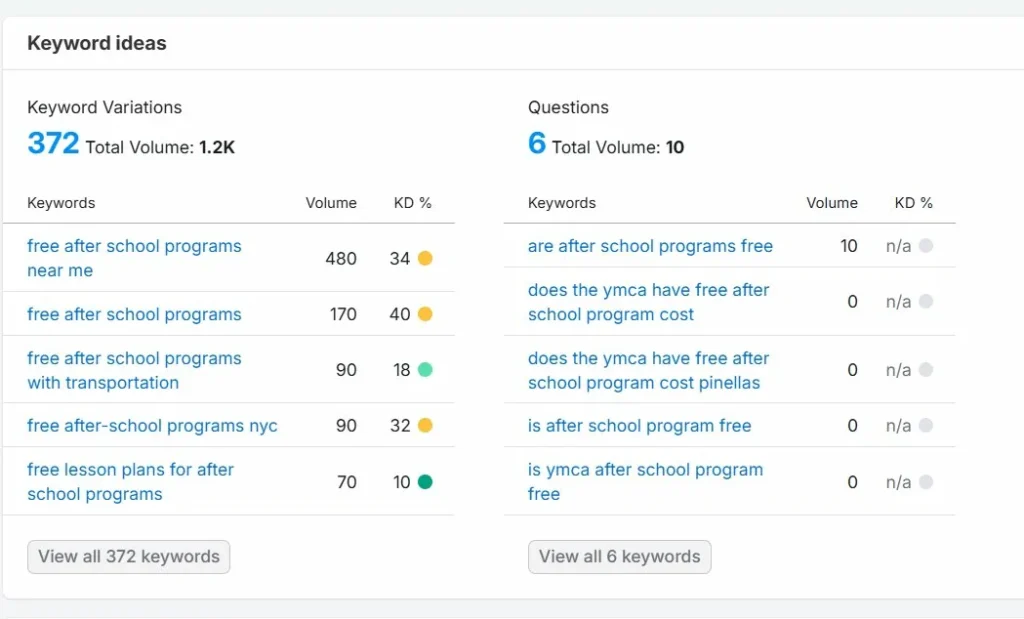
“Free after school programs near me” gets 480 searches at 34% difficulty. “Free after school programs” gets 170 searches at 40% difficulty. If you run youth programs, this is exactly the kind of page you need.
Create a detailed resource:
- What free programs you offer
- Age ranges and eligibility
- How parents can enroll
- Transportation options if applicable
- Weekly schedule and what kids actually do
Again, local advantage applies. A national site might technically rank higher, but Google prioritizes local results for these searches. If someone in your city searches “free after school programs near me,” Google wants to show them programs they can actually access, not something three states away.
When you’re working on web design for nonprofits, these landing pages should be easy to create and update without needing a developer every time. If your CMS makes it hard to add new pages or you can’t update content yourself, that’s holding you back from ranking for these opportunities.
Strategy 3: Create One Linkable Resource That Other Sites Want to Reference
Most nonprofit blogs are full of posts that nobody links to. “5 ways to help the homeless” or “Our impact in 2025” don’t get backlinks because they’re not useful to other websites.
You need to create something other nonprofits, bloggers, journalists, and community sites actually want to link to. One good resource that earns 50 backlinks over time beats 50 blog posts that get zero.
Examples of linkable resources:
- Databases for grants. Make a list of all the grants that nonprofits in your state or region can apply for that are related to your cause. Update it every three months. Make it so complete that other groups save it as a favorite and use it in their newsletters.
- Surveys of salaries. Do an anonymous poll of salaries for nonprofits in your location and field of work. Put out the results with charts and an analysis. When other NGOs are attempting to figure out how much to pay their employees, they will link to this.
- Legal help for free. If you know a lot about the law, make a list of free legal resources for NGOs in your state, like how to fill out formation papers, compliance instructions, and templates for bylaws. This will be linked to by law firms and business development centers.
- Tools for keeping track of volunteer hours. Make a free, straightforward program that helps high school kids keep track of their service hours so they may use them as proof for college applications. Schools and guidance counselors will be able to link to it.
The resource doesn’t have to be massive. It just has to solve a problem that makes people think “I should bookmark this and share it with others.”
When other sites link to your resource, Google sees those backlinks as votes that your site is valuable. That authority spreads to your other pages, making it easier to rank for the landing pages you created in Strategy 2.
Don’t Ignore Video Content for Emotional Connection
Nonprofits have something most businesses don’t: stories that genuinely move people. A tech company can explain their product in a blog post. You need people to feel something.
I’ve seen small nonprofits get more traffic from a single viral TikTok than from six months of blog posts. Video content works differently for nonprofits because emotions drive the shares.
Platforms where nonprofit videos can go viral:
- TikTok: Short emotional stories (30-60 seconds) about who you’ve helped, before-and-after transformations, day-in-the-life of your work
- YouTube Shorts: Behind-the-scenes content, volunteer testimonials, quick impact updates
- Facebook: Longer-form videos (2-5 minutes) showing your programs in action, fundraiser updates, event recaps
When a video gets viral on any of these sites, people don’t just view it and go on. They search for your company. They look for your site. They want to know how to provide money or time.
There should be a clear call to action at the end of every viral video, such “Visit [YourWebsite.org] to help” or “Link in bio to volunteer.” You’re not just trying to get more followers on social media; you’re using video to get people to your website so they can do something.
It doesn’t matter what kind of equipment you have. Phones make videos that are good enough. What counts is making a meaningful difference. A grainy film of a family getting help is more powerful than a business video using stock footage that has been polished.
You’re missing out on traffic if you don’t make videos in 2026. A 45-second emotive TikTok can get more people to know about your NGO than months of SEO labor. Do both.
Putting It All Together
People that write SEO tips for NGOs usually haven’t worked with a small budget or tried to compete with organizations that have been operating for decades. You don’t have to beat everyone else in your field to make these three techniques work: getting PR mentions in ranking publications, having specific landing pages for local searches, and having one powerful linkable resource.
You’re finding places where you can win. You’re using the authority of other sites until you get your own. You’re going for searches with real intent, where people are ready to give, volunteer, or obtain aid.
And when you add video content that people care about, you’re not only getting high search engine rankings. You’re making an internet presence that really helps your cause.
Begin with Strategy 2. Choose three of the searches above that are similar to what your nonprofit does, make thorough landing pages for each, and keep an eye on what occurs over the next 90 days. You will see traffic before your domain authority goes up by one point.