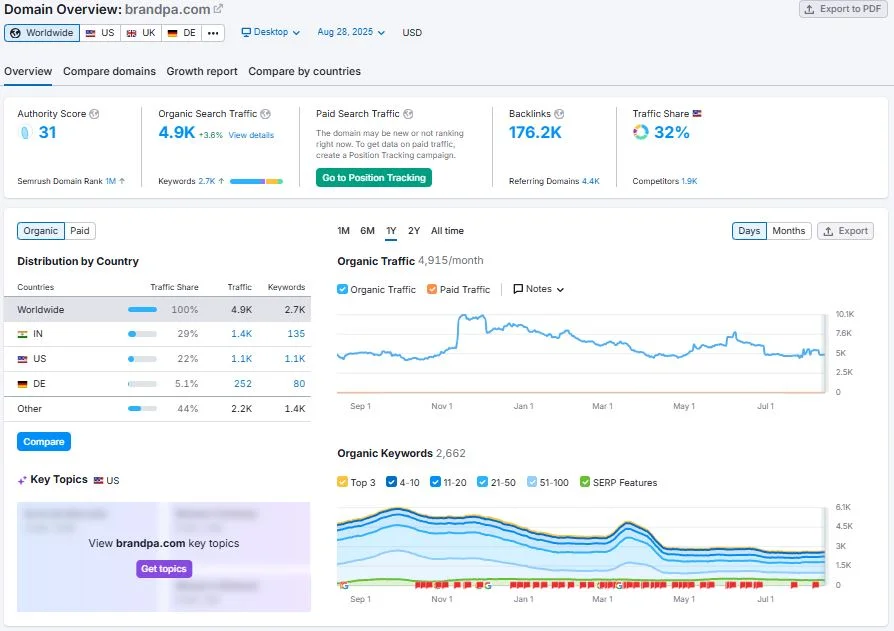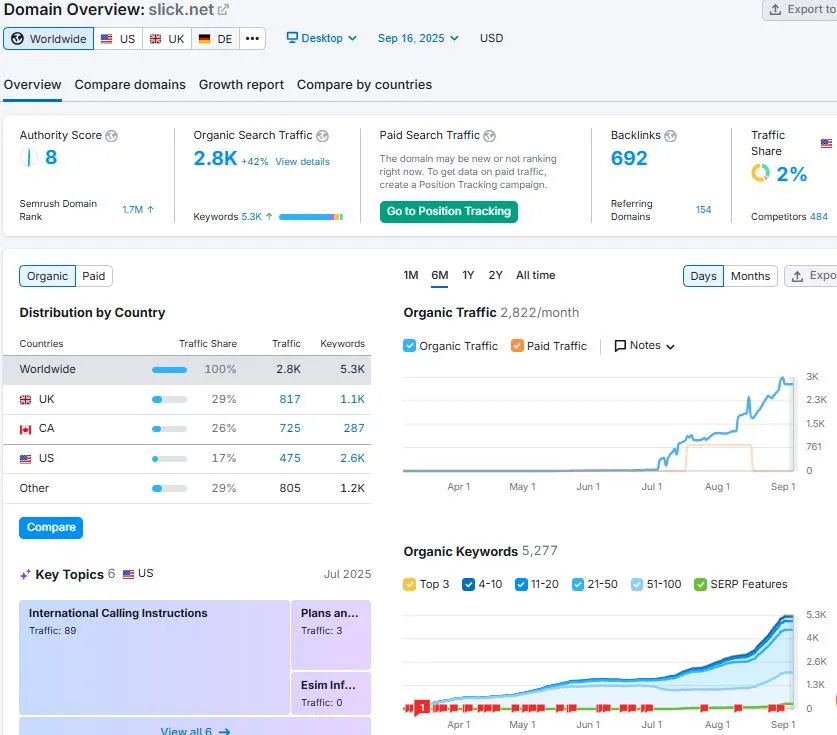
A survey by Brightlocal’s Customer review survey Found that 93% of consumers search for local businesses online and that 72% of people who conduct a local search on their smartphone visit a business within five miles as reported on Hubspot’s Local SEO stats.
- Local SEO Checklist:
- 1. Optimise your website for local keyword phrases
- 2. Create location pages for each of your areas of services locations
- 3. Embed a Google Map on your website and on each location page
- 4. Optimise your website for mobile
- 5. Add images and videos to your website and to your location pages
- 6. Monitor your website’s performance with Google Search Console
- 7. Monitor your website’s backlink profile
- 8. Claim and optimise your Google Business Profile listing
- On-Page Local SEO Factors:
- 1. Title tags
- 2. Meta descriptions
- 3. Header tags
- 4. URL structure
- 5. Keyword density
- 6. Image optimisation
- 7. Internal linking
- 8. Schema markup
- 9. Content
- Off-Page Local SEO Factors:
- Key takeaways
If you want to make sure your local business is visible to consumers who are searching for the products or services you offer, then you need to either invest your time and efforts in learning and applying SEO or invest into done-for-you local SEO services. Local SEO is the process of optimising your online presence to rank higher in local search results.
In this guide, we’re going to show you everything you need to know about local SEO, including how to optimise your website, how to create local content, how to build local links, and more. By the end of this guide, you’ll be well versed in local SEO and you’ll be able to dominate your local market.
Local SEO Checklist:
1. Optimise your website for local keyword phrases
If you’re running a business that serves a specific geographic area, it’s important to optimise your website for local keyword phrases. By doing this, you’ll make it easier for potential customers in your area to find your business when they search for relevant terms online.
There are a few different ways to optimise your website for local keyword phrases. First, you’ll want to make sure that your website is properly configured to include your business’s name, address, and phone number (NAP). You should also include relevant keyword phrases in your website’s title tags and Meta descriptions.
2. Create location pages for each of your areas of services locations
If you have more than one location for your business, it’s important to create separate location pages for each one. This ensures that your customers can find the most relevant information for their specific needs.
Creating a separate page for each location also allows you to tailor your content to the specific audience in that area. For example, if you have a location in a highly populated city, you might want to focus on the convenience of your location.
3. Embed a Google Map on your website and on each location page
Adding a Google Map to your website can be a great way to improve your SEO efforts. By embedding a map on your website, you can help potential customers find your business more easily. Additionally, by including a map on each location page, you can provide search engines with more information about your business, which can help to improve your ranking in search results.
4. Optimise your website for mobile
As the number of mobile users continues to grow, it’s important to make sure that your website is optimised for them. Mobile users have different needs than desktop users, and if your site isn’t designed for them, you’re likely to lose traffic and rank in the search engines.
Fortunately, optimising your website for mobile users is relatively easy to do, and it can have a major impact on your SEO. Here are a few tips to help you get started:
- Make sure your website is responsive. This means that it will adjust to different screen sizes and devices.
- Use large, easy-to-read fonts.
- Use simple, easy-to-navigate menus.
5. Add images and videos to your website and to your location pages
Inserting images that include targeted keywords in the alt text and videos on your website and your location pages can help improve your SEO. Both images and videos can help improve your search engine ranking by increasing your content’s relevance and by providing additional information about your business. Additionally, videos can help increase the amount of time that visitors spend on your website, which is another factor that search engines consider when ranking websites.
6. Monitor your website’s performance with Google Search Console
Google Search Console is a free service that enables you to monitor your website’s performance in Google Search. With Search Console, you can see how your site appears in Google search results and get alerted when there are issues with your site. You can also use Search Console to submit your website to Google for indexing and troubleshoot problems that might be preventing your website from being indexed.
7. Monitor your website’s backlink profile
Backlinks are one of the most important ranking factors for search engines, so it’s important to keep an eye on your website’s backlink profile. There are a number of ways to do this, but one of the easiest is to use a tool like Moz’s Open Site Explorer. This tool allows you to see who is linking to your website, what anchor text they’re using, and the quality of those links.
8. Claim and optimise your Google Business Profile listing
As a business owner, you know how important it is to have an accurate and up-to-date listing on Google Business Profile (Formerly known as Google My Business). Claiming and optimising your GBP listing is a great way to make sure your business is visible and enticing to potential customers.
When you claim your GBP listing, you’ll be able to edit your business name, address, and hours of operation. You can also add photos, videos, and a description of your business. Optimizing your listing with this information will help potential customers learn more about your business and what you have to offer.
On-Page Local SEO Factors:
1. Title tags
A title tag is an HTML element that specifies the title of a web page. Title tags are typically used to display the page’s title in the search engine results pages (SERPs), as well as in the browser’s tab.
Title tags are one of the most important on-page SEO elements, as they tell both search engines and users what the page is about. The title tag should be placed within the head element of the HTML document.
While the title tag is not the only factor that determines a web page’s ranking in the search results, it is still an important element of on-page SEO. In addition to using keywords in the title tag, it is also important to create a unique and descriptive title that
2. Meta descriptions
Meta descriptions are short descriptions of the content of a web page. They are typically used by search engines to display a preview of a page’s content in search results. Meta descriptions can also be used by social media platforms to generate previews of web pages when they are shared. Including targeted keywords into pages meta descriptions help improve search engine visibility
3. Header tags
Header tags are HTML tags used to denote headings and subheadings within your content. They are most commonly used to structure the main headings (h1-h6) and subheadings (h2-h6) of your webpages, though they can also be used to denote the headings of individual sections within your content (e.g. h3).
Header tags are important for both accessibility and SEO purposes. For accessibility, header tags allow screen readers to navigate and understand your content more easily. For SEO, header tags help search engines understand the structure and hierarchy of your content, which can influence where your content ranks in search engine results pages.
4. URL structure
If you want your website to rank highly in search engine results pages, it’s important to include relevant keywords in your URL structure. This helps search engines understand what your website is about, and ultimately drives traffic to your site.
When creating new pages or posts on your website, be sure to include targeted keywords in the URL. For example, if you’re writing a blog post about “how to start a garden,” you could include the keyword “garden” in the URL: www.example.com/how-to-start-a-garden. Not only will this help people find your content, but it will also signal to search engines that your website is relevant to that keyword.
5. Keyword density
It is important to maintain a healthy keyword density on your website. This refers to the number of times a keyword or phrase appears on a page, in relation to the rest of the content. If your keyword density is too low, your website will be less visible to search engines. Conversely, if your keyword density is too high, your website may be penalised for keyword stuffing.
6. Image optimisation
Images are an important part of any website or online presence, and optimising them can help to improve search visibility and also speed up your site and improve your users’ experience. Include targeted keywords in the images Alt text and use image compression tools for improved page speeds.
7. Internal linking
Internal linking is a process of linking one page of a website to another page on the same website. This can be done by hyperlinking text or by using an image as a link. Internal linking is important because it helps to improve the website’s overall structure and organisation, and it can also be used to help improve a website’s SEO
8. Schema markup
Schema markup is a code that you can add to your website to help search engines understand your website better. It is a form of microdata that uses a specific vocabulary to describe your website.
Schema markup can be used to provide information about a business, such as its address, opening hours, and price range. It can also be used to mark up a product, and can include information about the product such as its price, its manufacturer, and a review of the product.
Adding schema markup to your website can help search engines understand your website better and can result in better search engine rankings.
9. Content
When it comes to SEO, content is king. Creating high-quality, keyword-rich content is essential for getting your website to rank highly in search engine results pages. However, simply publishing great content isn’t enough – you also need to promote it and get it in front of your target audience. Here are some tips for creating and promoting content for SEO purposes:
- Plan your content. Decide what topics you want to write about, and make sure you include the relevant keywords throughout your pieces.
- Write interesting and engaging content. In addition to being keyword-rich, your content should also be interesting and engaging to read for audience retention.
- Optimise your content by including your targeted keywords in URL, Meta descriptions and Header tags
Off-Page Local SEO Factors:
1. Link Building
Link building is the process of acquiring links from other websites to your own. This can be done in a variety of ways, such as guest blogging, writing testimonials, or simply providing helpful content that others want to link to. The important thing is to get links from high-quality websites that are relevant to your own. This will help improve your website’s search engine ranking and visibility.
2. Local directory listings
In order to improve your website’s visibility in search engine results, you can list your site in local online directories. This will help boost your SEO efforts by increasing your site’s link popularity, which is one of the many factors search engines use to determine rankings.
There are many different online directories you can list your site in, and it’s a good idea to list in as many as possible. However, you should also focus on quality over quantity, and only list your site in directories that are relevant to your niche or industry. In addition, be sure to complete your listing profile thoroughly, and include keyword-rich descriptions of your business.
3. Guest blogging
Guest posting is the process of writing content for another website or blog in order to build relationships and earn backlinks. This is an important SEO strategy because it helps to improve your website’s visibility and reach. When done correctly, guest posting can also result in increased traffic and leads for your business.
There are a few things to keep in mind when guest posting, such as making sure the content is high-quality and relevant to your audience. It’s also important to select guest posting opportunities carefully, as not all sites will be a good fit for your business.
4. Reviews
Google and other search engines use reviews as a ranking factor in their algorithm, which means that having positive reviews can improve your chances of appearing higher in the search results. Reviews also help to build trust and credibility with potential customers, which can lead to more sales and repeat business.
5. Influencer marketing
Influencer marketing involves working with social media “influencers” who have large followings on social media platforms. These influencers can help to promote your product or service to their followers, and can reach a large number of potential customers.
Working with social media influencers can be a great way to promote your product or service, and reach a large number of potential customers. However, it is important to work with influencers who are relevant to your product or service, and who have a large and engaged following. Otherwise, your marketing efforts may not be effective.
Key takeaways
In conclusion, Local SEO can be a complex and an ever-changing field. As overwhelming and time-consuming the process can be, In order to stay ahead of the competition it is important to partner with a professional SEO company that can keep your website and listings optimised. Contact a leading provider of local SEO services that can help you get started with local SEO and ensure that your next project is visible in local search results.