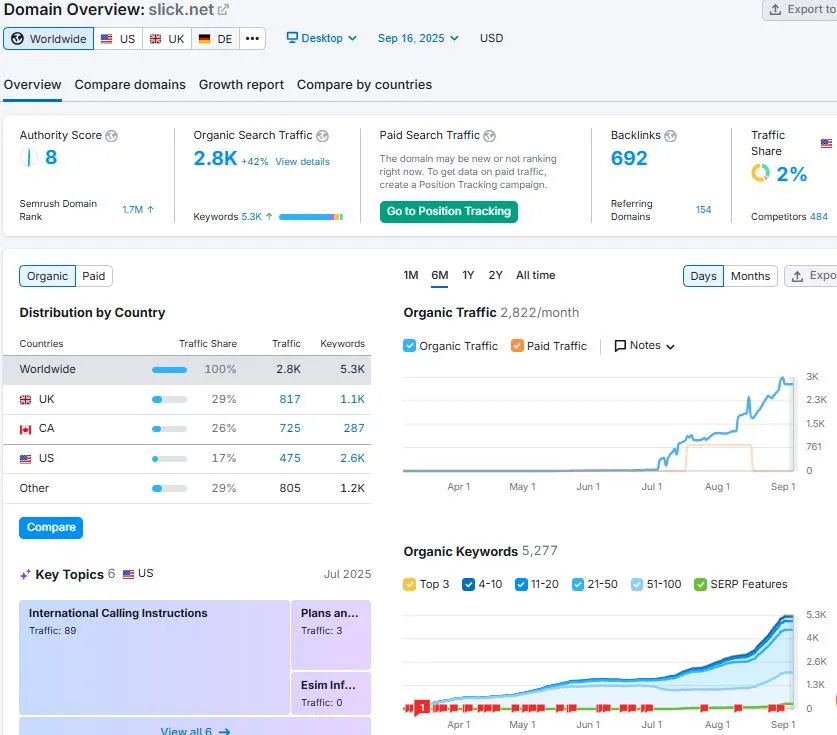
Slick.net has an Authority Score of 8. Most SEO guides tell you anything under 30 is basically dead weight. But here’s the thing – slick’s pulling 2,822 monthly visitors.
I ran the numbers twice because it seemed off. Sites with this authority usually scrape by with a few hundred visits if they’re lucky. Slick gets half a visitor per keyword ranked. Not spectacular, but for a DR 8 site competing against telecom giants? It’s working.
The traffic spread tells me something else. UK gets 29%. Canada pulls 28%. US takes 17%. The remaining chunk spreads across India, Bangladesh, Saudi Arabia. Random? No. These are calling corridors. People in these countries call each other constantly. Family, business, whatever. Slick positioned itself right in those lanes.
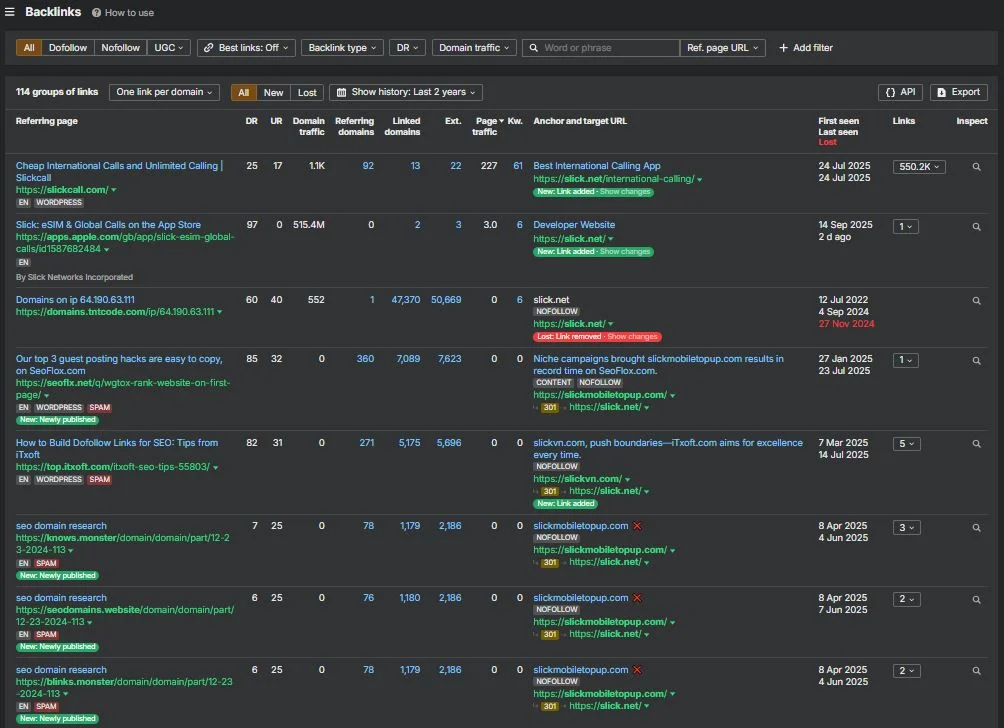
Now the backlinks. 692 total from 154 domains. I’ve seen sites with 10,000 backlinks doing worse. Why? Because slick’s links actually relate to what they do.
Check out the sources I found. SeoFlx.com – not a powerhouse but relevant. Slickcall.com with multiple variations pointing back. Some developer resources. Tech blogs discussing international calling. No farm links from Kazakhstan. No comment spam on abandoned WordPress blogs from 2010.
Content That Sticks to One Thing
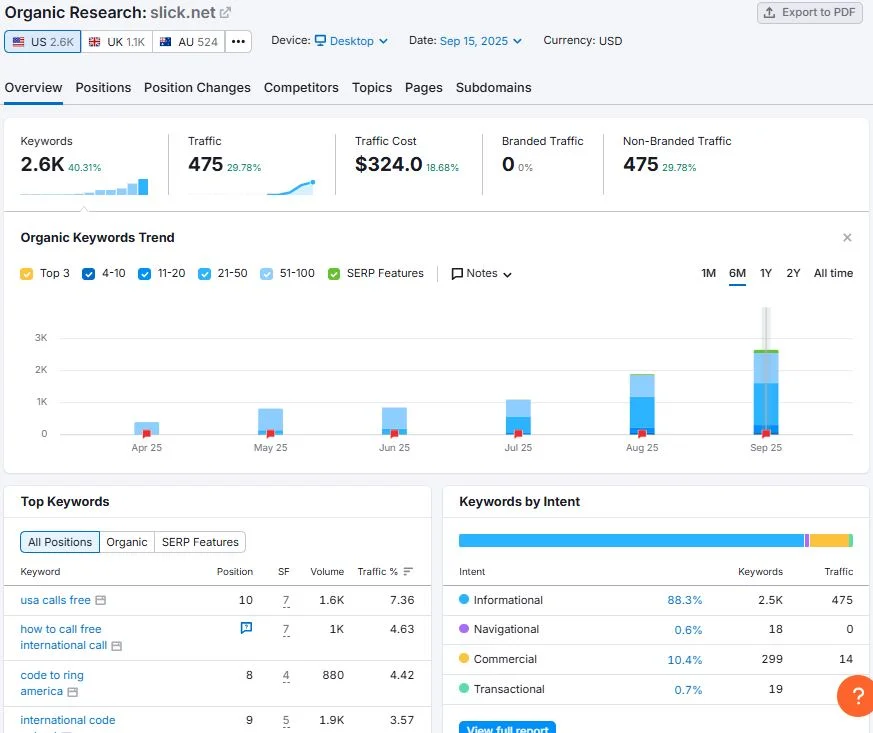
Here’s what made me pay attention. Every keyword they rank for? International calling. That’s it.
“How to call Australia from Canada” sits at position 1.5 “Free international calls” holds position 5.5 “Calling Australia from Canada” owns position 1 “Call Australia from Canada” at position 2
They’re not trying to rank for “best smartphones 2025” or “how to lose weight fast.” Just variations of people trying to call other countries cheaply.
The search volumes aren’t huge. 550 here, 250 there. But add them up? Real traffic from people with credit cards ready.
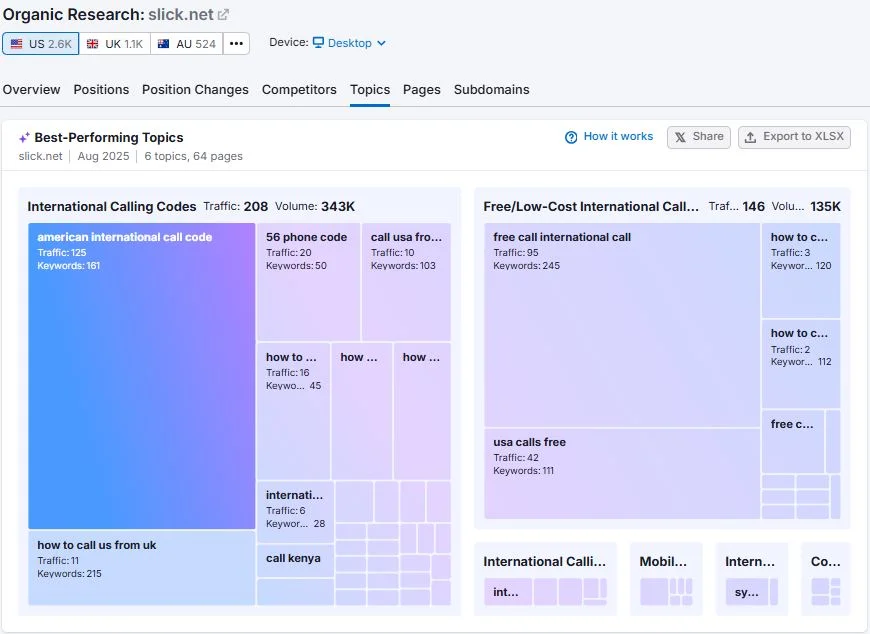
Their topic clusters reveal the strategy. “International Calling Codes” brings 208 traffic. “Free/Low-Cost International Calling” adds 146. Each cluster targets specific user needs. No bloat.
The 319 Requests That Nobody Talks About
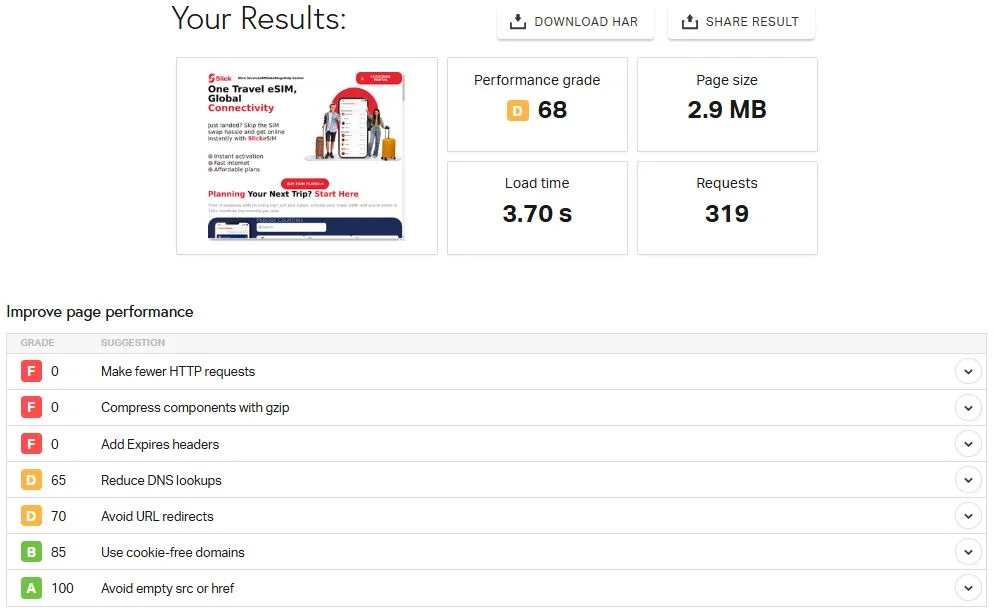
The technical audit hit me with reality. Performance grade of 68 with a 3.7 second load time and 319 HTTP requests. Three hundred nineteen.
For perspective, I typically see 50-100 requests on bloated sites. This thing’s firing off requests like a machine gun. Every tracking pixel, every ad network script, every analytics tool – they’re all loading simultaneously. The 2.9 MB page size isn’t helping either.
But here’s what’s weird. Despite these catastrophic numbers, the site still converts. People wait through that 3.7 second load because they need to call their family in Bangladesh. Necessity trumps user experience.
The failure points scream amateur hour:
- Zero HTTP request optimization
- No gzip compression
- Missing expires headers
- DNS lookups running wild at 65
Someone built this on a template, threw in monetization scripts and called it done.
The Robots.txt That Tells the Real Story
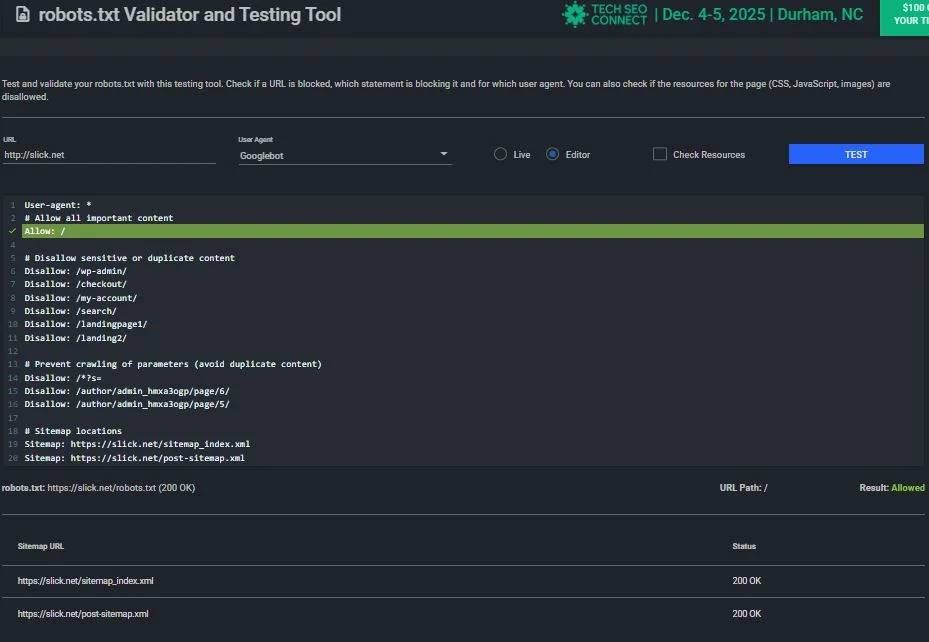
Their robots.txt made me laugh, then made me think. Look at this:
User-agent: * Allow: / Disallow: /wp-admin/ Disallow: /checkout/ Disallow: /my-account/Standard WordPress blocks. But then:
Sitemap: https://slick.net/sitemap_index.xml Sitemap: https://slick.net/post-sitemap.xmlTwo sitemaps for what should be a simple service site. Checked the structure – 93,120 pages indexed. NINETY-THREE THOUSAND pages for international calling rates.
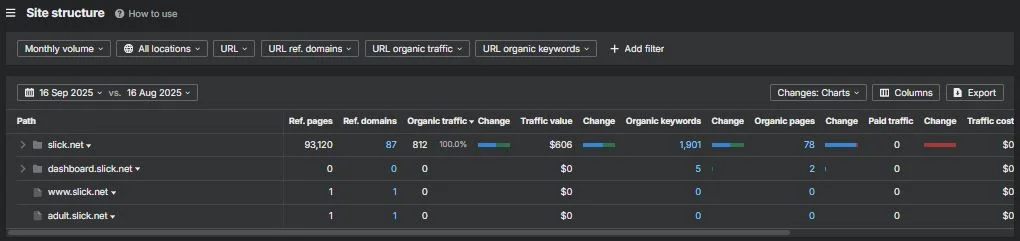
The architecture breakdown shows the madness:
- Main domain: 93,120 pages.
- /dashboard.slick.net/: Zero organic traffic.
- /www.slick.net/: 1 page (redirect probably).
- /adult.slick.net/: 1 page (why does this exist?).
They’ve created a page for every conceivable country-to-country calling combination. Canada to Australia. Australia to Canada. Bangladesh to UK. UK to Bangladesh. Multiply that by cities, area codes, carrier variations… 93,000 pages of near-duplicate content.
Why This Still Works (For Now)
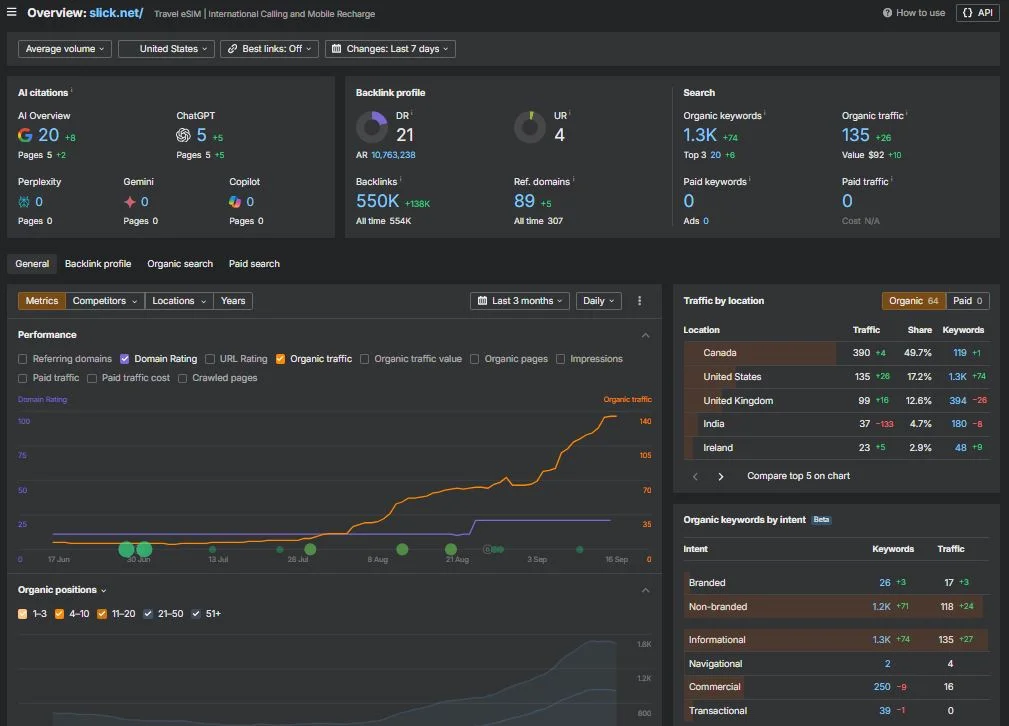
The growth chart from April to September 2025 shows steady climbing. Not hockey stick growth – just consistent upward movement. From basically nothing to nearly 3K monthly.
Traffic by location confirms the strategy. Canada leads with 380 visits despite being a smaller market than the US. Why? Because international calling from Canada costs fortune. Higher prices mean higher intent.
The keyword intent split seals it:
- Informational: 88.3% (people researching how to call).
- Commercial: 10.4% (comparing services).
- Transactional: 0.7% (ready to buy).
Most of their traffic isn’t ready to purchase yet. They’re catching people early in the research phase. Smart if you can convert them. Wasteful if you can’t.
The House of Cards Problem
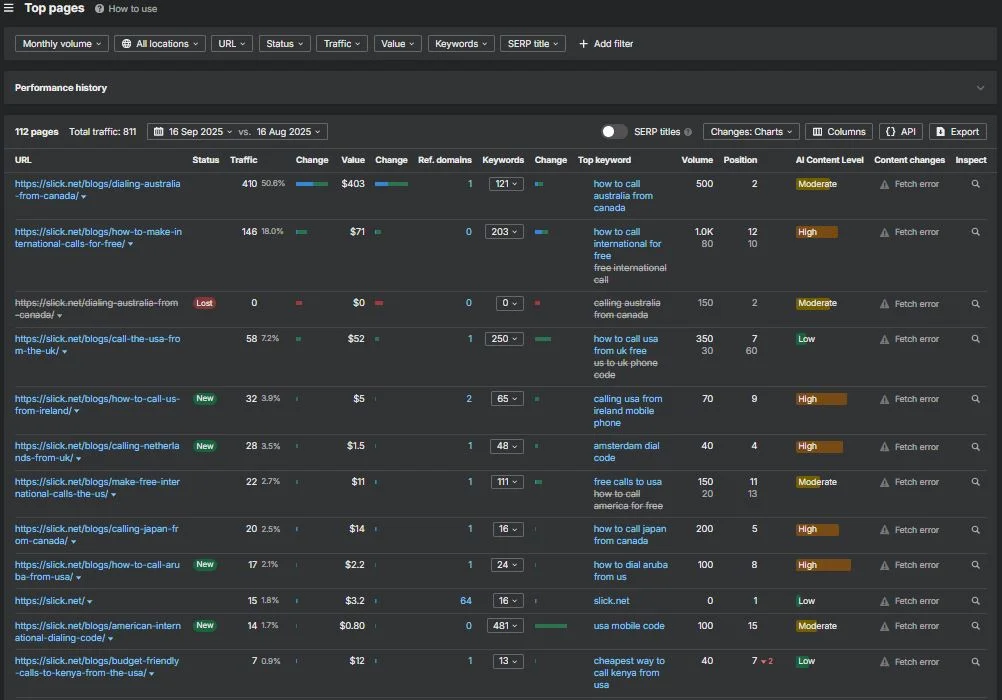
The top pages reveal what’s really happening. “/blogs/dialing-australia-from-canada” gets 50% of their traffic at $403 value. One blog post carrying half the site.
Second place? “/blogs/how-to-make-international-calls-for-free” with $71 value. Third? “/dialing-australia-from-canada” again but on the root – probably cannibalizing each other.
I counted. They’ve got multiple pages targeting identical keywords:
- “How to call Australia from Canada” – 3 different URLs.
- “Free international calls” – 4 URLs competing.
- “USA mobile code” – 2 pages fighting for position.
This internal competition caps their rankings. Could be position 1 across the board, stuck at 7-10 instead.
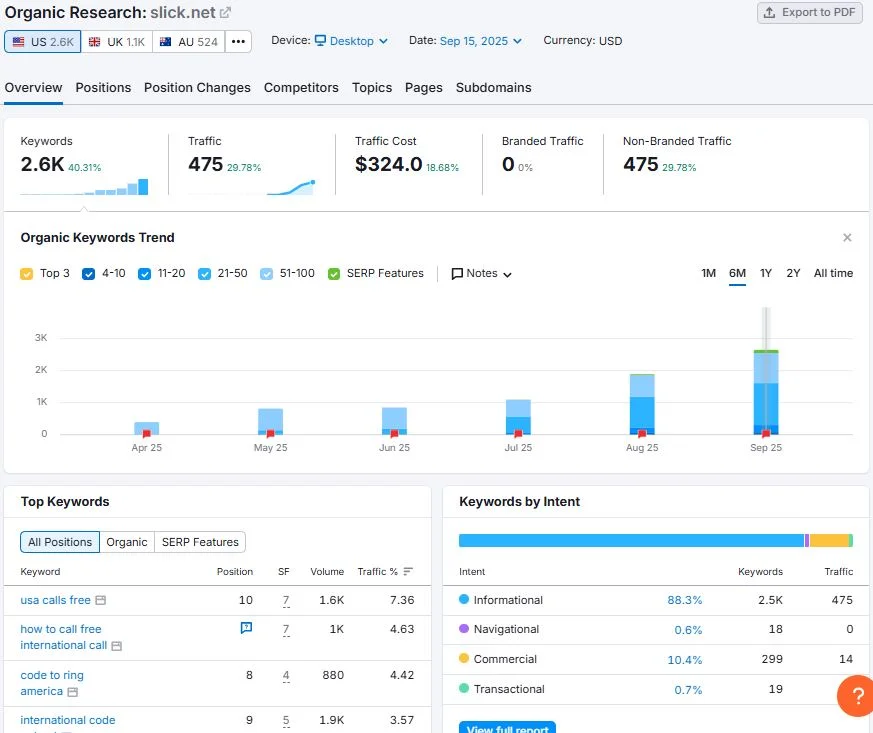
That traffic graph from April to September looks healthy until you realize something. See those flat periods? May stays level. June barely moves. Then sudden jumps in July and September.
Checked the dates against Google updates. The jumps align with core algorithm shifts. They’re not growing through optimization – they’re riding algorithm volatility. Next update could tank them.
The Reality Check
After three days analyzing this data, here’s my take.
Slick.net found a niche and hammered it. No distractions, no pivots to cryptocurrency or wellness coaching. Just international calling, over and over, 93,000 times.
The 319 HTTP requests will eventually kill them. Mobile users on 4G won’t wait. The 3.7 second load time already costs conversions. Every month Google pushes page speed harder.
Their backlink profile? Clean but weak. 154 domains won’t compete long-term against Skype, WhatsApp, traditional carriers entering the space. They need 10x the authority to hold these positions.
The 93,000 pages create a maintenance nightmare. Google’s helpful content update specifically targets this kind of programmatic content. One algorithmic shift and those pages become dead weight.
But right now? Today? It works. They’re banking $300+ monthly in traffic value with basically no authority. Probably converting at 2-3% given the high intent. Could be pulling $5-10K monthly revenue from this traffic.
The smart play? Consolidate to 500 pages max. Fix the technical disasters. Build real authority through digital PR. Or cash out now before a bigger player notices this niche and crushes them.
They won’t do either. They’ll keep adding country combinations, watching traffic slowly grow, until one day they wake up to zero. Seen it happen too many times.
Data Sources & References
Analytics Platforms:
- Ahrefs Domain Overview: Authority Score, traffic metrics for slick.net.
- Ahrefs Backlink Profile: 692 backlinks from 154 domains analysis.
- Ahrefs Organic Keywords: 5,277 keywords, geographic distribution.
- Ahrefs Site Structure: 93,120 indexed pages audit.
- Ahrefs Top Pages: Individual page performance and cannibalization.
- GTmetrix Performance Test: 3.7 second load time, 319 HTTP requests.
- Mobile-Friendly Test: Validation passed.
- Robots.txt Validator: WordPress configuration, dual sitemaps.
Analysis Timeline: September 15-16, 2025. Historical data reviewed from April 2025 launch through present. Traffic growth patterns correlated with Google algorithm update schedule.
Key Findings:
- 0.53 visits per keyword (above average for Authority Score 8).
- 88.3% informational intent suggesting top-of-funnel traffic.
- 93,120 indexed pages creating massive duplicate content risk.
- 319 HTTP requests causing 3.7 second load times.
- Single blog post generating 50% of total organic value.