Video content today isn’t just a nice-to-have – it’s a cornerstone of successful marketing strategies. Whether you’re looking to raise brand awareness, drive website traffic, or increase sales, strategic video planning can transform your business outcomes and maximize engagement with your target audience.
- From Hobby to Income: How to Earn on Video Content Business?
- 8 Steps to Crafting an Effective Video Content Plan
- Step 1: Set Clear Video Content Objectives
- Step 2: Select the Appropriate Video Types
- Step 3: Craft Your Core Marketing Message
- Step 4: Plan the SEO Content Marketing Strategy
- Step 5: Optimize Videos for Conversions
- Step 6: Maximize the Reach & Impact of Your Videos
- Step 7: Analyze Your Video Performance
- Step 8: Use Feedback to Get Better
- Content Business Planning Principles
- Video Content Calendar
Effective video content planning takes a holistic approach, covering everything from strategy and production to distribution. Without proper planning, you risk creating content that fails to make a meaningful impact, wasting valuable resources and missing opportunities for growth. By aligning your video content with specific sales and marketing objectives, you’ll ensure every video serves a purpose in your broader business strategy.
From Hobby to Income: How to Earn on Video Content Business?
Transforming your video creation hobby into a profitable business requires strategic planning and the right tools.
- Identify Your Niche and Audience
Stop picking random topics and hoping something sticks. Here’s how to actually find a niche that pays:
- Check what people are already paying for – Look at Udemy, Skillshare, and YouTube’s paid memberships. What courses cost $100+? What channels have thousands of paying subscribers? That’s where the money is.
- Spy on your competition’s comment sections – Read through comments on popular videos in potential niches. What questions keep coming up? What problems do people mention that nobody’s solving? Those gaps are your opportunity.
- Use Google Keyword Planner for commercial intent – Search for “[your topic] + buy/review/best/how to” and look at the cost-per-click data. High CPC means businesses are willing to pay for those searches, which means there’s money in that niche.
- Test with a single video first – Don’t commit to a whole channel yet. Make one detailed video about a specific problem in your potential niche. If it gets good engagement and comments asking for more, you’re onto something.
- Check Facebook groups and Reddit forums – Join groups related to your potential niche and look for posts that get lots of replies. What problems come up over and over? What solutions do people recommend? Those recurring issues are video gold.
- Look at what tools and software exist – If there are expensive tools for a topic ($50+ monthly subscriptions), that usually means professionals need help with it. Tutorial content around professional tools often converts well.
Finding your specific niche creates the foundation for a successful video content business. Research market trends and audience needs to discover underserved topics in video content. Examples of further profitable niches include:
- Technical tutorials for specialized software
- Product reviews for specific industries
- Behind-the-scenes content for particular professions
- Educational content for niche subjects
Understanding your target viewers’ demographics, preferences, and pain points helps tailor content that resonates deeply and encourages consistent engagement.
You must ensure that your Youtube channel name aligns well with your audience, you can also use YouTube channel AI name generator for help.
- Develop a Content Strategy
Your content strategy serves as the roadmap for your video business success.
- Pick one format and master it – Don’t try to do tutorials, vlogs, and reviews all at once. Choose screen recordings, talking head videos, or product demos and get really good at that one thing first.
- Plan your content in clusters – Instead of random topics, create 4-5 videos around the same theme. If someone watches one, YouTube will suggest the others. This keeps viewers on your channel longer and builds topic authority.
- Create a content calendar with deadlines – Pick specific days for filming, editing, and uploading. Treat it like a real job with real deadlines. Most people fail because they post whenever they “feel like it.”
- Build a simple email list from day one – Put a link in every video description to a free guide or checklist. Collect emails so you’re not dependent on algorithm changes. Even 100 email subscribers beats 10,000 YouTube followers if those subscribers actually buy stuff.
- Plan your monetization before you film – Know whether you’re selling courses, affiliate products, coaching, or services. Every video should move people toward that goal. Don’t just make content and hope money appears later.
- Batch your production – Film multiple videos in one session, then edit them all, then schedule them all. This is way more efficient than doing everything one video at a time.
Create a comprehensive plan that includes:
- Content themes and topics aligned with audience interests.
- Publishing schedule (frequency and best posting times).
- Content formats (tutorials, interviews, demonstrations).
- Distribution channels optimized for your target audience.
Consistency in publishing quality content establishes your credibility and builds a loyal audience base that’s essential for monetization opportunities.
- Select the Right Platforms
Different platforms offer various monetization options and audience demographics. Choose platforms that align with your content type and business goals:
| Platform | Primary Audience | Monetization Options | Best Content Types |
| YouTube | Broad, all ages | Ads, memberships, Super Chat | Tutorials, reviews, vlogs |
| TikTok | Gen Z, younger Millennials | Creator Fund, brand partnerships | Short-form, trending content |
| Millennials, visual focus | Sponsored posts, affiliate marketing | Lifestyle, behind-the-scenes | |
| Professionals, B2B | Sponsored content, premium courses | Industry insights, B2B tutorials |
- Implement Monetization Strategies
Most creators think YouTube ad revenue is the only way to make money from videos. That’s backwards thinking – ad revenue should be your smallest income stream, not your main one.
Start with affiliate marketing while you’re still small. Pick products you actually use and can demonstrate on camera. A single affiliate sale can earn you $50-500, while you’d need 50,000 views to make the same from ads. The key is being selective – promote 1-2 products maximum per video, and only stuff that directly solves problems you’re discussing.
Once you have 1,000+ subscribers, create your own digital products. Film yourself doing something step-by-step, then sell that process as a course. A $97 course sold to just 1% of your audience beats months of ad revenue. Don’t overthink it – people pay for organized, actionable information they can follow along with.
Sponsorships kick in around 10,000+ subscribers, but here’s what nobody tells you: reach out to smaller companies first. Big brands get hundreds of pitches daily. Small software companies, local businesses, or niche product makers are more likely to say yes and pay better rates relative to your audience size.
Services and consulting often work better than products for technical channels. If you’re teaching Photoshop, offer custom design work. If you’re explaining marketing, offer marketing audits. One $2,000 consulting client equals selling 20 courses – and consulting clients often become repeat customers.
- Ad Revenue: Partner with platform ad programs like YouTube’s Partner Program.
- Sponsorships: Collaborate with brands aligned with your content niche.
- Affiliate Marketing: Promote products with unique tracking links.
- Membership Models: Offer premium content through subscription services.
- Digital Products: Create and sell courses, templates, or guides.
Combining multiple revenue streams provides stability and maximizes earning potential for your video business.
- Leverage Analytics for Growth
Watch time matters more than views. A video with 5,000 views and 60% retention beats one with 20,000 views and 20% retention. YouTube promotes videos that keep people watching, so find your highest retention videos and make more like them.
Traffic sources show you where real fans come from. If most of your views come from “Browse features” (YouTube’s homepage), you’re doing well. If they come from “Suggested videos,” you’re benefiting from other creators’ audiences. External traffic usually means people are sharing your stuff – that’s gold.
Demographics reveal your real audience versus who you think you’re targeting. If you’re making beginner tutorials but your audience is 80% advanced users, you’re missing opportunities to create intermediate content they’d actually pay for.
Comments and community posts engagement rates tell you what topics resonate. A video with 500 views but 50 comments often performs better long-term than one with 5,000 views and 10 comments. Engaged viewers become customers.
Revenue per view is your most important metric that YouTube doesn’t track. Calculate how much money each video generates from all sources – ads, affiliates, product sales, leads. Focus on making more videos like your highest-earning ones, not just your most-viewed ones.
Data analysis forms a critical component of scaling your video content business. Track key metrics, including:
- Viewer retention rates.
- Engagement statistics (comments, shares).
- Traffic sources.
- Conversion metrics.
Use these insights to refine your content strategy, focusing on what performs best with your audience and generates the most revenue. Analytics help identify content gaps and opportunities for expanding your video business portfolio.
8 Steps to Crafting an Effective Video Content Plan
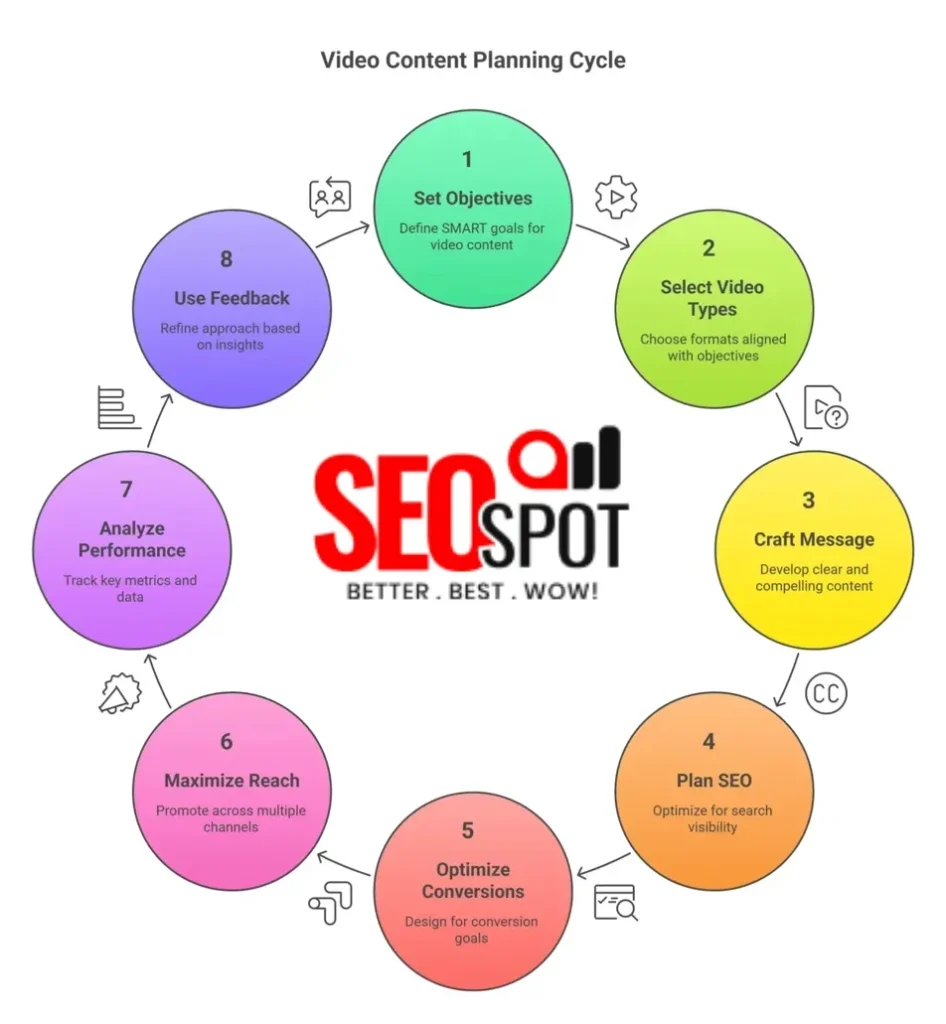
Creating a strategic video content plan transforms random production into purposeful storytelling that drives real business results. Follow these ten proven steps to develop a video content plan that captivates your audience and achieves your marketing goals.
Step 1: Set Clear Video Content Objectives
Establish specific, measurable goals for your video content before production begins. Define what success looks like using SMART criteria (Specific, Measurable, Achievable, Relevant, Time-bound) for each video project. For example, aim to increase brand awareness by generating 10,000 views, drive website traffic with a 5% click-through rate, or boost sales with a 15% conversion rate from video landing pages.
Step 2: Select the Appropriate Video Types
Choose video formats that align with both your objectives and audience preferences. Educational tutorials work well for complex products, while testimonials build trust through social proof. Consider creating:
- Explainer videos with closed captions and translations made in Dubs.
- Product demonstrations for showcasing features.
- Customer stories for building emotional connections.
- Behind-the-scenes content for authenticity.
- Webinars for in-depth education.
- Short-form videos for social media engagement.
Match each video type to specific stages in your customer journey for maximum impact.
Step 3: Craft Your Core Marketing Message
Develop a clear, compelling message that addresses your audience’s needs while highlighting your unique value proposition:
- Focus on one primary message per video to avoid confusion.
- Structure your content with a strong hook in the first 5-10 seconds, followed by valuable information, and conclude with a specific call to action.
- Use storytelling techniques to make complex information accessible and memorable.
Step 4: Plan the SEO Content Marketing Strategy
- Optimize your videos for search visibility by researching relevant keywords and incorporating them into titles, descriptions, and tags.
- Create custom thumbnails with compelling visuals and text that entice clicks.
- Develop a content calendar that plans video releases around seasonal trends, product launches, or industry events.
- Include transcripts with your videos to improve accessibility and searchability.
Step 5: Optimize Videos for Conversions
Design your videos with conversion goals in mind:
- Include clear, compelling calls to action that guide viewers toward the next step in their journey.
- Create custom landing pages for video traffic that continue the conversation and capture leads.
- Use end screens, cards, and annotations to direct viewers to related content or offer opportunities to engage further with your brand.
Step 6: Maximize the Reach & Impact of Your Videos
Extend your video’s lifespan through strategic promotion across multiple channels:
- Email your video content to relevant subscriber segments with personalized context.
- Share on social media platforms with platform-specific captions and hashtags.
- Consider paid promotion for high-value videos to reach targeted audiences beyond your existing followers.
- Partner with influencers or complementary brands to tap into new audience segments.
Step 7: Analyze Your Video Performance
- Track key performance metrics that align with your initial objectives.
- Monitor view counts, watch time, engagement rates, click-through rates, and conversion data across all platforms.
- Compare performance against industry benchmarks and your own historical data.
- Identify patterns in high-performing content, including optimal posting times, video lengths, topics, and formats that resonate with your audience.
Step 8: Use Feedback to Get Better
Use performance data and audience feedback to continuously refine your approach:
- Experiment with A/B testing different video elements like thumbnails, titles, or calls to action.
- Solicit direct feedback through comments, surveys, and social media interactions.
- Create an iterative improvement process where insights from past videos inform future content decisions.
- Regularly revisit your overall strategy to ensure alignment with evolving business goals and audience preferences.
Content Business Planning Principles
Establish Clear Business Goals
Establishing clear business goals forms the foundation of your video content business plan.
“I want to make money from YouTube” isn’t a business goal – it’s a wish. Real goals have numbers and deadlines.
Set revenue targets per quarter, not per year. “$10,000 in the next 3 months from affiliate commissions” gives you something concrete to work toward. Break that down further: if your average commission is $50, you need 200 sales, which might require 40,000 targeted views based on your conversion rate.
Pick subscriber milestones that unlock specific opportunities. 1,000 subscribers gets you monetization. 10,000 opens up better sponsorship deals. 50,000+ lets you negotiate higher rates. But here’s the key – focus on the opportunities each milestone brings, not just the number itself.
Define your content output goals with specifics. “Post twice weekly” is vague. “Upload one tutorial Tuesday, one product review Friday, every week for 6 months” is actionable. This consistency helps viewers know when to expect content and helps you plan production schedules.
Set audience engagement benchmarks. Instead of hoping for comments, aim for specific engagement rates. If your videos normally get 2% engagement (likes + comments divided by views), work toward 3%. Small improvements compound over time.
Link each video project directly to specific outcomes like increased brand awareness, higher conversion rates, or improved customer retention. For example, awareness videos focus on expanding your audience reach, while conversion-focused content aims to transform viewers into customers. Also, create a business objectives framework that aligns video initiatives with your overall business strategy to ensure every production contributes meaningfully to your growth.
Craft a Content Calendar
Video Content Calendar
Content Types
Add Content
A content calendar organizes your video production workflow and ensures consistent delivery to your audience. So:
- Map out key dates, themes, and content types at least 3-6 months in advance to maintain a steady publishing schedule.
- Include seasonal events, product launches, and industry happenings relevant to your niche.
- Structure your calendar with production deadlines, publication dates, and promotion schedules for each video.
Maintaining this organized approach prevents last-minute rushes and allows for strategic content distribution throughout the year.
Allocate Resources Effectively
Resource allocation determines the sustainability of your video content business.
Most creators blow their budget on gear and skimp on everything else. Your camera doesn’t make you money – your strategy does.
Start with the 70/20/10 rule: 70% of your budget on content creation (including your time), 20% on promotion and tools, 10% on equipment upgrades. If you’re spending more than 10% on gear when starting out, you’re probably procrastinating on actually making content.
Time is your biggest resource, so protect it ruthlessly. Batch similar tasks – film 4 videos in one session instead of spreading it across 4 days. The setup and breakdown time stays the same, but you get 4x the output. Same with editing, thumbnail creation, and uploading.
Outsource based on your hourly value, not your comfort zone. If you can make $100/hour from consulting but spend 5 hours editing a video, paying someone $50 to edit makes financial sense. Most creators hold onto tasks they should delegate because they “enjoy” doing them or want “creative control.”
Invest in systems that save future time. Spending $200 on project management software or $500 on better editing hardware pays for itself quickly if it saves you 2 hours per week. Calculate the time savings over a year – it’s usually worth way more than the upfront cost.
Track your cost per video and revenue per video monthly. If you’re spending $300 in time and resources per video but only making $150 back, something needs to change. Either reduce costs, improve monetization, or make content that performs better.