Pay-per-click (PPC) advertising is a powerful tool for nonprofits in Washington D.C., providing an effective way to reach new supporters, donors, and volunteers. In the bustling and competitive environment of the nation’s capital, standing out can be a challenge. PPC advertising offers nonprofits the ability to cut through the noise and present their messages directly to a targeted audience. With the right strategies, including the utilization of Google Grants, nonprofits can significantly enhance their visibility and further their missions. This comprehensive guide will delve into the nuances of PPC advertising for nonprofits in Washington D.C., covering everything from setting up campaigns to optimizing performance and leveraging various tools and strategies.
- Understanding PPC Advertising
- Google Grants for Nonprofits
- Setting Up a Google Grants Account
- Keyword Research for Nonprofits
- Creating Compelling Ad Copy
- Optimizing Landing Pages
- Targeting the Right Audience
- Budgeting and Bidding Strategies
- Tracking and Measuring Success
- Common Challenges and Solutions
- Integrating PPC with Other Marketing Strategies
Understanding PPC Advertising
PPC advertising is a model of digital marketing where advertisers pay a fee each time their ad is clicked. Essentially, it’s a way of buying visits to your site, rather than attempting to “earn” those visits organically. PPC ads appear on search engines, social media platforms, and various websites, making it a versatile approach to reach potential supporters. For nonprofits, PPC can drive awareness, increase donations, and recruit volunteers by targeting individuals who are actively searching for related causes or information.
Why PPC is Crucial for Nonprofits
For nonprofits, visibility is key. PPC advertising helps organizations get in front of people who are searching for causes and services that align with their missions. It’s cost-effective because you only pay when someone engages with your ad. This can lead to immediate results, as opposed to the longer timeframes associated with organic search optimization. In a city like Washington D.C., with its high competition for attention and resources, PPC advertising ensures that your nonprofit can make a significant impact without a massive budget.
Google Grants for Nonprofits
Google Grants, part of the Google for Nonprofits program, offers up to $10,000 per month in free advertising on Google Search. This is an incredible opportunity for nonprofits to increase their online presence without the financial burden. Eligibility requires organizations to be recognized as charitable entities, adhere to Google’s non-discrimination and donation receipt policies, and maintain a high-quality website that meets Google’s standards.
Setting Up a Google Grants Account
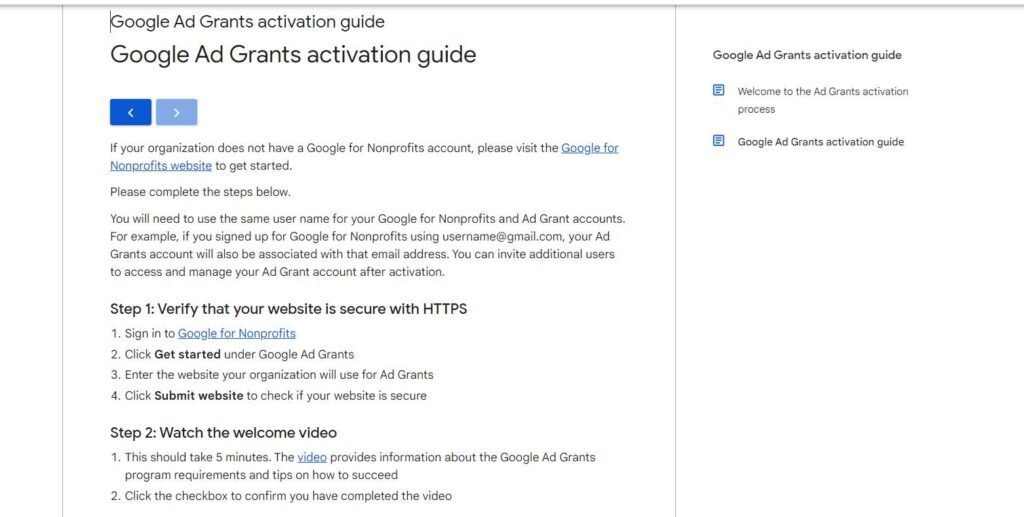
Setting up a Google Grants account involves several steps. First, your nonprofit must be registered with Google for Nonprofits. Once approved, you can apply for the Google Ad Grants program. The application process includes verifying your nonprofit status and agreeing to Google’s terms and policies. After acceptance, you’ll set up your Google Ads account, create campaigns, and start running ads. It’s important to follow Google’s guidelines closely to maintain eligibility and make the most of your grant.
Step-by-Step Guide
1. Qualify for Google for Nonprofits:
- Your organization must meet specific criteria to qualify for Google for Nonprofits. This includes having a valid 501(c)(3) status in the United States or equivalent status in other countries.
2. Create a Google for Nonprofits Account:
- Visit the Google for Nonprofits website and start the application process.
- Provide required information about your organization, including legal name, website, mission, and tax-exempt status.
- Google will verify your organization’s eligibility through a third-party verification process.
3. Activate Google Ad Grants:
- Once your Google for Nonprofits account is verified, you can activate the Google Ad Grants program.
- Sign in to your Google for Nonprofits account and locate the Google Ad Grants section.
- Follow the on-screen instructions to submit your application for Ad Grants.
- Google will review your application and notify you of their decision.
4. Create and Optimize Ad Campaigns:
- If your application is approved, you will receive a Google Ads account with an advertising budget of $10,000 per month.
- Create compelling ad copy and landing pages that align with your nonprofit’s mission.
- Utilize relevant keywords to target your desired audience.
- Continuously monitor and optimize your campaigns for maximum impact.
Requirements for Google Ad Grants
- 501(c)(3) status or equivalent tax-exempt status in other countries.
- Active website with clear information about your organization’s mission and programs.
- Adherence to Google Ads policies, including guidelines for nonprofits.
- Commitment to maintaining a good click-through rate (CTR) and ad relevance.
- Willingness to monitor and optimize ad campaigns regularly.
Additional Tips:
- Start with a small number of well-targeted ad groups.
- Use strong, persuasive ad copy that highlights your nonprofit’s impact.
- Create high-quality landing pages that are relevant to your ads.
- Track your campaign performance and make necessary adjustments.
- Utilize Google Analytics to measure website traffic and conversions.
Keyword Research for Nonprofits
Keyword research is the foundation of any successful PPC campaign. It involves identifying the words and phrases that potential supporters use when searching for information related to your cause.
Using tools like Google Keyword Planner, Moz, and SEMrush, you can discover high-traffic, low-competition keywords to target.
Remember Following:
- Who are you trying to reach? Donors, volunteers, or supporters?
- What are their needs and interests? What problems are they trying to solve?
- Where are they located? This can help you refine your search terms.
General Keywords:
- animal welfare
- animal rescue
- animal adoption
- donate to animals
- animal charity
Specific Keywords:
- dog adoption [city]
- cat rescue [city]
- support animal shelters
- donate to animal shelters
- volunteer animal care
Long-Tail Keywords:
- how to adopt a rescue dog
- best cat food for rescue cats
- low-cost spay and neuter programs
- where to donate old blankets for animals
- volunteer opportunities for animal lovers
Remember:
- Analyze your competition: See what keywords your competitors are using.
- Focus on relevant keywords: Choose keywords that accurately reflect your nonprofit’s mission and services.
- Consider search intent: Understand why people are searching for specific keywords.
- Use a mix of keywords: Combine general, specific, and long-tail keywords for better reach.
Focus on keywords that align closely with your nonprofit’s mission and services to attract the most relevant audience. Implementing these keywords strategically in your ads will improve their performance and relevance.
Creating Compelling Ad Copy
Effective ad copy is crucial for capturing attention and driving action. Start with a strong, engaging headline that communicates the value of your nonprofit.
- Clearly State Your Mission: Explain your nonprofit’s purpose and impact in a concise manner.
- Effect: Increases relevance and resonates with potential donors.
- Example: “Empowering education for underprivileged children in Africa”
- Use Emotional Triggers: Appeal to emotions like compassion, hope, or urgency.
- Effect: Encourages empathy and prompts action.
- Example: “Help a child access clean water today”
- Highlight the Impact: Quantify the difference donations can make.
- Effect: Demonstrates tangible results and motivates giving.
- Example: “£10 feeds a family of four for a week”
- Include a Strong Call-to-Action (CTA): Directly ask for donations or sign-ups.
- Effect: Encourages click-throughs and conversions.
- Example: “Donate now and change a life”
- Use Social Proof: Mention partnerships, awards, or recognition.
- Effect: Establishes credibility and trust.
- Example: “In partnership with UNICEF, making a difference globally”
- Optimize for Mobile: Ensure ad copy is concise and readable on mobile devices.
- Effect: Improves mobile click-through rates and engagement.
- Example: Use shorter sentences and focus on key messages
- Test and Refine: Continuously test ad copy variations and refine based on performance data.
- Effect: Identifies top-performing ad copy and improves overall campaign effectiveness.
- Example: Test different CTAs, such as “Donate now” vs. “Learn more”
Follow with a concise description that highlights the benefits of supporting your cause, and include a compelling call-to-action (CTA) that encourages clicks. Tailoring your ad copy to the specific needs and interests of your audience can significantly enhance engagement and conversion rates.
Optimizing Landing Pages
A high-converting landing page is crucial for nonprofit PPC campaigns, as it can significantly amplify donations, volunteer sign-ups, and advocacy efforts. Ensure your landing page resonates with visitors by clearly communicating your mission, showcasing impactful stories, and providing a seamless donation experience. Key elements include a compelling headline, engaging content, a prominent call-to-action (CTA), and effortless navigation. Use powerful images, testimonials, and recognition to establish trust and credibility, ultimately inspiring visitors to support your cause. By optimizing your landing pages, you can increase conversions, maximize your nonprofit’s online impact, and further your mission.
Video content can be really helpful to illustrate the progress/work efforts.
A high-converting landing page is essential for the success of your PPC campaigns. Ensure that your landing page is relevant to the ad and provides a seamless experience for the visitor.
- Headline: Help Us Empower Education for Underprivileged Children
- Content: Every £10 donation provides a child with access to education for a month. Your support can change lives.
- CTA: Donate Now and Empower a Child’s Future
- Trust Element: Recognized by Charity Navigator and supported by [partner organization]
By tailoring your landing page to your nonprofit’s specific needs and goals, you can create a compelling and effective experience for visitors, driving support and furthering your mission.
Key elements include a clear headline, engaging content, a strong CTA, and easy navigation. Use images and testimonials to build trust and credibility. By optimizing your landing pages, you can increase conversions and maximize the impact of your PPC efforts.
Targeting the Right Audience
Understanding and targeting the right audience is vital for any PPC campaign. Utilize demographic data, geographic targeting, and behavioral insights to reach individuals most likely to support your nonprofit. In Washington D.C., consider factors like local interests, demographics, and regional behaviors. Tailoring your campaigns to the specific characteristics of your audience will improve relevance and engagement.
Budgeting and Bidding Strategies
Effective budgeting and bidding strategies can maximize the return on your PPC investment. Set a realistic budget based on your overall marketing goals and the cost of keywords in your niche. Use bidding strategies that align with your campaign objectives, whether it’s maximizing clicks, conversions, or impressions. Regularly review and adjust your budget and bids to ensure optimal performance and cost efficiency.
Tracking and Measuring Success
Tracking and measuring the success of your PPC campaigns is crucial for continuous improvement. Use tools like Google Analytics and Google Ads to monitor key metrics such as click-through rates (CTR), conversion rates, and cost per acquisition (CPA). Analyzing this data helps you understand what’s working and what needs adjustment. Regularly refining your strategies based on performance insights will lead to better results over time.
Common Challenges and Solutions
Nonprofits often face unique challenges in PPC advertising, such as limited budgets and high competition. Overcoming these obstacles requires strategic planning and innovative solutions. For example, leveraging Google Grants can offset budget constraints, while A/B testing ad copy and targeting can improve efficiency. Additionally, staying up-to-date with PPC trends and best practices will help your nonprofit stay competitive.
Integrating PPC with Other Marketing Strategies
Integrating PPC advertising with other marketing strategies can amplify your results. Combining PPC with SEO can improve your overall online visibility, while social media advertising can extend your reach. Email marketing campaigns can also benefit from PPC by driving traffic to specific landing pages. A cohesive, multi-channel approach ensures that your message reaches a broader audience and reinforces your nonprofit’s mission.