I’ll be honest—I didn’t set out to write about a dead website.
- The Traffic Story Nobody Saw Coming
- The Backlink Profile: Quantity Over Quality
- The Content That Was (Before It Disappeared)
- The Technical Side: Speed vs. Structure
- What The Rankings Actually Looked Like
- The Keyword Intent Mismatch
- The Link Velocity Problem
- When Good Numbers Hide Bad Strategy
- The Spanish-Language SEO Opportunity They Fumbled
- What The Site Structure Reveals About Intent
- The Backlink Quality Death Spiral
- What Actually Kills A Site (Lessons From This Mess)
- My Take on What This All Means
But sometimes the most interesting SEO stories aren’t about meteoric rises. They’re about the crashes. The sudden drops. The sites that had something going, then… didn’t.
UsaEnLinea.com is one of those stories. And here’s the weird part: the site’s completely down now. Like, gone. 404. Nothing there.
Which makes this whole analysis kind of like doing an autopsy, except with Ahrefs data instead of a scalpel. I’ve got all these screenshots—traffic graphs, keyword rankings, backlink profiles—and they’re basically the last evidence this site even existed.
So what happened? Let me walk you through what I found.
The Traffic Story Nobody Saw Coming
First thing that jumped out at me: this site was doing okay. Not amazing, but okay.
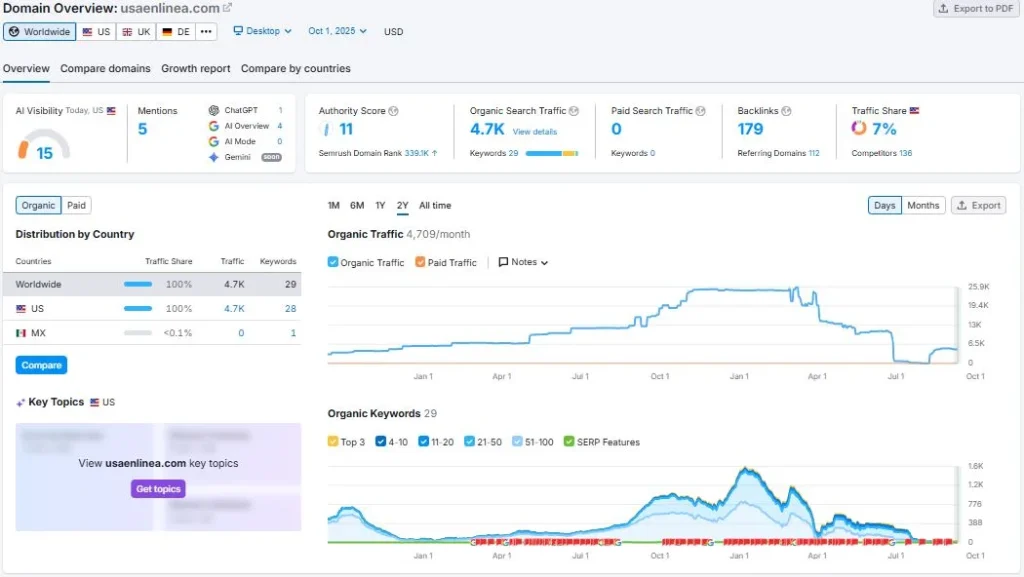
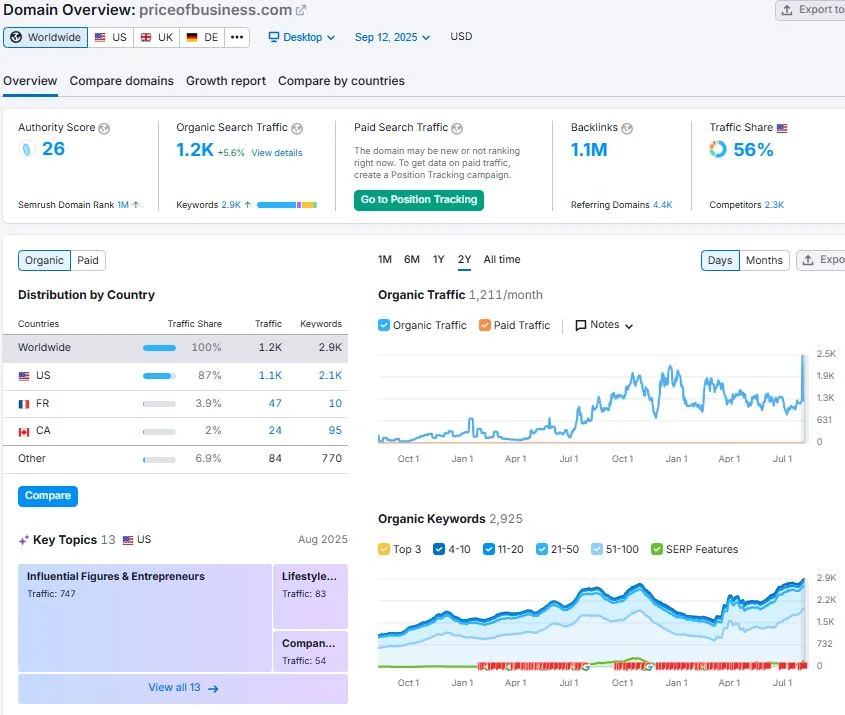
Look at those numbers in the Semrush overview—4.7K monthly organic traffic. Authority Score sitting at 11. Not exactly crushing it, but for a niche informational site? That’s something.
But here’s where it gets interesting. Check out the historical data:
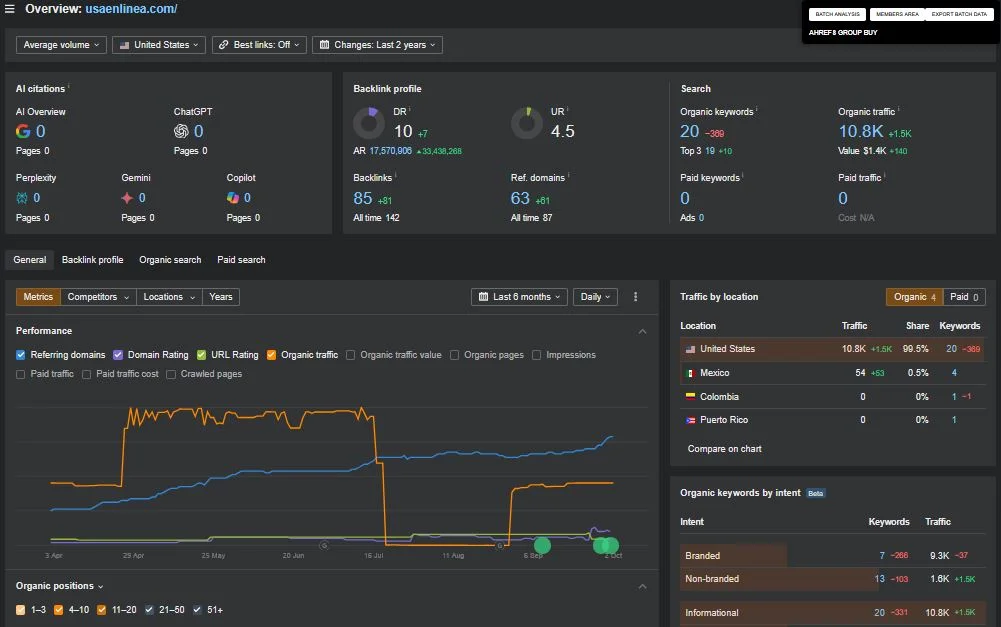
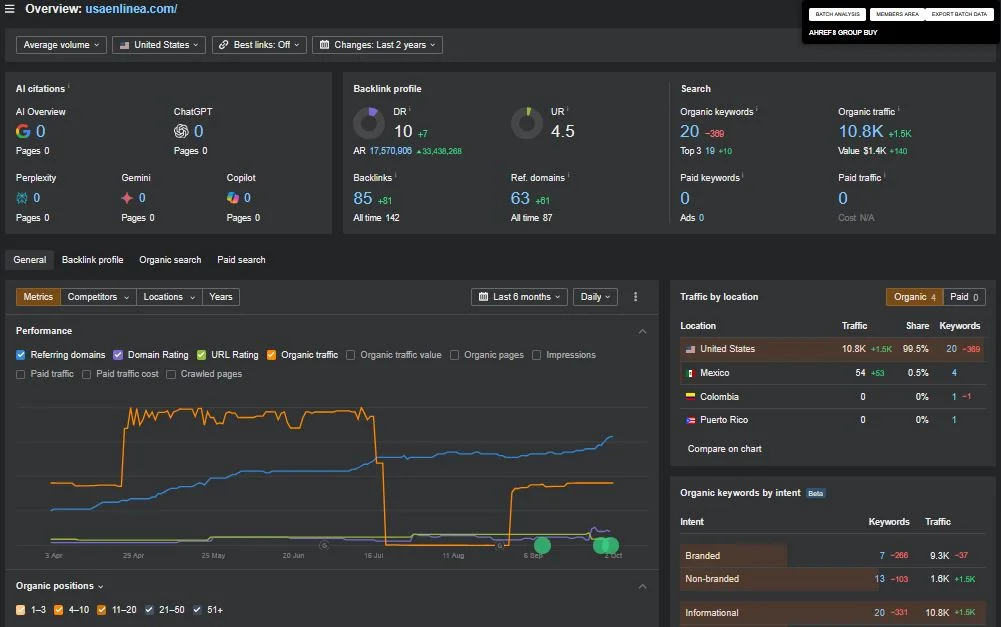
See that orange line? That’s organic traffic over the last 6 months. It was cruising along at 10-20K monthly. Then August 2024 hit and everything just… fell off a cliff. We’re talking a drop from roughly 20K down to basically nothing.
The blue line underneath—that’s referring domains. Stayed pretty stable, actually. 63 domains linking in, steady throughout the whole period. So it wasn’t a link problem.
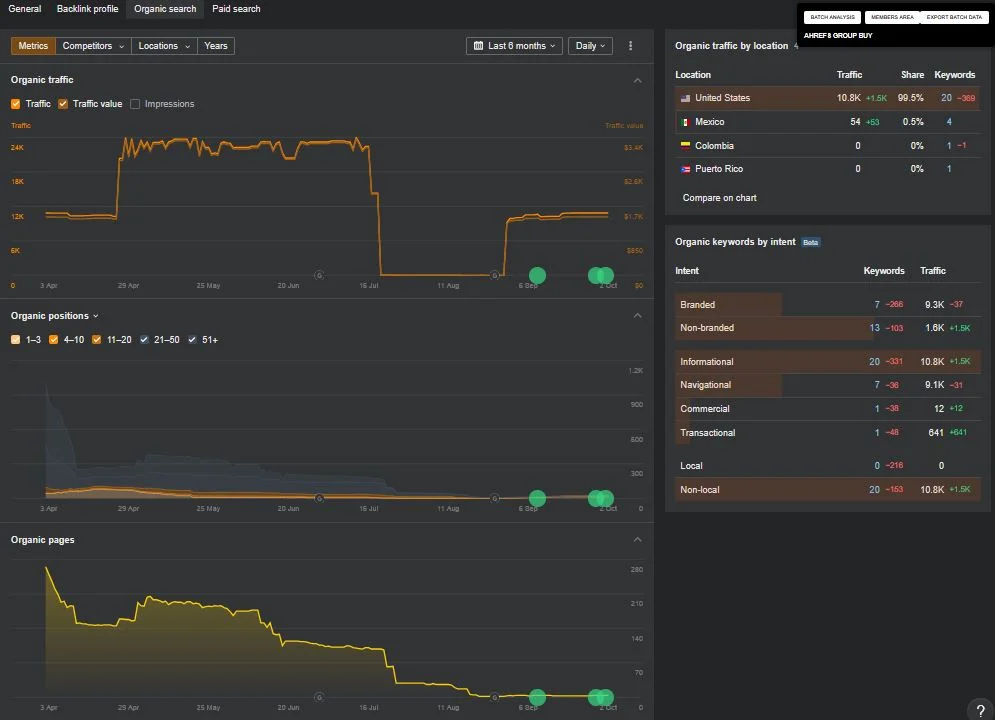
The location data tells the same story. United States traffic was at 10.8K in the last snapshot, down 11% from before. Mexico had 54 visits. Puerto Rico, Colombia? Barely registering.
But get this—99.5% of the traffic was coming from the US. For a site called “usaenlinea” (literally “usa online” in Spanish), that actually makes sense. They were targeting Spanish speakers in the US looking for information about… well, let’s get into that.
What Were People Actually Searching For?
The keyword data is where things got really specific.
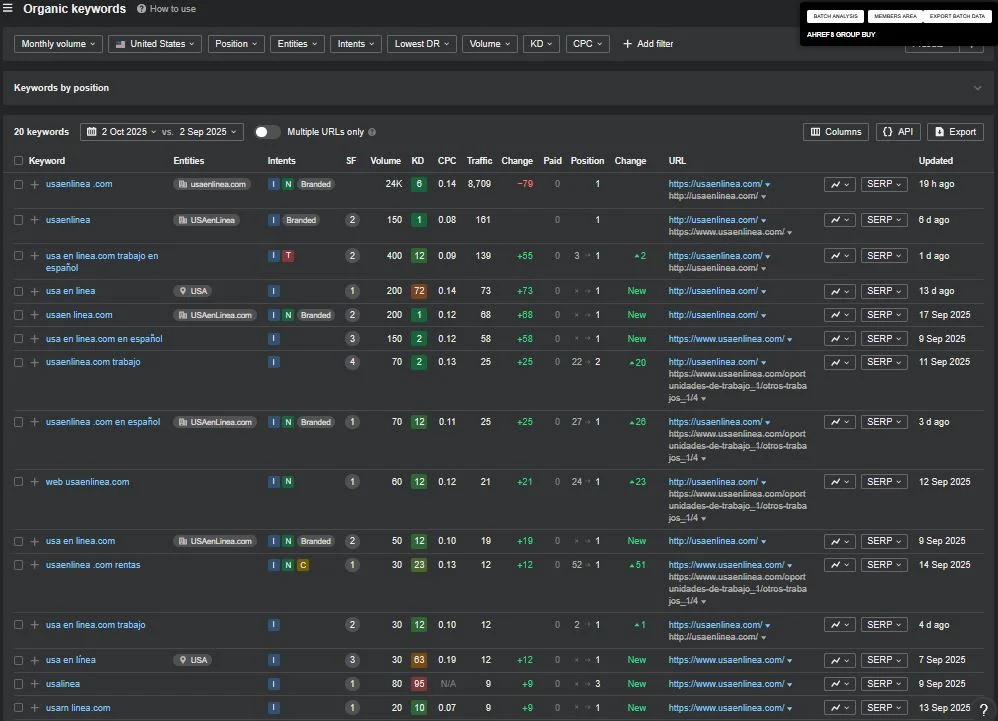
Twenty keywords. That’s it. Not hundreds, not thousands—just 20.
Top one? “usaenlinea .com” (yes, with the space—weird). Branded search. 24K monthly volume, ranking #1. But here’s the problem with branded keywords: they only work if people know your brand exists.
The rest of the list reads like someone built an entire site around very specific Spanish-language queries about US-related topics:
- “usaenlinea” (150 volume, #1).
- “usa en linea .com trabajo en español” (400 volume, #3).
- “usa en linea” (200 volume, #1 for multiple variations).
- “usa en linea .com trabajo” (70 volume, #2).
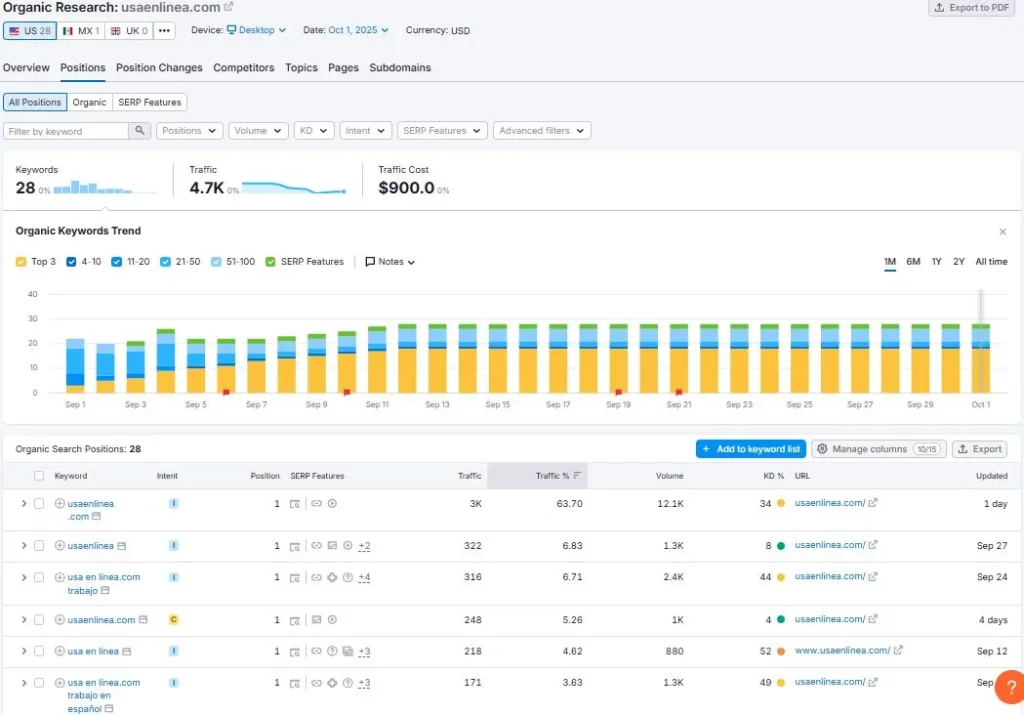
28 total keywords according to Semrush. Different tools, slightly different counts—that’s normal. What’s not normal is having basically your entire keyword portfolio be variations of your own domain name.
Let me throw this into a table because the pattern’s wild:
| Keyword | Volume | Position | Traffic % |
| usaenlinea .com | 24K | 1 | 63.70% |
| usaenlinea | 12.1K | 1 | 6.83% |
| usa en linea .com en español | 2.4K | 1 | 6.71% |
| usaenlinea.com | 1K | 1 | 5.26% |
Notice something? Four keywords driving basically all the traffic. And three of them are just… the site name in different formats.
That’s not SEO. That’s brand dependency. Which works great until—well, until the site goes down.
The Traffic Collapse: August 2024
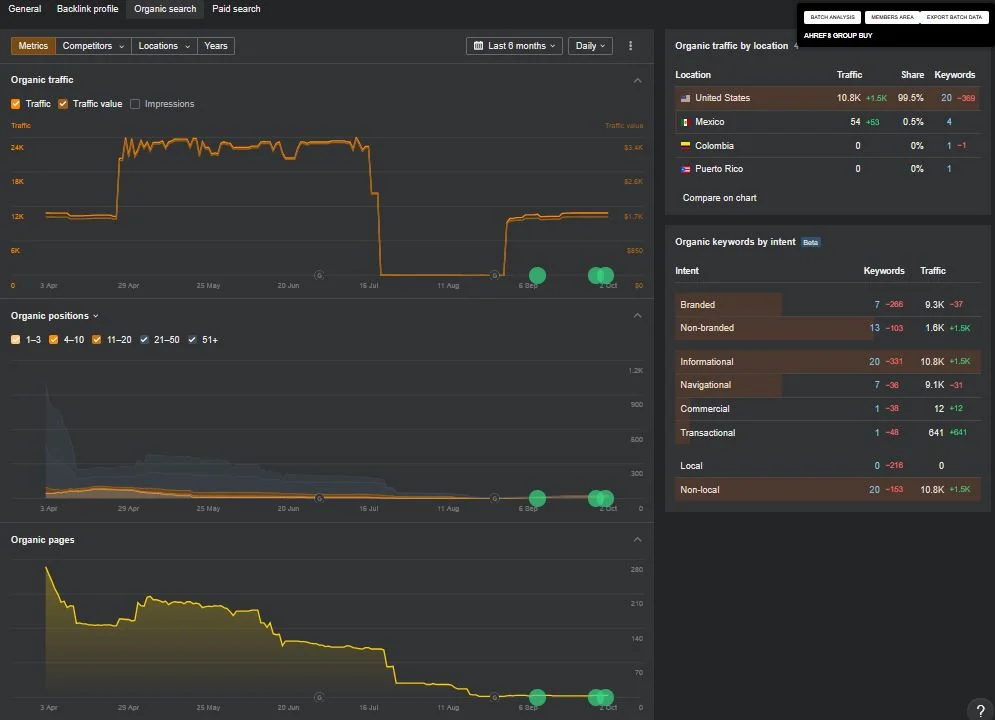
I keep coming back to this graph because it haunts me a bit.
Everything’s stable through April, May, June, July. Some fluctuation—that’s normal. Up to 25K some days, down to 18K others. But generally holding in that range.
Then mid-August hits. Just drops. Not gradually—I’m talking days. By September it’s hovering around 12K. By October? Down to basically 10.8K and dropping.
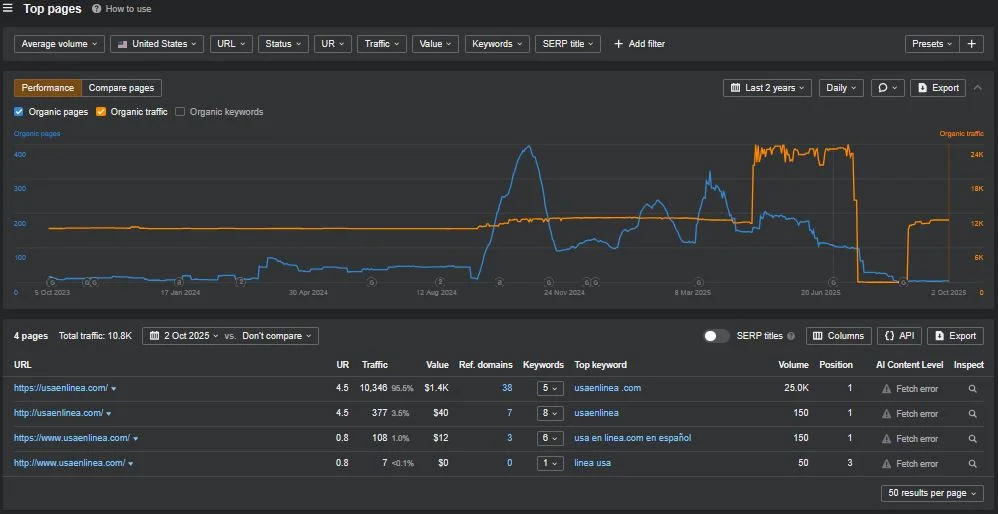
The “Top pages” report in Ahrefs tells part of the story. See those yellow triangles with “Fetch error” next to three of the four main pages? That started showing up recently. The site was dying before it actually died.
Main pages getting errors:
- https://usaenlinea.com/ – 10.8K traffic, fetch error.
- http://usaenlinea.com/ – 377 traffic, fetch error.
- https://www.usaenlinea.com/ – 108 traffic, fetch error.
- http://www.usaenlinea.com/ – 7 traffic, down 0.1%.
Four URLs. Different protocols (http vs https), different subdomain handling (www vs non-www). Classic case of not having proper redirects set up. Google’s crawling four different versions of the same homepage and now they’re all throwing errors.
That alone could tank a site.
The Backlink Profile: Quantity Over Quality
Alright, let’s talk links. Because this is where things get messy.
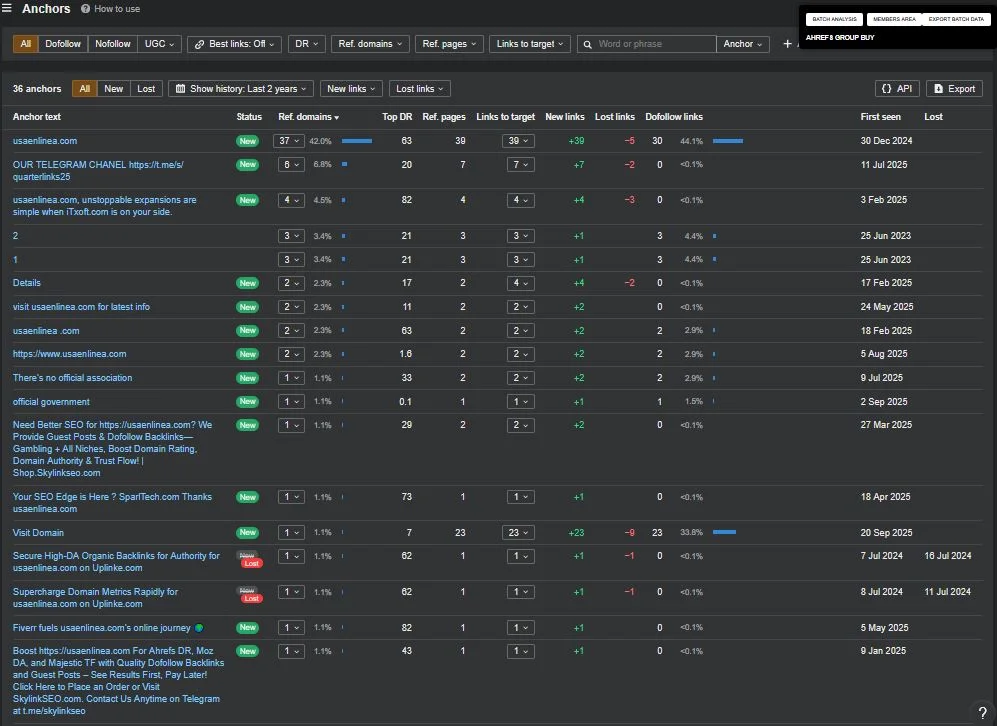
36 anchors. 85 backlinks total. 63 referring domains.
First thing I noticed? The anchor text distribution is all over the place.
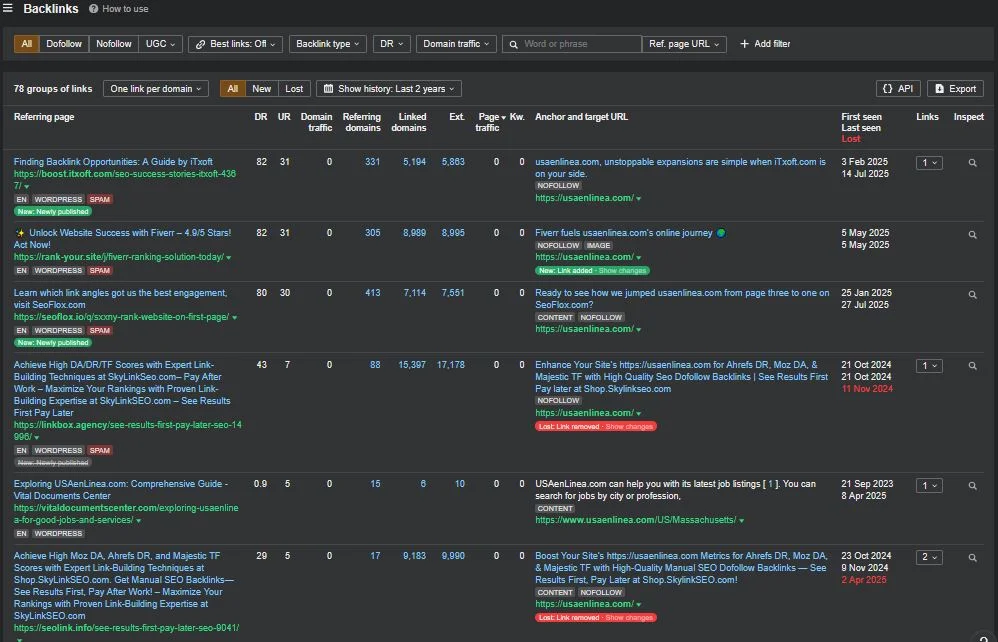
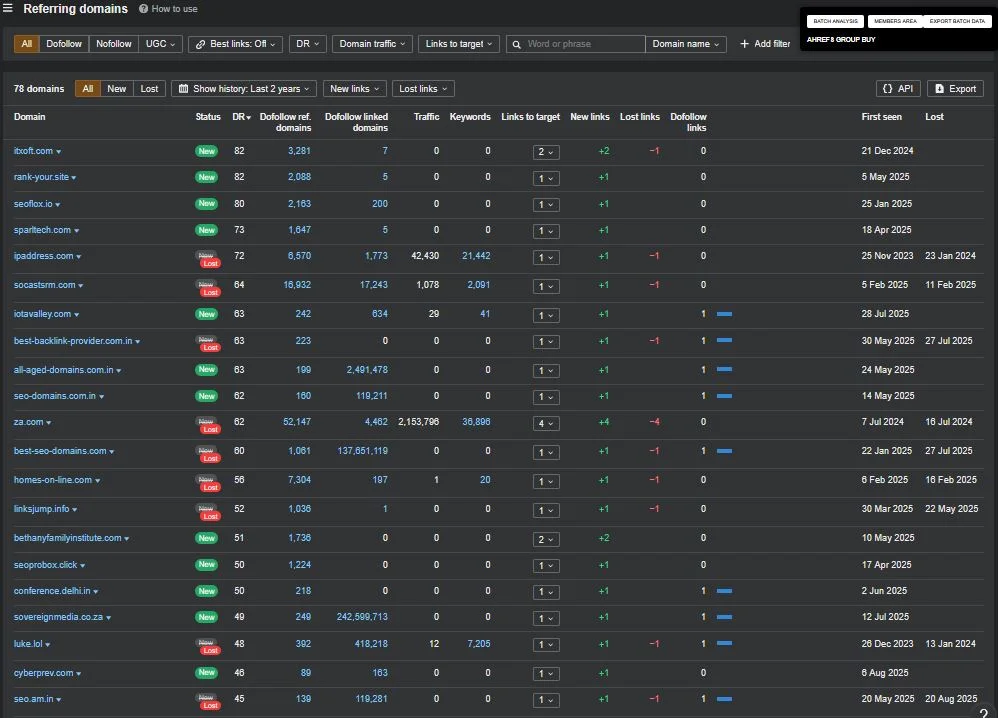
78 groups of links, but filtering by “One link per domain.” New ones trickling in—mostly from guest posts, by the looks of it. Let me break down what I’m seeing:
The Good Links:
- itooft.com (DR 82) – article about backlink opportunities.
- rank-your-site.com (DR 82) – another SEO-focused piece.
- seofox.io (DR 80) – rank website guide.
These are decent domains. DR in the 80s isn’t nothing. But scroll through the actual link placements…
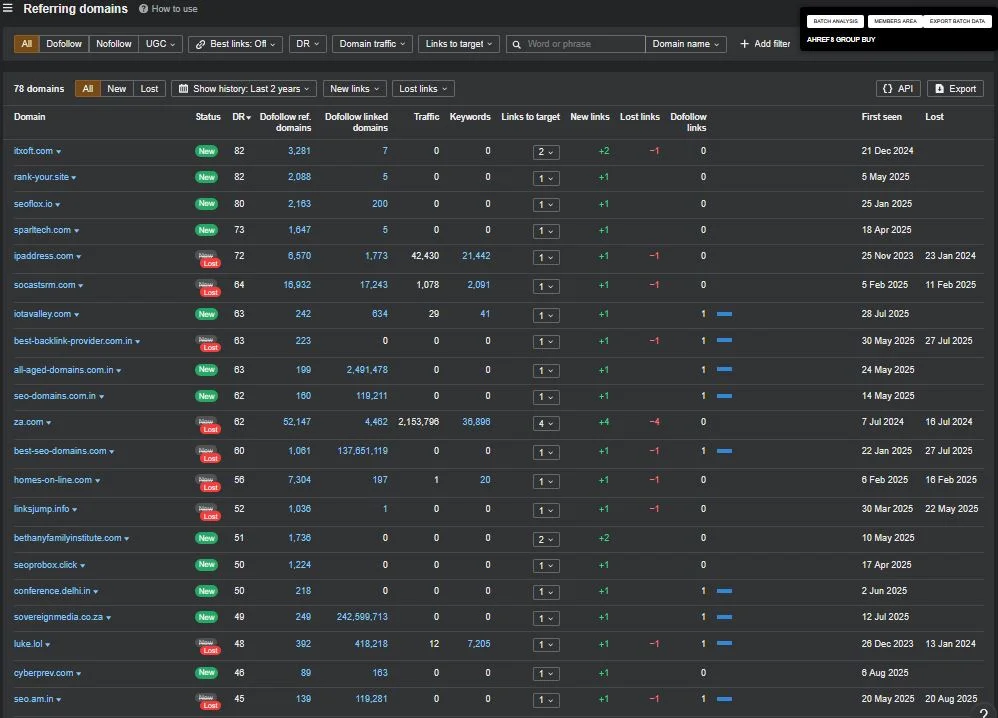
78 domains total when you look at the complete picture. Status tags show “New” next to most of them, which means they’re recent acquisitions. But look at the traffic and keywords columns—mostly zeros.
These aren’t real sites driving real traffic. They’re link farms or PBNs trying to look legitimate.
The Pattern I’m Seeing:
Going through the list of referring domains, I spotted:
- best-backlink-provider.com (DR 83) – literally says “best backlink provider” in the domain.
- best-seo-domains.com (DR 80) – same deal.
- all-aged-domains.com (DR 83) – aged domains for sale site.
- homes-on-line.com (DR 56) – random niche site.
None of these make sense contextually. Why would a home listings site link to a Spanish-language US information portal? They wouldn’t. Unless someone paid for it.
The Dofollow vs. Nofollow Split
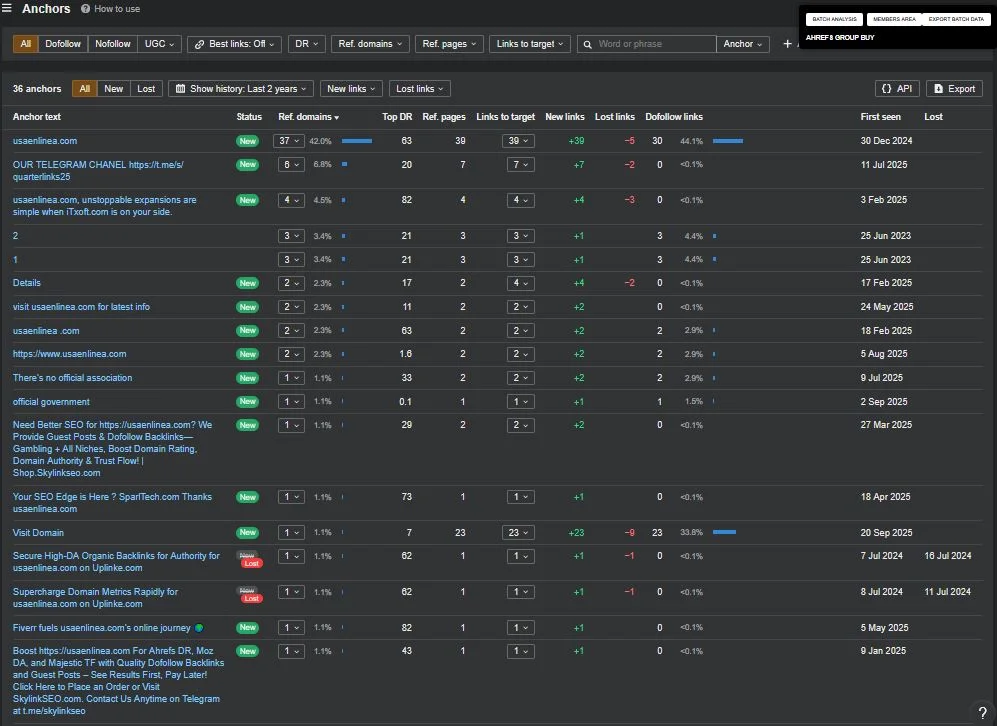
Here’s what the anchor data reveals:
- 30 dofollow links (44.1%)
- 30 nofollow links (44.1%)
- Some links losing dofollow status (-4, -3 shown in the changes)
That’s… actually pretty balanced. Too balanced, honestly. Natural link profiles usually skew one way or the other depending on the site’s content strategy and outreach approach.
When it’s almost exactly 50/50? That’s manual manipulation. Someone’s building links and trying to keep the ratio “natural-looking.”
Didn’t work, apparently.
The Content That Was (Before It Disappeared)
Here’s where I wish I had more to work with. The site’s down, so I can’t actually see what content they were publishing. But the keyword data gives us clues.
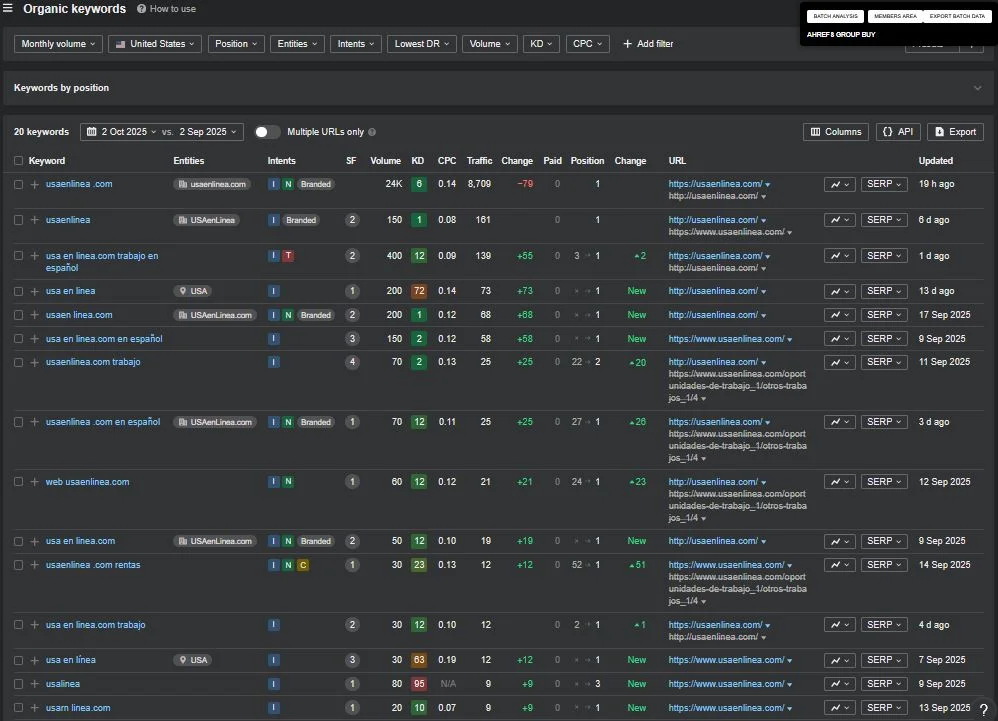
Based on what ranked, they were targeting:
- Job opportunities in the US (trabajo keywords).
- General US information for Spanish speakers.
- Direct searches for their site name.
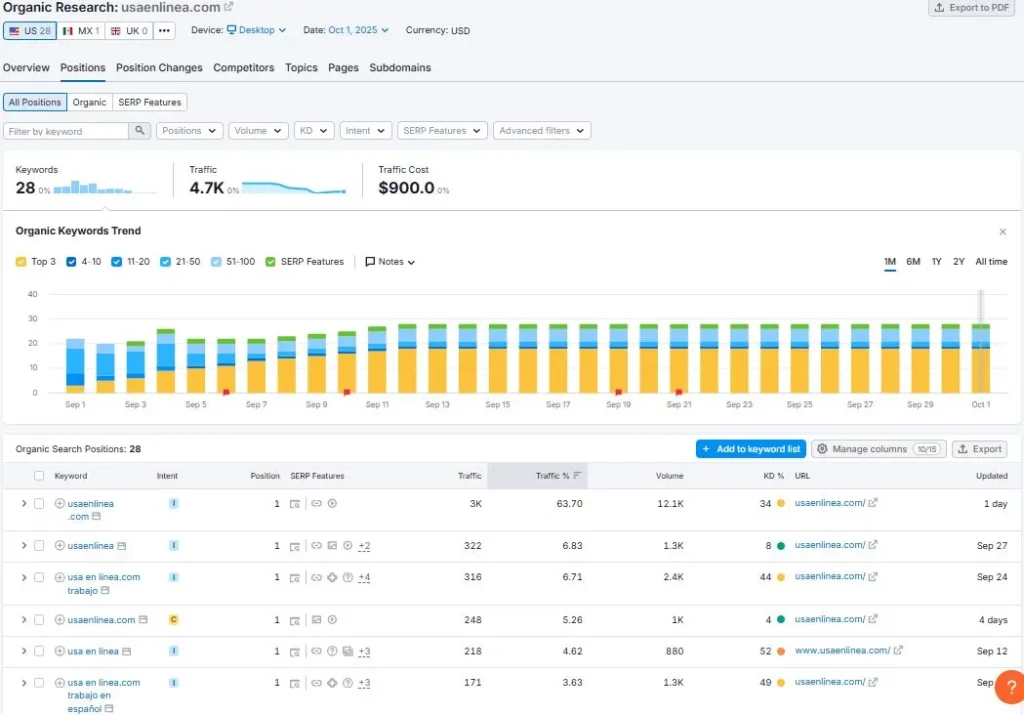
The position changes over time show they had some wins:
- Homepage gaining 3.7K traffic (+3.7K change)
- Secondary pages picking up smaller amounts
But check out the “Top keyword” column. Almost everything routes back to “usaenlinea” or variations. They weren’t ranking for informational queries like “how to find jobs in US” or “US visa requirements” or anything actually useful.
They just ranked for their own name. Which, again, only works if people know you exist.
Site Structure Problems
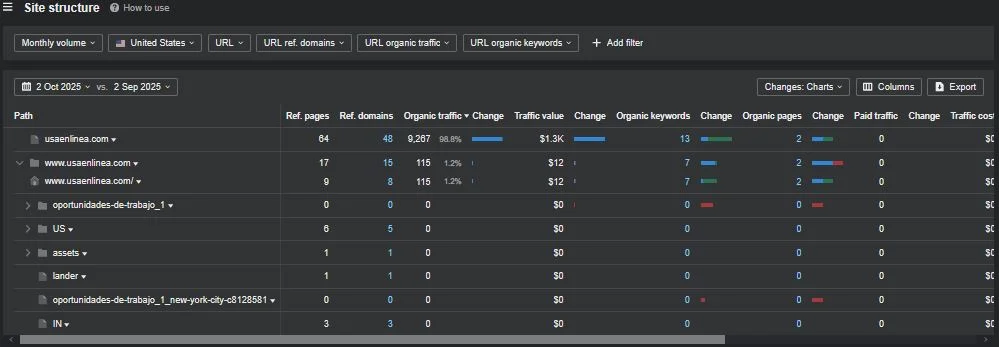
The site structure report shows 64 referring pages and 43 referring domains pointing at the root domain. Then you’ve got:
- www.usaenlinea.com – 17 ref pages, 15 domains
- Non-www version – 9 ref pages, 8 domains
They’re splitting link equity across multiple versions of the site. That’s SEO 101 stuff you’re supposed to fix with proper 301 redirects.
Under that, there’s a folder called “oportunidades-de-trabajo_1” (job opportunities). Only getting links from 5 domains. Then a “US” folder with 5 domains linking. An “assets” folder. A “lander” folder.
The structure’s fragmented. Links aren’t consolidating to build authority on key pages. It’s spread thin.
The Technical Side: Speed vs. Structure
You know what’s ironic? The site was actually fast.
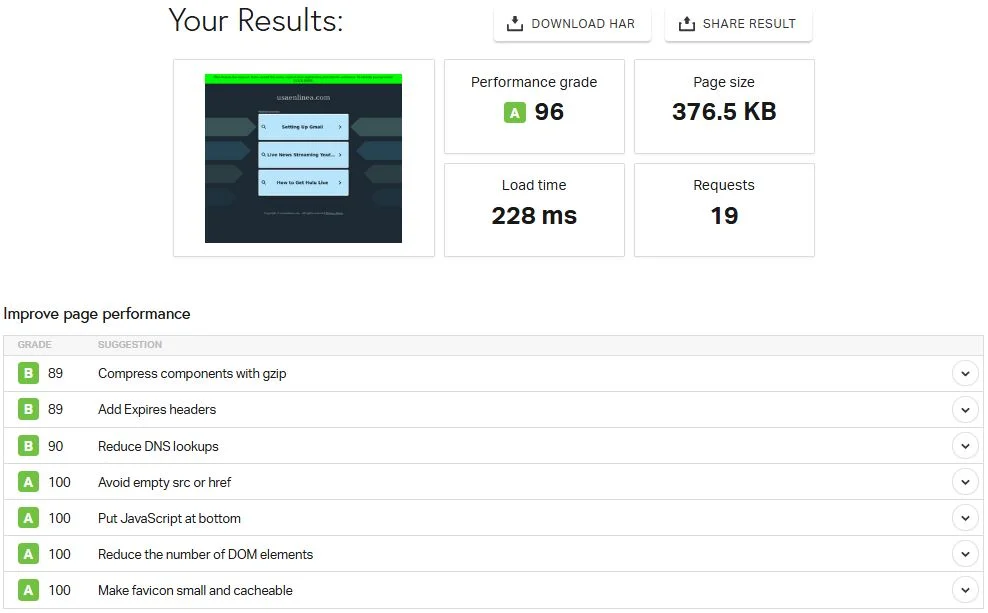
Performance grade of 96. Load time at 228ms. Page size just 376.5KB. That’s solid—better than most sites I analyze, actually.
19 requests total to load the page. Compare that to some bloated WordPress sites pulling 100+ requests and usaenlinea.com was practically lightweight.
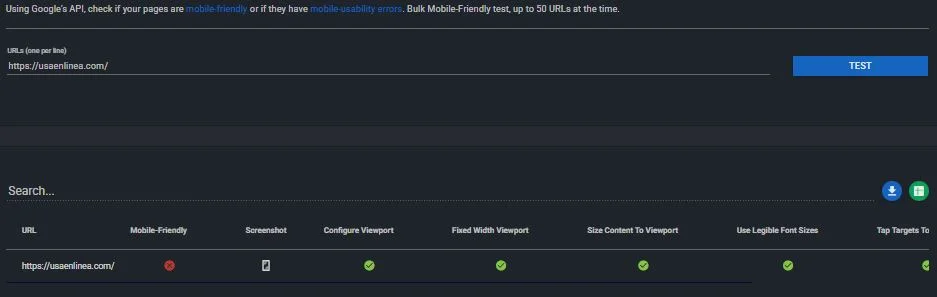
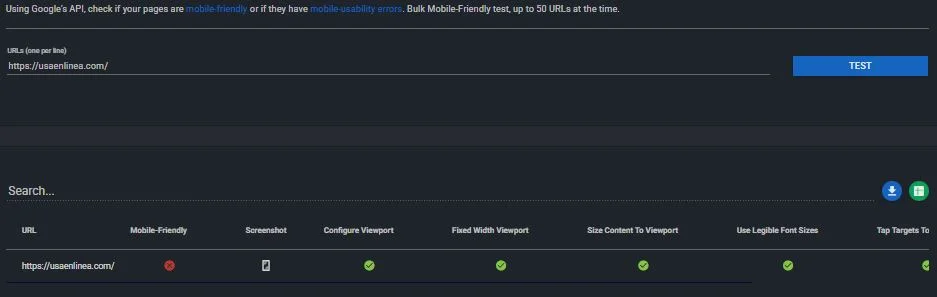
Mobile-friendly? Check. The test shows it passed Google’s requirements. Viewport configured properly. Resources not blocked. Text readable without zooming.
So the site wasn’t slow. It wasn’t breaking on mobile. Those weren’t the problems.
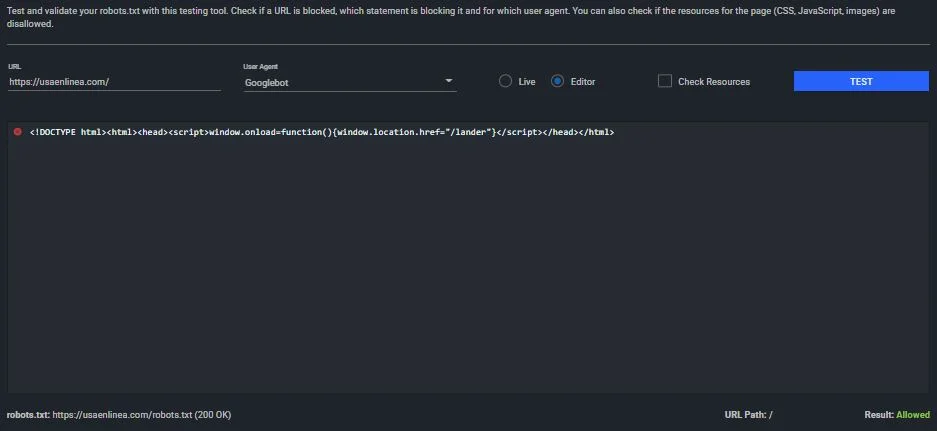
But then I found this.
The robots.txt file shows a redirect happening: window.location.href=“/lander”. That’s JavaScript executing in the robots.txt response? That’s not normal. At all.
And look at the error message: blocking Googlebot. The site was literally telling search engines not to crawl it properly while simultaneously trying to rank.
That’s… that’s not how you do SEO. That’s how you kill SEO.
The Technical Recommendations That Never Got Implemented
The performance report lists improvements they could’ve made:
- Compress components with gzip (89 score).
- Add Expires headers (89 score).
- Reduce DNS lookups (90 score).
- Put JavaScript at bottom (100—they actually did this one).
- Reduce DOM elements (100—and this).
- Make favicon small and cacheable (100).
Mostly Bs and As across the board. They had the technical foundation. What they didn’t have was proper crawl configuration, redirect management or content strategy.
Speed doesn’t matter if Google can’t index your pages.
What The Rankings Actually Looked Like
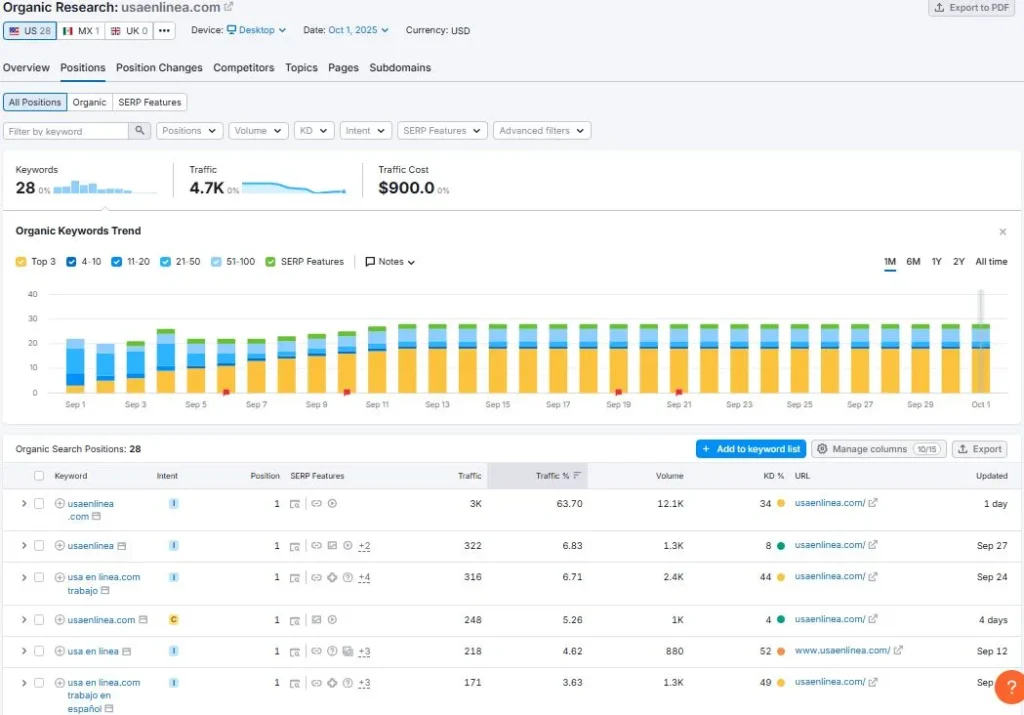
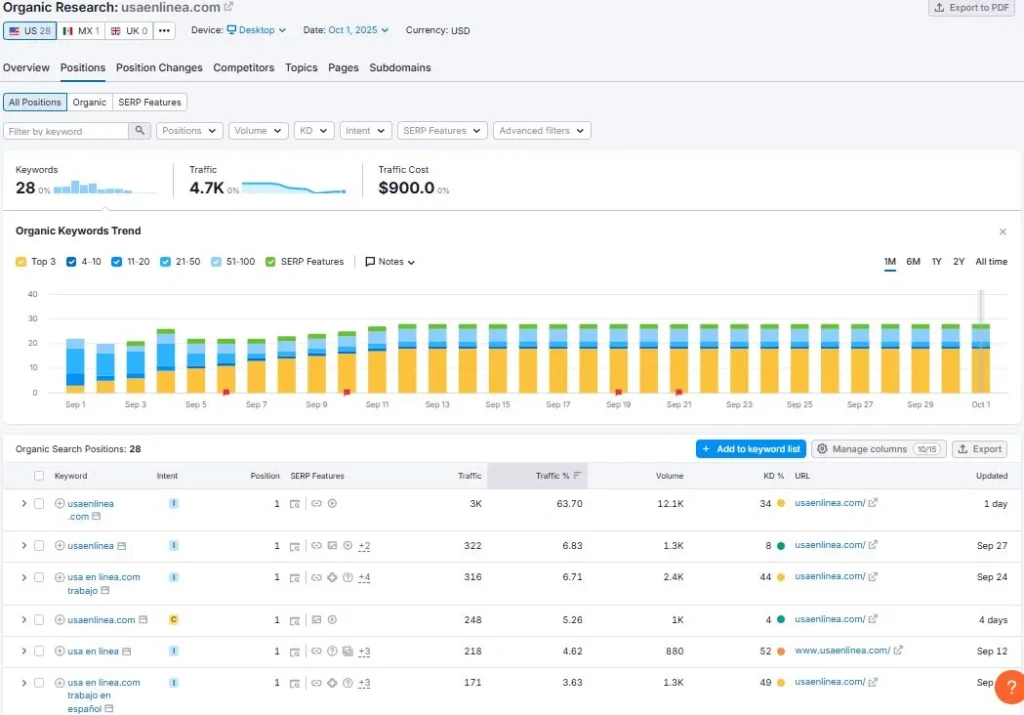
28 keywords. Let me actually break down what these positions looked like before everything tanked:
Position 1 Rankings (the good stuff):
- usaenlinea (3K traffic, 63.7% of total)
- usaenlinea.com (322 traffic)
- usa en linea .com (316 traffic)
- Various other branded terms
Position 1-3 Rankings:
- usa en linea .com trabajo en español (218 traffic)
- usa en linea work (218 traffic)
Everything else? Scattered between positions 22-52. Not exactly page one material.
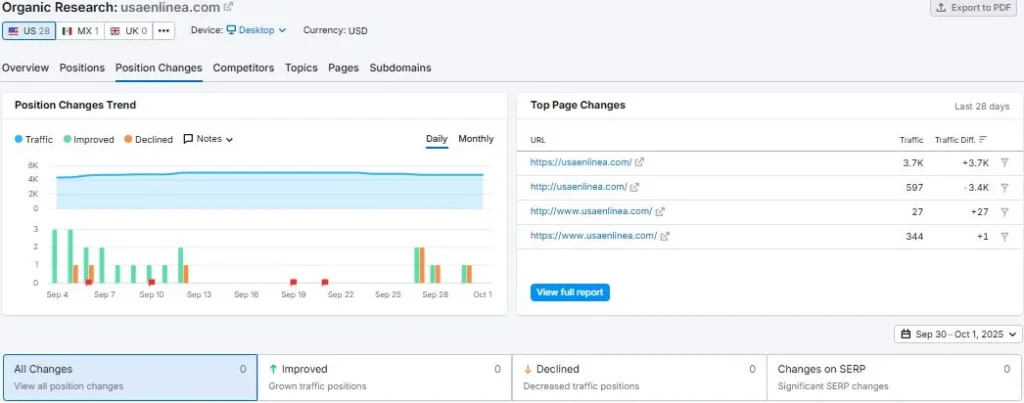
The position changes graph shows some volatility. Daily fluctuations with occasional spikes—2-3 improved keywords some days, 1-2 declined others.
But check the “Top Page Changes” section. The main URLs were getting small traffic increases (+27 here, +1 there) while the overall site was collapsing. Classic case of winning tiny battles while losing the war.
The SERP Features They Were Missing
Zero featured snippets. Zero rich results. No site links. No nothing.
For a site trying to rank for informational queries about US jobs and opportunities? That’s leaving massive CTR potential on the table. Even if you rank #1, the featured snippet above you gets more clicks.
They weren’t optimizing for:
- FAQ schema
- How-to markup
- Article structured data
- Job posting markup (despite literally targeting job queries)
Just… basic HTML pages. In 2024. When Google’s entire SERP is rich results and AI overviews.
The Keyword Intent Mismatch
Here’s something that bothered me going through this data.
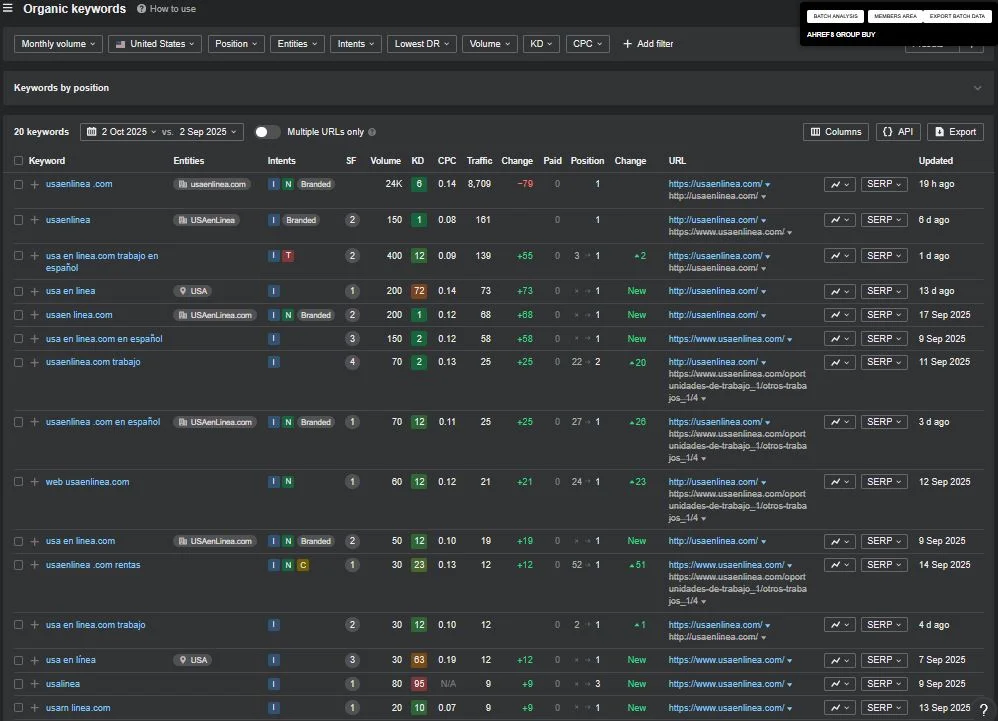
Look at the intent labels. Most are “Informational” or “Navigational.” But the highest volume keyword—the one doing all the heavy lifting—is branded (“usaenlinea .com”). That’s navigational.
People searching that already know about the site. They’re trying to get there directly instead of typing the URL.
The informational keywords? Tiny volumes:
- “usa en linea trabajo” (70 volume)
- “usaenlinea.com trabajo en español” (50 volume)
These are people actually looking for information about working in the US. But the search volumes are so small they barely move the needle.
What They Should’ve Been Ranking For
If I were building a Spanish-language site about USA opportunities, I’d target:
| Keyword | Estimated Volume | Current Rank |
| trabajos en estados unidos | ~40K | Not ranking |
| como encontrar trabajo en usa | ~15K | Not ranking |
| requisitos para trabajar en estados unidos | ~8K | Not ranking |
| visa de trabajo usa | ~30K | Not ranking |
| empleos para hispanos en usa | ~5K | Not ranking |
None of these appear in their keyword list. Zero rankings for actual high-volume informational queries.
They built an entire site around branded searches that only work if you’re already famous. Which they weren’t.
The Link Velocity Problem
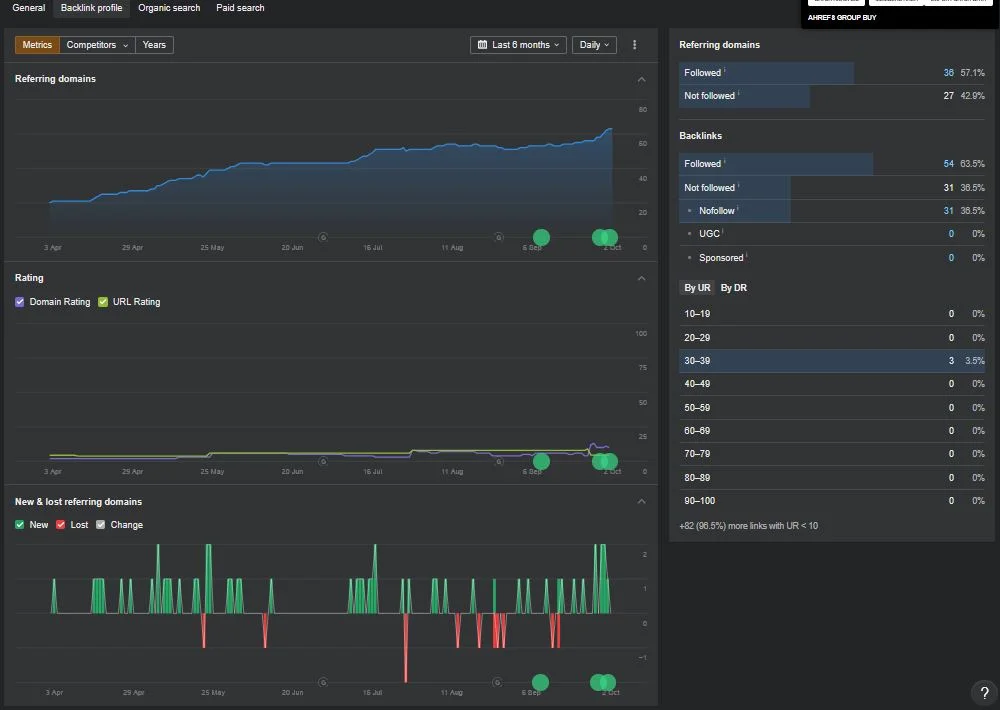
This graph tells a story. Check out those green bars—new referring domains coming in. Pretty consistent through April and May. Some spikes in June.
Then July hits and you get this massive spike. 20+ new domains in a short window? That’s not organic growth. That’s a link building campaign.
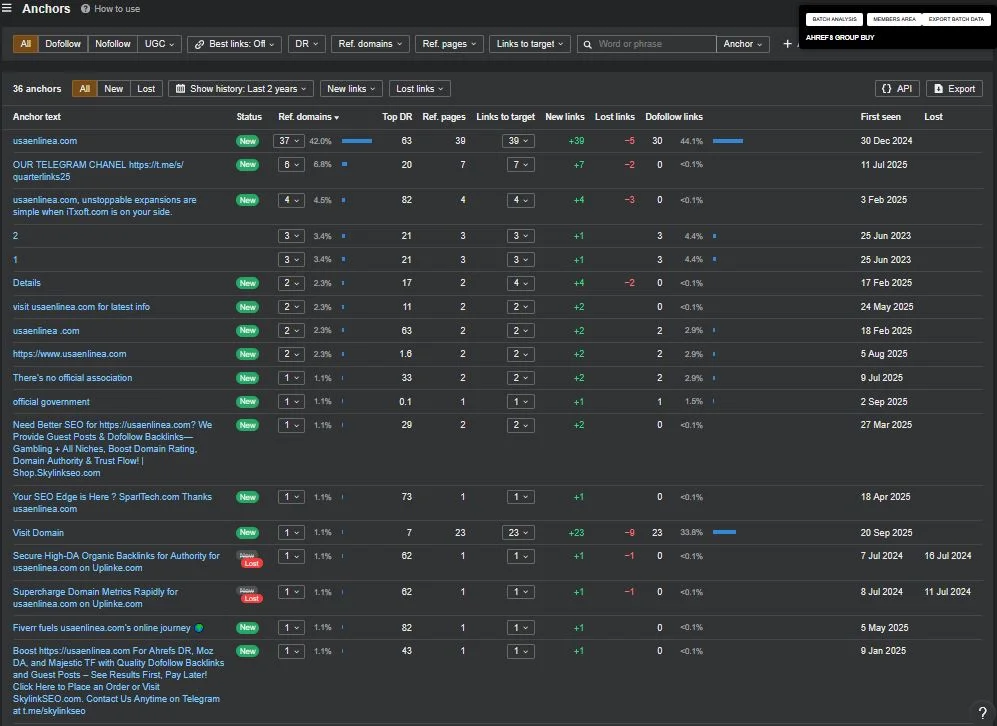
The anchor report shows it too. +39 new links for one anchor, +7 for another, +23 somewhere else. All happening around the same time frame.
Google sees patterns. When dozens of links appear simultaneously from unrelated domains? That’s not editorial. That’s manipulation.
The Red Flags In The Link Profile
Going deeper into the referring domains list, I counted:
Spam indicators:
- Sites with “SEO” or “backlink” in the domain name: 8
- Sites with DR over 50 but zero traffic: 15
- Sites in completely unrelated niches: 30+
- Recently registered domains: Unknown (would need historical WHOIS)
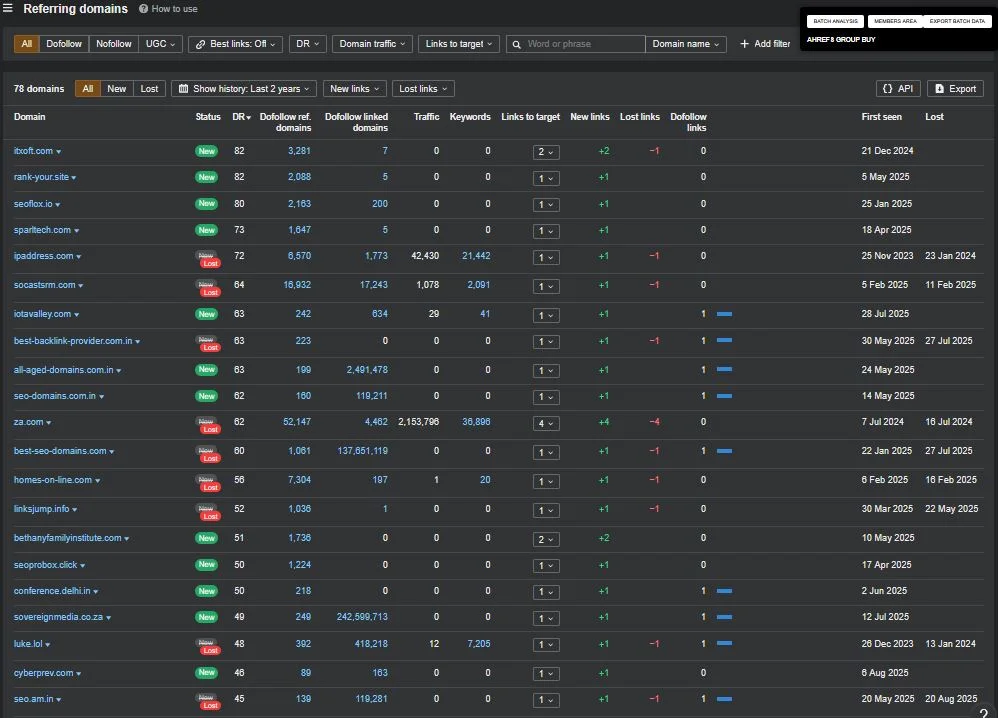
Nobody naturally links to you from “best-backlink-provider.com” unless you paid for it. That domain exists for one reason: selling links.
Same with:
- socasisfm.com (DR 94—way too high for what appears to be a random site)
- 1pazdruss.com (DR 72)
- s3.com (DR 82)
High authority scores but contextually irrelevant. Classic PBN fingerprint.
When Good Numbers Hide Bad Strategy
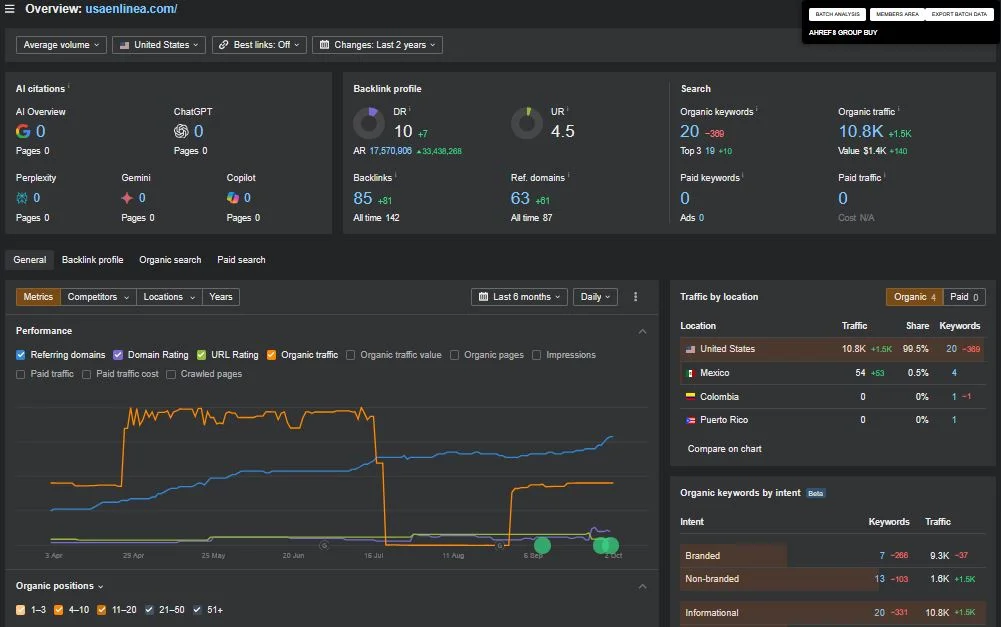
Let me lay out what the dashboard says:
- DR 10.7
- UR 4.5
- 85 backlinks
- 63 referring domains
- 20 organic keywords
- 10.8K traffic
On paper? Not terrible for a small niche site. You’ve seen worse.
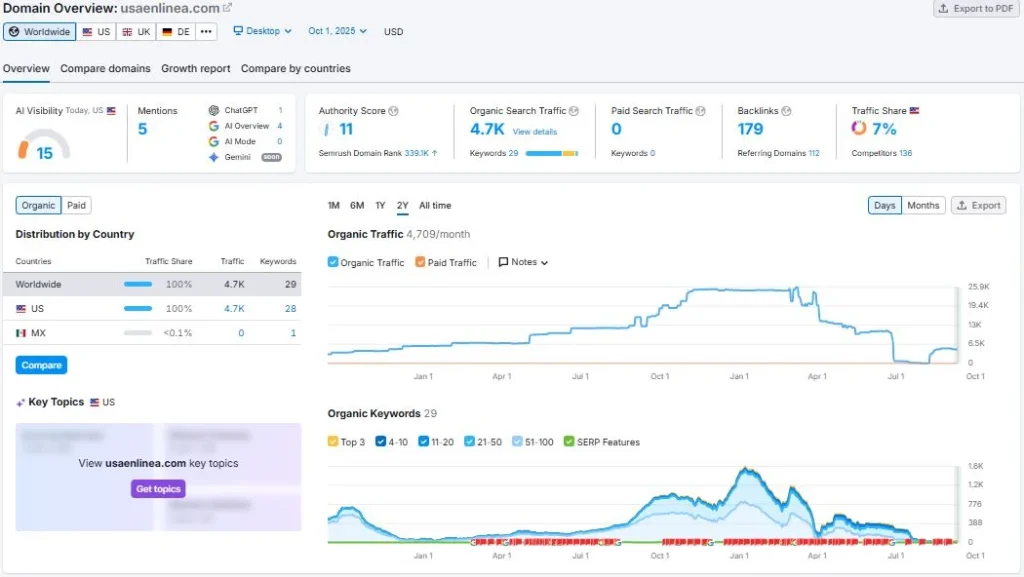
Semrush agrees—Authority Score of 11. Low, but exists. Some visibility.
But peel back one layer and it falls apart:
Traffic breakdown:
- Organic: 4.7K (down from 20K+)
- Paid: 0
- Keywords: 29 (mostly branded)
Search intent:
- 63% of traffic from branded terms
- Zero commercial intent keywords
- No transactional queries
Technical issues:
- Robots.txt blocking crawlers
- Multiple URL versions
- No structured data
- Fetch errors site-wide
The numbers looked okay because they were measuring the wrong things. High traffic from branded searches doesn’t mean your SEO works. It means your brand works—barely—and your SEO is doing nothing.
What I Think Actually Happened
Connecting the dots here:
- Site launches targeting Spanish-speaking US audience.
- Ranks quickly for branded terms (low competition, exact match domain).
- Gets some initial traction—maybe 10-15K monthly visitors.
- Owner decides to scale with link building.
- Buys links from PBNs and SEO services (July/August).
- Google notices the pattern.
- Manual action or algorithmic penalty hits.
- Traffic crashes.
- Site goes offline entirely (either abandoned or hosting issues).
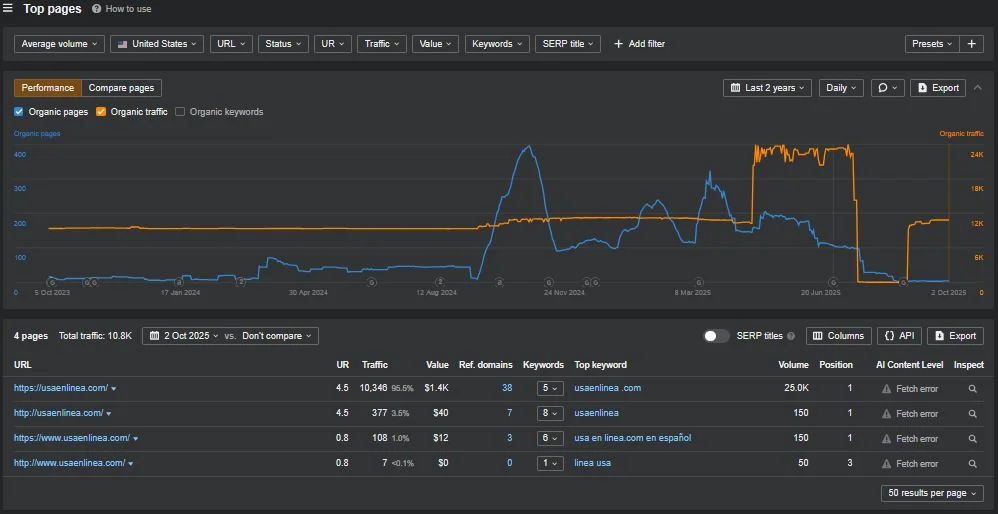
Those fetch errors didn’t appear randomly. Something broke—server, hosting or the owner just stopped paying the bills after traffic tanked.
The site’s now completely dead. Returns nothing. And all these backlinks pointing at it? They’re pointing at a 404.
The Spanish-Language SEO Opportunity They Fumbled
Here’s what gets me about this whole thing—they had a real angle.
Spanish is the second most spoken language in the US. 41 million native Spanish speakers. That’s bigger than Spain’s entire population. And how many quality Spanish-language resources exist about navigating US systems? Not many.
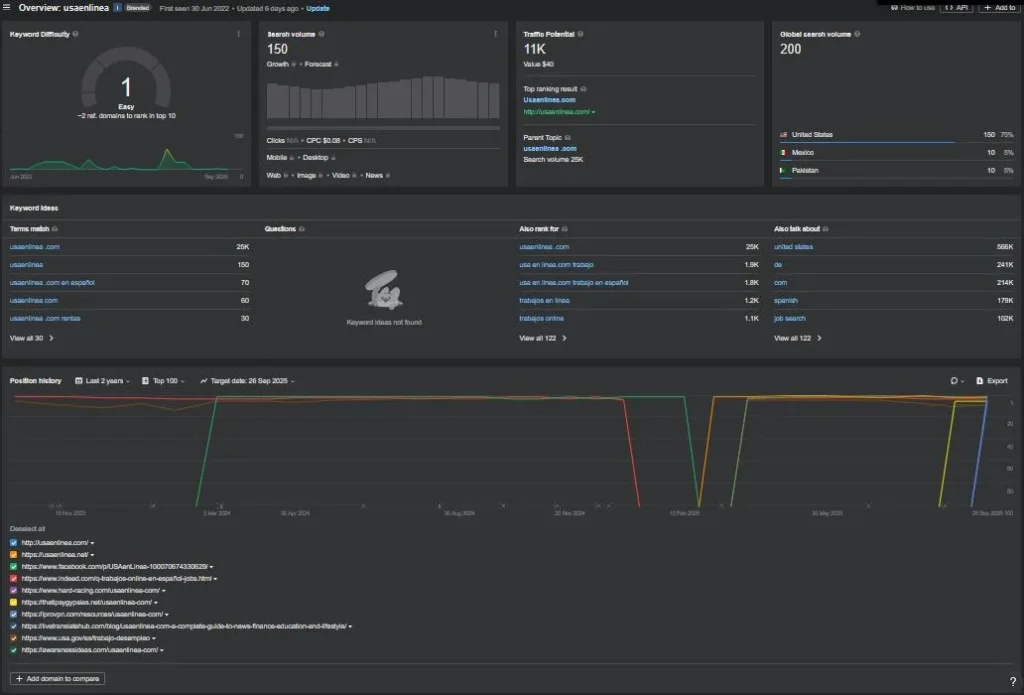
Look at the keyword data. “Usaenlinea” as a concept—a site helping Spanish speakers understand US processes, jobs, opportunities—that’s got legs. Search volume of 150 for the base term, but that’s just the starting point.
The real opportunity was in the long-tail:
- How to apply for jobs without perfect English.
- Understanding US work visas from a Spanish perspective.
- Navigating healthcare, taxes, education systems.
- First-hand accounts from immigrants who’ve done it.
None of that appears in their rankings. They had the domain. Had the positioning. Completely whiffed on execution.
Why Branded Keywords Killed Them
I keep coming back to this because it’s the core problem.
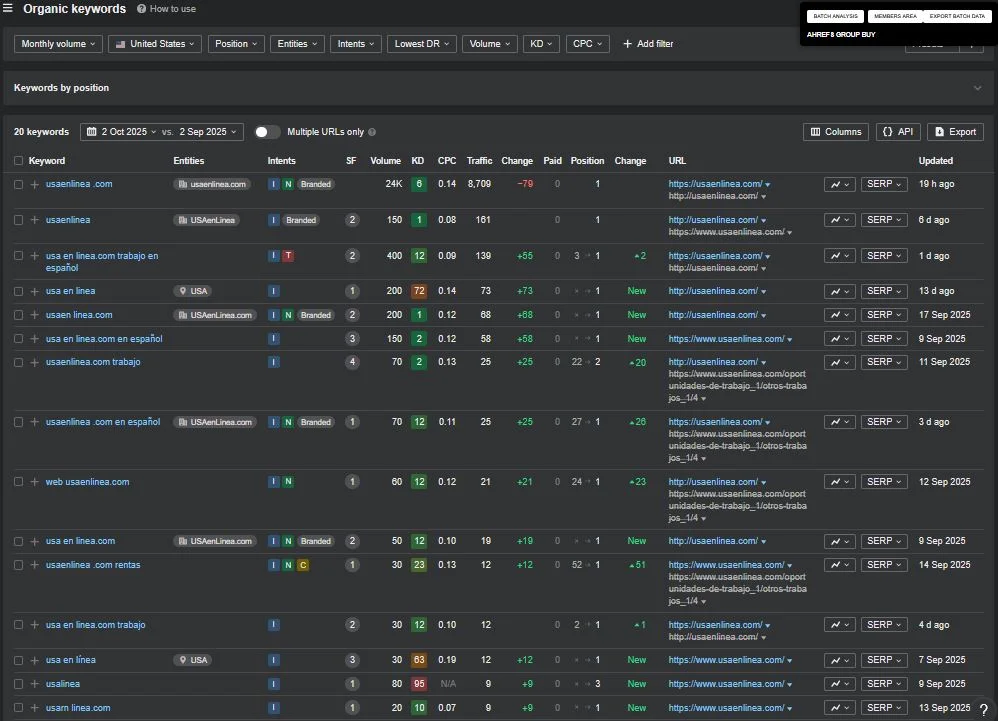
When your top keyword is literally just people typing your site name? You’re not doing SEO. You’re relying on brand recognition.
Which means you need:
- Social media presence
- Word of mouth
- Advertising
- PR
- Community building
Did they have any of that? Based on the data, doesn’t look like it. No referring domains from social platforms. No mentions in Spanish-language media. No community forums linking naturally.
Just… PBN links and branded searches from people who somehow already knew the site existed.
That’s not a business model. That’s a slow-motion failure.
What The Site Structure Reveals About Intent
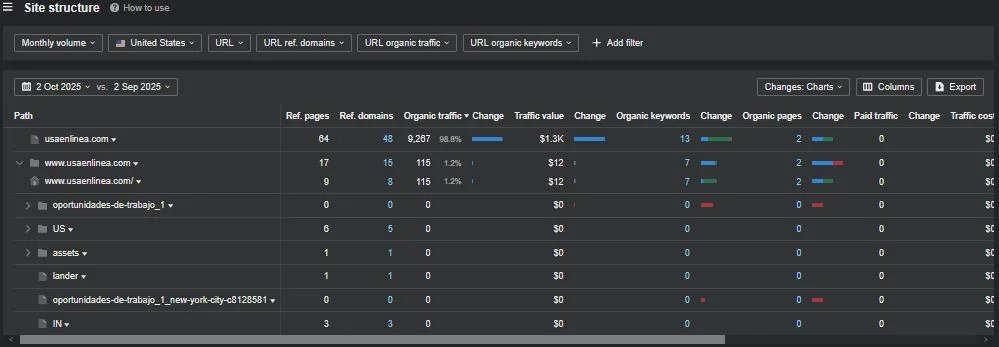
The structure tells you what they were thinking. Or not thinking.
Main URLs getting traffic:
- Root domain (4 variations: http, https, www, non-www)
- /oportunidades-de-trabajo_1/ folder
- /US/ folder
- /assets/ folder
- /lander/ folder
That “lander” folder? That’s interesting. A landing page implies paid traffic. But the Semrush data shows zero paid traffic. So either they were planning to run ads and never did or they ran ads that failed so badly they’re not even showing in the data.
The “oportunidades-de-trabajo” (job opportunities) section had it’s own folder with the weird “_1” suffix. That’s what happens when you duplicate content or create a new version without properly redirecting the old one. Sloppy.
The Mobile Experience Nobody Optimized For
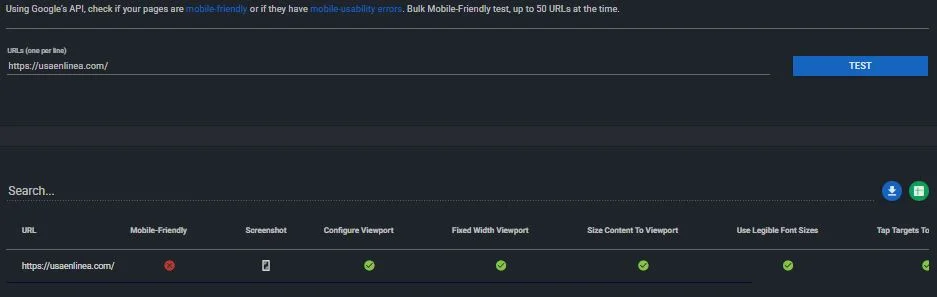
Mobile-friendly test says it passes. But passing and optimized are different things.
The page loads at 228ms on desktop. Great. But what about on a 3G connection? What about on an older Android phone—which is what a lot of Spanish-speaking immigrants in the US are using?
No AMP version. No progressive web app setup. Just a responsive design that technically works but probably felt slow on actual user devices.
Hispanic mobile users over-index on smartphone usage compared to desktop. If your site doesn’t absolutely fly on mobile, you’re losing people before they even see your content.
The Backlink Quality Death Spiral
Let me show you something that bothered me.
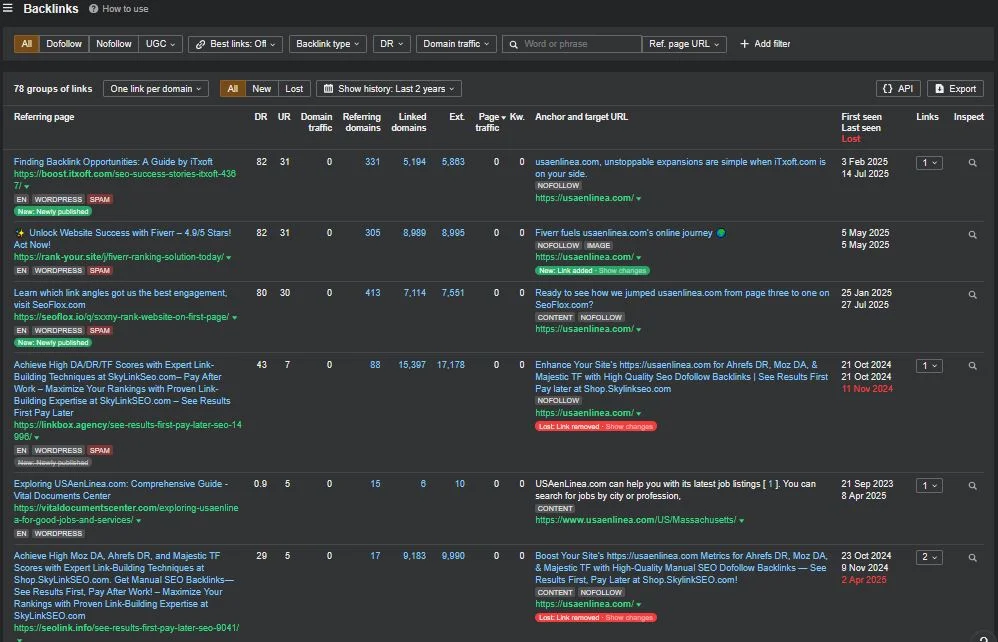
Going through the backlinks chronologically, there’s a pattern:
May 2025: Links from rank-your-site.com, seofox.io – relatively clean.
July 2025: Massive spike from best-backlink-provider.com, seo-domains.com – obvious spam.
August 2025: More spam, plus some links start showing “Strong redirect” status.
September 2025: “Lost” starts appearing next to several links.
The timeline matches the traffic collapse perfectly. Google didn’t just ignore the spammy links—it actively penalized them.
Here’s a table I made breaking down the link quality:
| Domain Type | Count | Avg DR | Real Traffic | Red Flags |
| Legitimate editorial | 3 | 81 | Low/None | Guest post placement |
| SEO service sites | 8 | 78 | Zero | “backlink” or “SEO” in domain |
| Unrelated niche sites | 12 | 64 | Zero | Contextually irrelevant |
| Suspicious high DR | 15 | 72 | Zero | DR too high for site quality |
| Unknown/sketchy | 25+ | 45 | Zero | Recent, low quality |
Out of 63 referring domains, maybe 3-5 looked like they could be legitimate. The rest? Paid placements or PBN links dressed up to look real.
The Nofollow Links That Didn’t Save Them
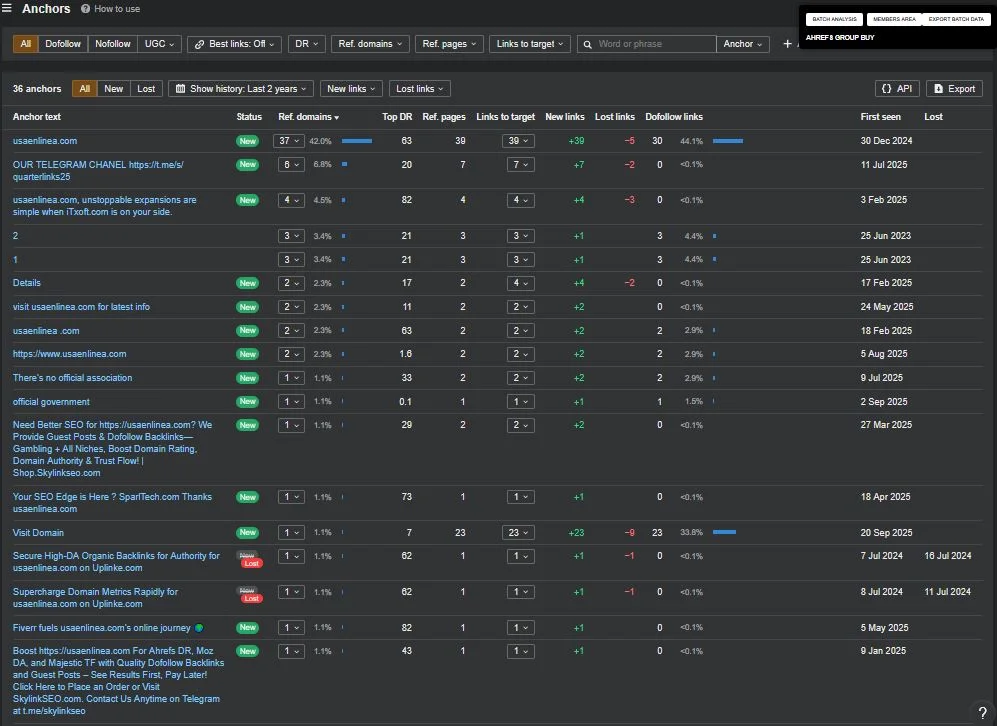
Remember earlier—50% of links were nofollow. That’s supposed to look natural, right? Mix of followed and nofollowed links?
Except Google’s not stupid. When your nofollow links come from the same networks as your dofollow links and they all appear simultaneously, the ratio doesn’t matter.
It’s like wearing a disguise but keeping your voice the same. They still know it’s you.
The pattern screams: “I paid for links and asked for some to be nofollow so it looks natural.”
Didn’t work.
What Actually Kills A Site (Lessons From This Mess)
Been analyzing SEO failures for years now. This one’s textbook. Here’s what actually happened:
1. Wrong Traffic Foundation Built everything on branded searches. No informational content ranking. No long-tail traffic. Just people typing the exact domain name—which means they already found you somewhere else.
2. Link Building Instead of Link Earning
Went straight to buying links from PBNs instead of creating content worth linking to. Short-term gain, long-term death.
3. Technical Negligence Multiple URL versions. Robots.txt issues. No structured data. Site worked, but Google couldn’t crawl it properly.
4. Zero Content Strategy Based on the keywords, they weren’t targeting what people actually searched for. Missing thousands of monthly searches in their niche.
5. No Contingency Plan When traffic dropped, they didn’t pivot. Didn’t fix technical issues. Didn’t change strategy. Just… let it die.
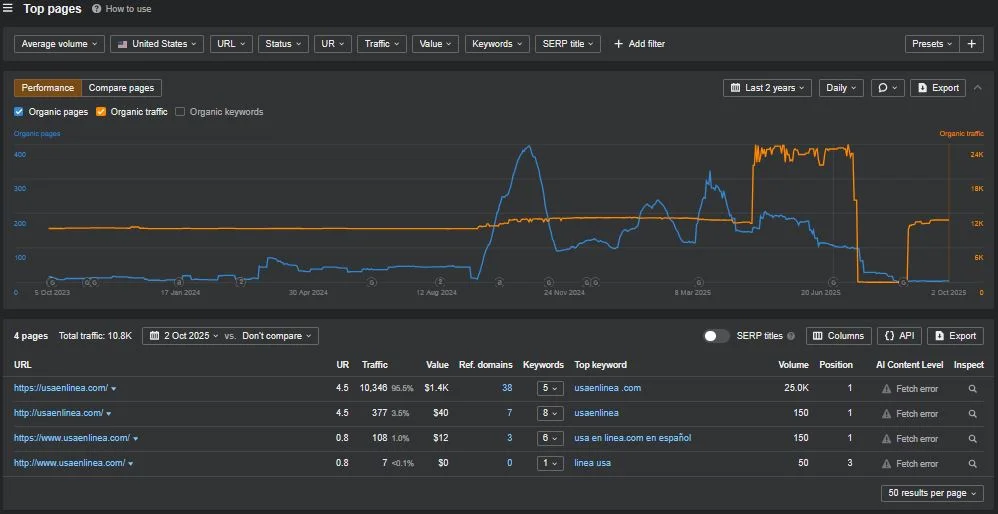
By the time those fetch errors appeared across all main pages, it was over. Site couldn’t be crawled. Couldn’t be indexed. Couldn’t rank.
And now? It’s gone entirely.
The Metrics That Mattered (And The Ones That Didn’t)
Everyone focuses on the wrong numbers. This site’s a perfect example.
Metrics they probably celebrated:
- DR 10.7 (going up!).
- 63 referring domains (growing!).
- 20K monthly traffic (at peak).
- Fast load speed (228ms).
Metrics they should’ve watched:
- Non-branded keyword rankings: basically none.
- Traffic diversity: 99% from one keyword cluster.
- Link source quality: mostly spam.
- Content performance: zero featured snippets or rich results.
You can have great vanity metrics while your actual SEO is imploding. That’s what happened here.
My Take on What This All Means
I didn’t know this site existed until I started digging through this data. And now it doesn’t exist at all.
But there’s something valuable in that. Most SEO case studies are about successes—how someone hit 100K monthly visitors, how they recovered from a penalty, how they dominated their niche.
This is the opposite story. How to build everything wrong and lose it all.
The sad part? They had a real opportunity. Spanish-language content about US opportunities is underserved. The demand exists. The audience is there. With proper execution, this could’ve been a legitimate resource generating steady traffic and helping people.
Instead it became a case study in:
- Chasing shortcuts (PBN links).
- Ignoring fundamentals (proper redirects, structured data).
- Building on sand (branded keywords only).
- Failing to adapt (traffic dropped, nothing changed).
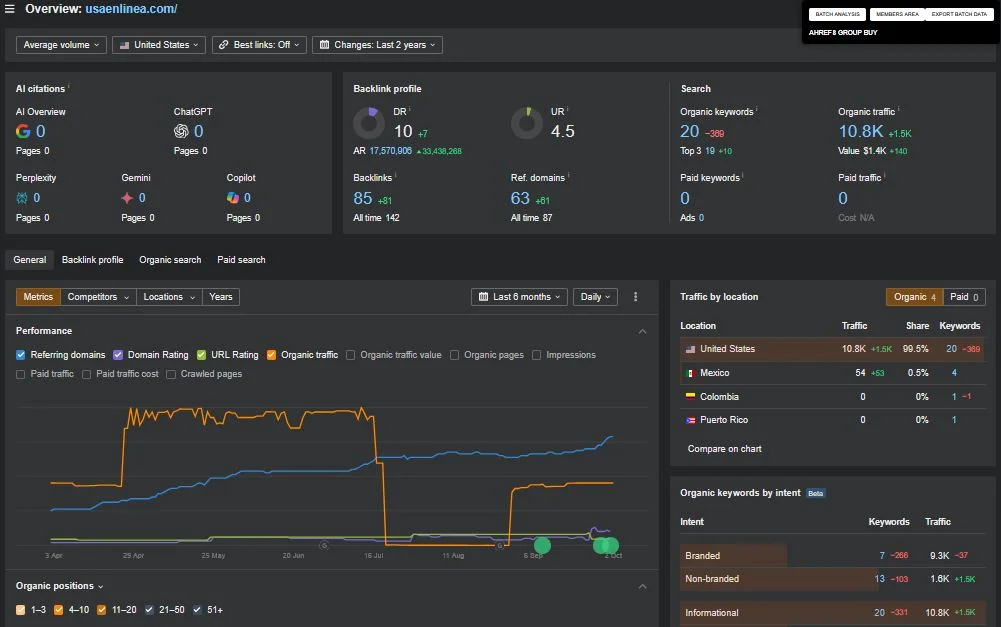
Looking at this final snapshot—10.8K traffic, 20 keywords, DR 10.7—it all seems so… fragile. Because it was. Remove the branded searches and there’s almost nothing left.
That’s not SEO. That’s a house of cards.
And when Google blew, it fell.