Backlink building used to be a grind. Prospecting for sites. Sending outreach emails. Following up (again and again). Writing guest posts. Negotiating placements. And that’s if you were doing it “the right way.” Add in link swaps, shady PBNs, or outsourced spam, and it only got messier.
But here’s the shift: automation isn’t just creeping into backlink workflows, it’s reshaping how off-page SEO is done entirely. Smart SEOs know it’s no longer about sheer volume. It’s about relevance, timing, and scale, without burning through resources.
What’s Actually Broken in Traditional Backlink Building?
According to linkradar.ai, Most off-page SEO in 2024 is either outdated or dangerously inefficient. A few examples:
- Manual prospecting still eats hours a week.
You can’t scale it. Outreach lists get stale. Tools overlap, but don’t integrate. - Success rates are tanking.
Cold emails go unanswered. Editors are swamped. Everyone wants links, few want to link. - Outreach lacks context.
Most pitches sound like templates, and Google knows it. One irrelevant backlink can do more harm than good. - Quality control is inconsistent.
You might land a link, sure, but is it indexed? Do they use nofollow? Is the domain penalized or toxic? These questions often get ignored until it’s too late.
Even well-intentioned SEO teams struggle with all of this, especially when juggling clients across industries.
Enter: Smarter, Automated Link Intelligence
This isn’t about flipping a switch and letting bots run wild. The next generation of backlink solutions is different.
Platforms like LinkRadar use data to drive link opportunities. Not just raw metrics like DR or traffic, but signals that reflect real-world linkability:
- Has this site linked to similar topics in the past?
- Does it mention competitors but not you?
- Is the content fresh and indexed?
- Can this link move the needle, or is it noise?
It’s like prospecting in 3D, powered by actual SEO intent instead of a CSV export and a prayer.
Link Automation ≠ Link Spam
Let’s kill a myth while we’re here. Automation doesn’t mean spammy. It doesn’t mean link farms, mass emails, or AI-written junk.
What it does mean is taking the guesswork out of research. Prioritizing outreach by actual opportunity. Streamlining how teams track results. And cutting down on human error (which, let’s face it, happens a lot when you’re juggling 50 tabs and 12 client deadlines).
Done right, automated backlinking feels like having an analyst on your team, not a robot pretending to be human.
Google’s Noticing, And That’s a Good Thing
Search engines are getting smarter. They’re reading between the links. Relevance, placement, and freshness matter more than ever.
Automated tools that surface high-context link targets are actually more aligned with Google’s direction than traditional mass outreach. Think about it:
- Topical backlinks from recent, high-quality content.
- Brand mentions that fit naturally in context.
- Pages that get crawled and indexed quickly.
That’s what Google rewards. Automation just helps you find those needles in the haystack, faster than your intern ever could.
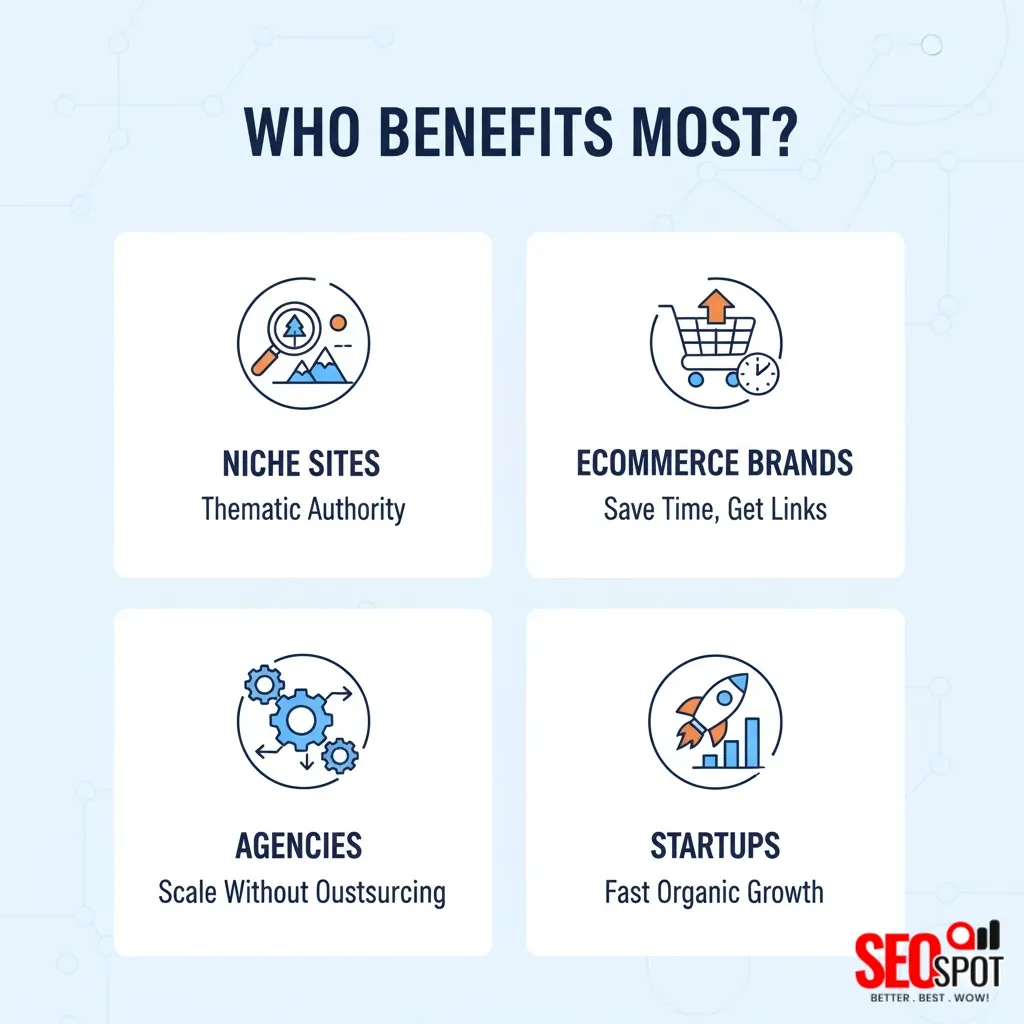
Who Benefits Most?
It’s not just big agencies. In fact, small teams probably benefit more. When you’re running lean, every hour matters. Tools that deliver qualified backlink leads on autopilot can replace entire link-building teams or freelancers.
Perfect fit for:
- Niche sites needing thematic authority.
- eCommerce brands that don’t have time to chase links.
- Agencies who want to scale without outsourcing.
- Startups with zero patience for slow organic growth.
And yes, even experienced SEOs who are tired of spreadsheets and spreadsheets of maybe-leads.
Metrics That Matter (and Ones That Don’t)
Legacy backlink tools trained people to chase vanity metrics. DR, DA, TF, CF, you name it. But what moves the needle in 2025?
- Topical alignment: Is the site covering your vertical?
- Link placement quality: Sidebar? Footer? Or inside 800 words of actual value?
- Link velocity: Is your growth natural and steady, or suspiciously spiky?
- Indexation and recrawl speed: If Google doesn’t see the link, does it even exist?
- Competitive gap analysis: Who’s linking to your competitors, and why not you?
Platforms like LinkRadar don’t just give you links. They give you clarity. A real roadmap. And the chance to do less guesswork, more growth.
What the Future of Link Building Actually Looks Like
The old model is fading. Manual link building will always exist, but it’s becoming niche. Reserved for PR-level campaigns or ultra-specific outreach. The day-to-day grind? That’s going automated.
Expect to see:
- Dynamic link prospecting that adapts as your site evolves
- Real-time alerting when competitors gain or lose key links
- Predictive link scoring before you ever pitch
- Native integrations between link tools and your SEO dashboards
In short: a lot less busywork. And a lot more actual SEO.
Final Thoughts
Backlinks still matter. That hasn’t changed. What’s changing is how smart teams find and build them.
You don’t need a hundred tools or a freelancer army. You need clarity. Speed. The grind is optional now. Growth doesn’t have to be.