The world is full of big words and even bigger questions, isn’t it? It’s no wonder that patients are more cautious than ever. They have heard too many empty promises and seen too many flashy ads that don’t deliver.
For some, this skepticism runs even deeper. Certain communities, especially Black patients, carry a distrust rooted in a long history of medical mistreatment and ongoing systemic issues. Past events, like unethical experiments and unequal care, have left painful scars.
So, how do you reach these understandably wary patients and show them you’re different? Thoughtful, patient-centered healthcare marketing is the secret to showing your patients that your care is rooted in compassion, not just conversion.
Here, we’ll share how you can build trust with skeptical patients through your marketing and communications.
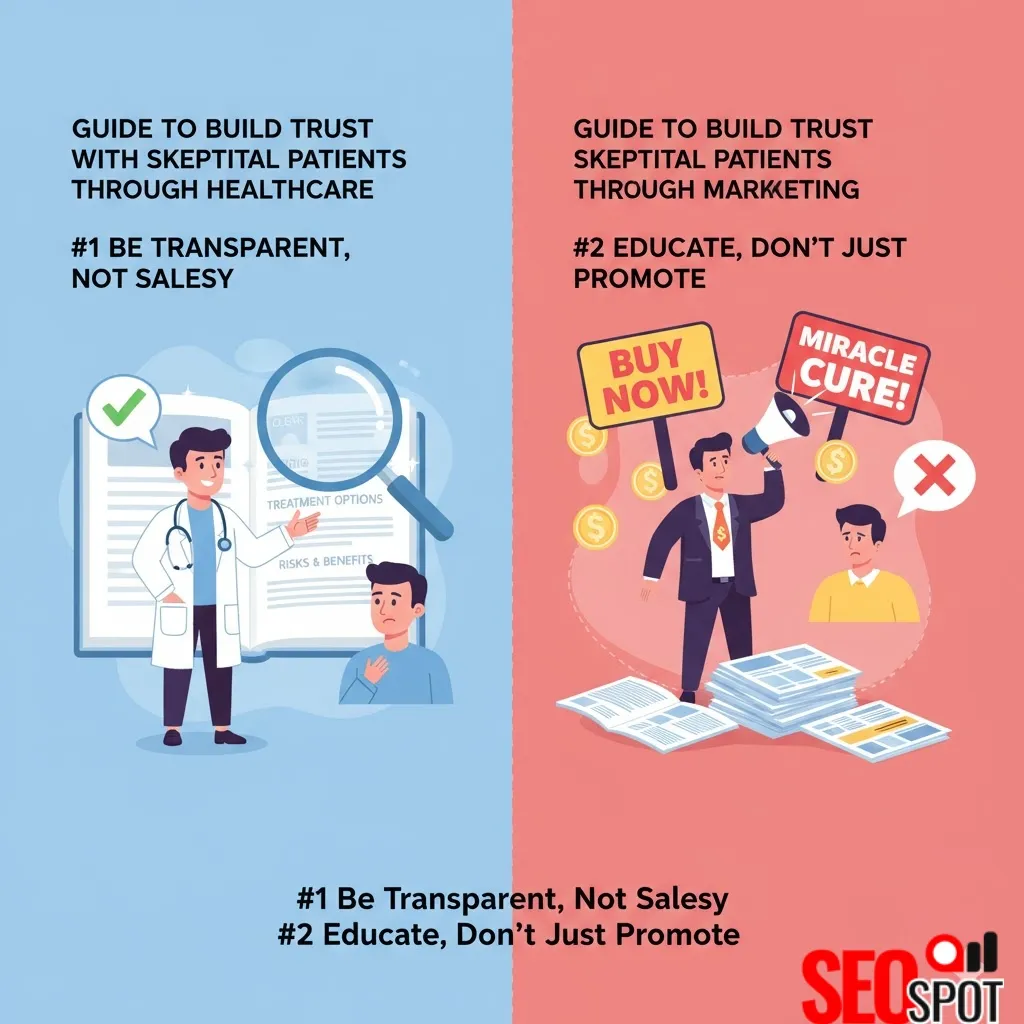
#1 Be Transparent, Not Salesy
Nobody likes feeling sold to, especially when it comes to something as personal as health.
Pushy sales tactics can erode trust when it comes to healthcare. They can trigger skepticism if patients sense the main goal is profit, not their well-being.
Instead of hitting people with polished sales pitches, try something radical. Clearly explain diagnoses, treatments, and care plans on your website.
Be transparent about pricing, too. It’s a significant concern for many patients. Provide cost estimates upfront, where feasible, or clearly explain billing procedures in understandable terms. That can mitigate frustration and anxiety. Otherwise, you can land in hot water as Aurora Healthcare did.
This year, in April, Julia Ubert was shocked after she received a $755 medical bill from Aurora Healthcare in Milwaukee. She had to bear $484 out-of-pocket. Feeling frustrated, she reached out to TMJ4 for assistance, after which the company removed the charges.
You can dedicate website pages to breaking down common procedure fees or partner with services that offer upfront, bundled pricing. Alternatively, you can provide online tools for price estimates. When patients are worried about costs, clear information can reduce that stress.
#2 Educate, Don’t Just Promote
Patients today are more proactive, actively seeking information to understand their choices. If you want to build substantial credibility and trust, prioritize patient education over promotion.
Blog posts are a great start. You can answer common questions or break down complex health topics into simple language.
Suppose you’re a behavioral health services provider. The Franklin County Free Press notes that 4 out of 10 people in the U.S. live in areas that lack behavioral health providers.
A well-written blog post on how to find a qualified therapist in your region can go a long way in helping them.
Quick animated videos can visually explain how a procedure works or what to expect with a certain condition, making information easier to digest. Quoting a study by Wyzowl, Snapshot Interactive states that 91% of consumers watch explainer videos to learn more about a provider’s offerings.
The expertise of behavioral health marketing professionals can be valuable here. They can create quick animated videos that explain what to expect during a therapy session or anxiety treatment. These visuals make complex or sensitive topics easier to grasp and less intimidating.
This builds trust and invites action, turning curiosity into confidence and views into appointments.
Case Study: Dr. Rebecca Chen’s Anxiety Treatment Education Campaign
Dr. Rebecca Chen runs a behavioral health practice in suburban Denver. She noticed potential patients were calling with the same questions over and over – “What actually happens in therapy?” and “How do I know if I need anxiety treatment?” Instead of just listing her credentials on her website, she decided to create educational content.
Chen started with a blog series breaking down different anxiety disorders in plain English. No medical jargon, no intimidating terminology. She wrote posts like “Why Your Heart Races When Nothing’s Wrong” and “The Difference Between Worry and Anxiety Disorder.” Each post included simple explanations of symptoms, treatment options, and what patients could expect during their first few sessions.
But the real game-changer was her video series. Chen created short animated videos showing what happens during a typical therapy session. One video walked viewers through cognitive behavioral therapy techniques using everyday examples – like how negative thought patterns are similar to getting stuck in a traffic jam in your mind. Another showed the physical layout of her office and explained why she arranged the furniture the way she did (hint: it’s designed to feel more like a living room than a medical facility).
The results were dramatic. Before the educational content, Chen’s website visitors spent an average of 2 minutes browsing and most left without taking any action. After launching the blog and videos, average session time jumped to 8 minutes. More importantly, the quality of phone calls improved. Instead of nervous, uncertain inquiries, she started getting calls from people who already understood what therapy involved and were ready to book appointments.
Her appointment booking rate increased by 340% within six months. But perhaps more telling was the feedback she received. Patients started their first sessions by saying things like “I watched your video about CBT, and I think that’s exactly what I need” or “Your blog post about panic attacks described exactly what I’ve been experiencing.”
Takeaways:
- Educational content transforms scared, hesitant prospects into informed, confident patients
- Breaking down complex medical topics into relatable analogies removes intimidation barriers
- When patients understand what to expect, they’re more likely to follow through with treatment
- Quality educational content attracts patients who are genuinely ready for help, not just browsing
Facts and figures have their place, but it’s stories that truly connect with human hearts. In fact, research shows that people are 22 times more likely to remember a fact when it’s wrapped in a story.
Hearing about real patient experiences can make your practice feel more human and show that you genuinely care. These narratives can provide hope and help future patients feel less anxious about their own situations.
Don’t just share your patients’ stories randomly. Ethics must be at the forefront. Always get permission. Use a clear release form that explains exactly how their story will be used, where it might appear like your website, and that they have the right to withdraw their consent.
This demonstrates respect and reinforces trustworthiness, which is important when patients may already feel institutions are misleading.
Focus on genuine experiences—the ups, the downs, and the eventual triumphs. Authenticity is what makes these stories resonate with people.
Video testimonials can be particularly powerful because seeing and hearing a real person share their journey has a strong impact. They can even increase conversion rates significantly. Many patients trust reviews from other patients even more than information coming directly from the healthcare provider.
The Fake Story Trap vs. Reality-Based Success
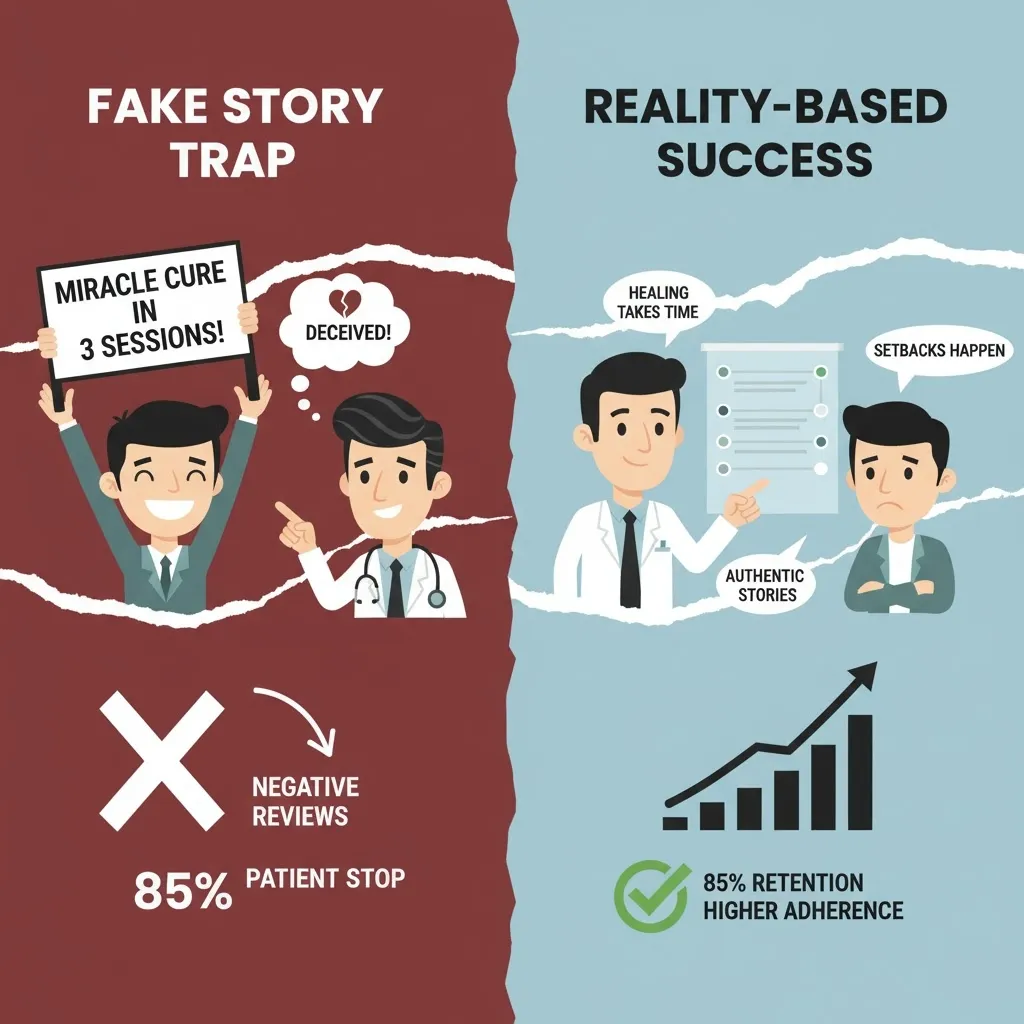
Many healthcare practices make the mistake of fabricating patient success stories or exaggerating outcomes. They’ll create composite characters or embellish minor improvements into miraculous transformations. This approach might generate short-term interest, but it backfires spectacularly.
Take the case of a pain management clinic that posted testimonials from “Jennifer K.” who claimed their treatment eliminated her chronic back pain completely after just three sessions. The problem? Jennifer was fictional, created by their marketing agency. When real patients came in expecting similar miraculous results and experienced the normal, gradual improvement that actually occurs, they felt deceived. Several left negative reviews specifically mentioning how the testimonials seemed “too good to be true.”
The clinic’s reputation suffered, and they spent months rebuilding trust. Worse, some patients stopped treatment early because they thought it wasn’t working when it actually was – they just expected unrealistic results based on the fake testimonials.
Compare this to Dr. Martinez, a physical therapist who shared real patient stories with proper consent. His testimonials included honest timelines, setbacks, and realistic outcomes. Maria Rodriguez, a real patient recovering from shoulder surgery, shared her story including the frustrating weeks when progress seemed slow and the breakthrough moments when she finally regained full range of motion after four months of consistent work.
These authentic stories resonated with prospective patients because they reflected the real, sometimes messy journey of recovery. Patients arrived with realistic expectations and were more likely to stick with treatment plans because they understood healing takes time. Dr. Martinez’s patient retention rate was 85% compared to the industry average of 68%, directly tied to setting proper expectations through honest storytelling.
Building Bridges, Not Walls
Building trust with skeptical patients isn’t that tough. Just consistently showing people that your care team is reliable, empathetic, and committed to their well-being will do the trick.
This kind of trust doesn’t happen overnight, though. It’s a long-term investment that deepens with every positive interaction. So, put these ideas into action, and, over time, you’ll notice a significant positive shift in your practice’s reputation.