
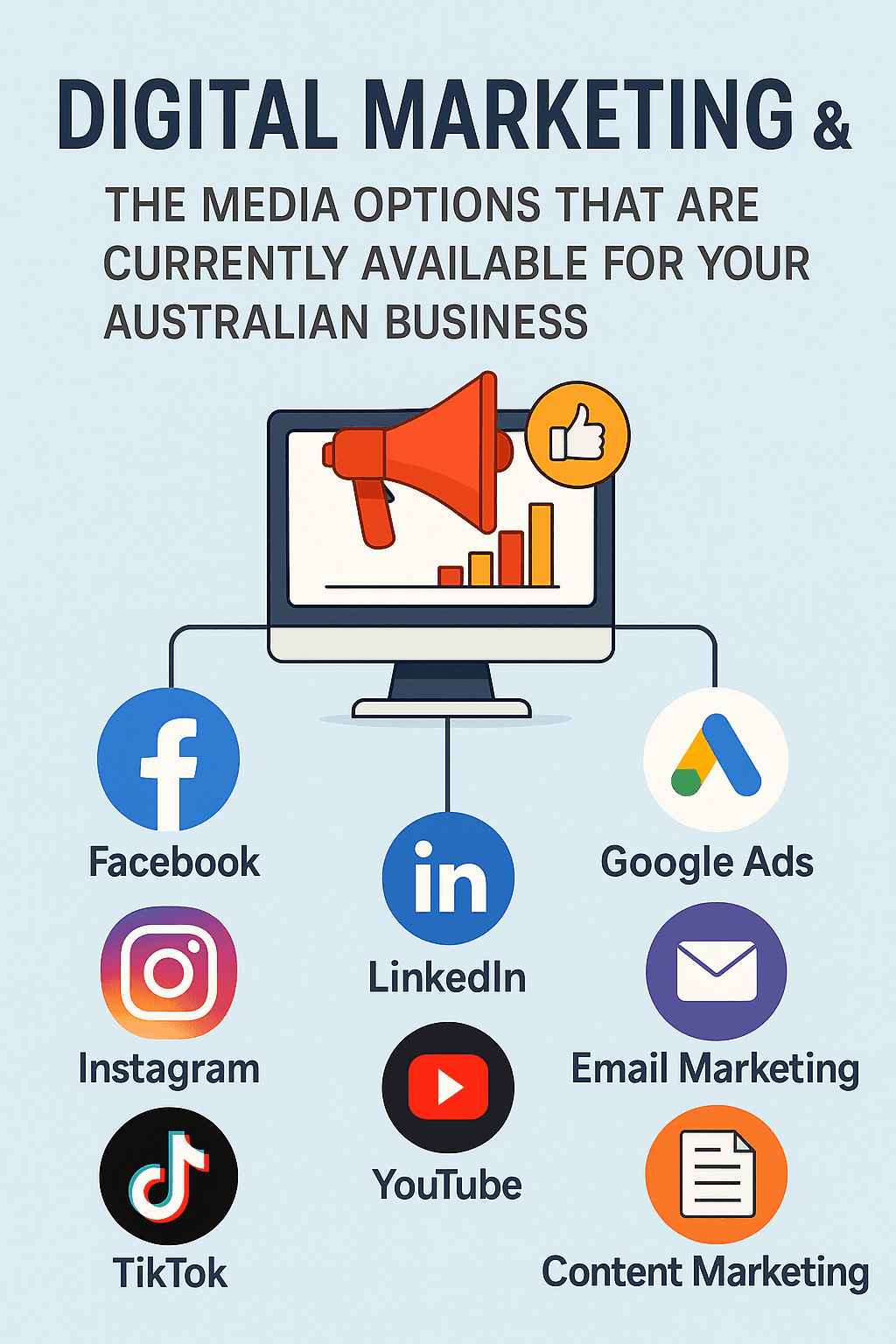
Digital Marketing & The Media Options That Are Currently Available For Your Australian Business (E-commerce).
This Content Is Focused On (E-commerce) Business & The Budget Range Under $10k/month Or $10k–$50k/month. Special thanks to to Barking Dog a top media buying agencies in Sydney, for providing us insights on this research. Let’s start: The hope is that you have already made the move from older traditi
This Content Is Focused On (E-commerce) Business & The Budget Range Under $10k/month Or $10k–$50k/month.
Special thanks to to Barking Dog a top media buying agencies in Sydney, for providing us insights on this research.
Let’s start:
The hope is that you have already made the move from older traditional methods of marketing to digital marketing. It’s highly likely that you have a social media presence, so you should know that this is where your business needs to be because it is something that people check multiple times a day. Media marketing is perfect for your brand and it actually allows you to have measurable business goals. It does take hard work to keep it up-to-date because you should always try to optimise your business profile by providing customers with information about new products and services that you have.
Nobody expects you to understand the intricacies of media marketing, and so thankfully, you can turn to reputable and affordable that know exactly what they’re doing and can create the best avenues to get your business message out there. This will allow you to engage with your customers in real time and to build a whole working community around your particular business brand.
There are a number of media options currently available for your Australian business and the following are some that you might want to consider.
Top 3 Digital Marketing Channels for Australian E-Commerce (based on research)
Channel
Avg CPC (AUD)
Avg CPM (AUD)
Typical ROAS
Strengths
Best Uses per Budget
Google Search & Shopping
~$3 per click
(search)
<$1–$2 (display)
High (search)
Intent-driven auction
~$5–10 (display est.)
~2:1 (200%) avg
4–5:1 with optimization
High intent traffic
Strong purchase conversion (≈3–7%)
Captures existing demand
Broad reach via Google’s networks
$10K:
Focus on top keywords & Shopping ads for quick ROI
$50K:
Scale to full-funnel (more keywords, Performance Max, display retargeting). Use Target ROAS bidding to maintain efficiency
Facebook/Instagram (Meta)
~$1+ per click
(link click)
Slightly higher in AU
~$10–20+ feeds
~$6–12 for Stories
~2–4:1 common
(200–400%)
4+:1 possible with retargeting
Massive reach (most Aussies on platform)
Advanced targeting (demographics, interests, lookalikes)
Visual ads spur product discovery
Social proof and engagement can drive viral effect
$10K:
Targeted campaigns (use lookalikes, a couple of best creatives, retarget site visitors)
$50K:
Multiple campaigns segmenting audiences; test diverse creatives (video, carousel, etc.); Advantage+ automation to optimize placement. Retarget aggressively to maximize ROAS
TikTok Ads
~$0.5–1.0 per click
Very low; even $0.20–0.30 in some cases
~$5–15 (avg ~$7)
Significantly cheaper than Meta CPMs
1.5–3:1 typical range
Starting lower, improving with optimization
Potential for breakout ROAS if content goes viral (cases of 5–10x ROAS+ exist)
Low-cost impressions – great for awareness and top-funnel reach
Viral potential (high engagement ~5-6%)
Appeals strongly to under-40 consumers
Creative, fun content can drive rapid sales spikes (#TikTokMadeMeBuyIt effect)
$10K:
Test waters with a small budget; use 1–2 trending-style creatives to gauge response
$50K:
Scale successful concepts, partner with creators, and run always-on campaigns. Use TikTok’s smart optimization and refresh ads constantly. Primarily a growth channel – watch ROAS and use for awareness if conversion ROI plateaus
Google Search & Shopping Ads: Your Best Friend for Ready-to-Buy Customers
Please note: I won’t recommend Google Display Ads for low budgets, as they are good for branding not conversions!
Google owns search in Australia – we’re talking about 94% market share here. When someone searches for “black running shoes size 10” or “wireless headphones under $200,” they’re not browsing for fun. They want to buy something, and Google Ads puts you right in front of them.
Google owns search in Australia – we’re talking about 94% market share here. When someone searches for “black running shoes size 10” or “wireless headphones under $200,” they’re not browsing for fun. They want to buy something, and Google Ads puts you right in front of them.
What You’ll Actually Pay
Expect to spend around $3 per click on Google search ads in Australia. Yeah, it’s pricier than what Americans pay, but that’s because everyone’s fighting for the same customers. Google Shopping ads (those product images with prices that show up at the top) usually cost a bit less per click, but you’re looking at similar ranges.
If someone searches for your brand name specifically, you’re golden. These branded searches convert like crazy – around 18% of people who click will actually buy something. Compare that to random display ads where you’re lucky to get 1-2% conversion rates.
The Numbers That Matter
Most businesses see a 2:1 return on their Google Ads spend once they get going. Spend $1, make $2 back in sales. Not mind-blowing, but solid. Get good at it, and you can push that to 5:1 or higher.
You sell running shoes online. Someone searches “men’s black running shoes,” clicks your ad (costs you $3), and buys a $100 pair. That’s roughly 30:1 return on that specific click. Of course, not every click converts, but even at a 3% conversion rate, you’re making money.
Small Budget ($10k/month): Focus on the Sure Things
With $10k monthly, you can’t spray and pray. Stick to your best-selling products and branded searches. Set up Google Shopping ads for your entire catalog – this is non-negotiable for e-commerce. Those product images with prices get clicks from people ready to buy.
Branded keywords are cheap and convert well. If someone searches for your company name, they already know you exist. Bid on those terms to make sure competitors don’t steal your traffic.
Use Google’s automated bidding (Target ROAS) to let their system optimize for you. Set it to aim for 4:1 return and let it figure out when to bid high or low based on who’s searching.
Bigger Budget ($50k/month): Expand Smart
More money means you can go after broader keywords and use Performance Max campaigns. These run your ads across Google Search, Shopping, YouTube, Gmail, and Display all at once. It’s like having Google find customers everywhere instead of just search results.
At this budget level, add remarketing to the mix. Those banner ads that follow people around after they visit your site? They work because they’re hitting warm prospects who already showed interest. Display ads cost around $1-2 per click, way cheaper than search, and they keep your products in front of people who were almost ready to buy or maybe not.
What Actually Works
Start with Google Shopping – upload your product catalog and let Google show your stuff with prices right in search results. Most e-commerce businesses find this gives them the best bang for their buck.
Don’t ignore long-tail keywords. “Running shoes” costs a fortune per click and attracts browsers. “Men’s size 11 black Nike running shoes under $150” costs less and attracts buyers.
Add negative keywords religiously. If you sell premium products, add “cheap” and “free” as negatives so you don’t waste money on bargain hunters.
Why Google First
Google Ads gives you immediate results you can actually measure. Someone clicks, they buy (or don’t), and you know exactly what worked. It’s not brand building or engagement metrics – it’s direct sales.
For Australian e-commerce, Google typically becomes your biggest traffic source once you get it dialed in. The platform handles everything from someone discovering your products to comparing prices to making the purchase. It’s basically your digital storefront for the entire country.
Most successful online stores end up spending 30-50% of their ad budget on Google because it just keeps working. Scale up gradually, test what works, and reinvest the profits into more ads. Simple but effective.
Facebook & Instagram Advertising (Meta Ads)
While Google catches people who already know what they want, Facebook and Instagram grab attention when people are just scrolling through their feeds. About 16-18 million Australians check Facebook every month, and roughly 65% use Instagram. That’s a massive audience just waiting to discover your products.
Meta ads work differently than Google. Someone might see your running shoes in their Instagram feed, not because they searched for shoes, but because they fit the profile of someone who buys athletic gear. Lower intent than search ads, sure, but the reach is enormous.
What It Actually Costs
Facebook and Instagram clicks run about $1.30 each in Australia – cheaper than Google, but the conversion rates are lower too. People browsing social media aren’t in shopping mode, so maybe 3-4% of clicks turn into sales instead of the 5-18% you get from search ads.
Those “cost per thousand impressions” numbers everyone talks about? Expect $10-20 to show your ad to 1,000 Australians on Facebook or Instagram. Stories ads are usually cheaper to show but might not convert as well as feed ads.
Returns That Make Sense
Most businesses see 2:1 to 4:1 return on their Facebook ad spend. Spend $100, make $200-400 back. Not as immediately profitable as Google’s best campaigns, but the volume can be huge.
Here’s where it gets interesting: dynamic retargeting ads (showing specific products people looked at on your site) often hit 5:1 returns or better. Someone browsed your leather jackets, left without buying, then sees those exact jackets in their Instagram feed later with a 10% off code. That’s gold.
Working With $10k Monthly
Split your budget roughly 60/40 between finding new customers and retargeting old visitors. Use lookalike audiences – Facebook finds people similar to your existing customers. If your best buyers are 25-40 year old women who love fitness, Facebook will find more people matching that pattern.
Keep it simple at this budget level. Run a few campaigns instead of dozens. Facebook’s algorithm needs data to work properly, and spreading $10k across 20 different campaigns just confuses the system.
Scaling to $50k and Beyond
More money means you can test everything. Different age groups, interests, creative styles, video vs photos. You can afford professional product photography and video content that actually stops people scrolling.
Try Meta’s Advantage+ Shopping campaigns – they use AI to automatically find your best audiences and show the right products to the right people. At higher budgets, this automation often beats manual targeting because it processes way more data than you ever could.
Creative That Actually Works
Video beats photos almost every time on social media. A 10-second clip showing someone wearing your clothes or using your product will outperform static images. Carousel ads work great too – show multiple angles or different color options in one ad.
Australians click about 22 ads per month on Facebook, so you’re competing for attention. Your creative needs to stop the scroll. Think less “professional product shot” and more “would this make me pause if I saw it in my feed?”
The Retargeting Goldmine
Set up campaigns for people who visited your site, added items to cart, or engaged with your Instagram posts. These warm audiences convert like crazy because they already know you exist.
Try sequential retargeting: show a product ad first, then a customer review ad, then a discount offer. Walk them through the decision over several days instead of hitting them with everything at once.
Smart Automation Features
Let Facebook choose where to show your ads – feed, stories, reels, wherever they perform best. Manual placement selection usually leaves money on the table because you miss cheaper inventory.
Automatic bidding strategies work well once you have conversion data. Set a target return (like 4:1) and let Facebook’s system adjust bids to hit that goal.
The Bigger Picture
Facebook and Instagram ads do something Google can’t – they create demand instead of just capturing it. Someone might see your product, not buy immediately, but remember your brand when they’re ready to purchase later.
These platforms excel at building your customer base. Google converts your existing demand into sales, but Meta ads find people who didn’t even know they wanted your products yet. That’s why most successful e-commerce stores use both channels together.
The key is understanding that social media advertising is partly about immediate sales and partly about planting seeds. Some of your best customers might see your ad today but not buy until next month after seeing you pop up a few more times.
What Usually Happens
Start conservative, test what works, then double down on winning combinations. A clothing brand might discover that carousel ads showing outfit combinations convert better than single product shots. Or that targeting parents works better than targeting the teenagers who’d actually wear the clothes.
Facebook and Instagram will likely become your biggest source of new customers as you scale up. The platform just has too much reach and too many targeting options to ignore. Plus, once you crack the creative code and find your best audiences, scaling becomes much easier than constantly hunting for new keywords on Google.
3. TikTok Advertising (Short-Form Video)
TikTok’s become a big deal for selling stuff online, especially if you’re targeting younger crowds. About 8.26 million Australians over 18 use it – that’s roughly 40% of adults. And it’s not just teenagers anymore; people in their 30s and 40s are scrolling through it too.
Here’s why TikTok works for online stores: it’s cheap to reach people, and videos can blow up fast. You’ve probably seen #TikTokMadeMeBuyIt trending – people genuinely buy stuff they discover on the platform. The full-screen video format lets you tell a story in seconds, and if you nail it, your ad might spread organically without paying extra.
What It Costs
TikTok ads cost way less than Facebook. We’re talking $3-10 per thousand views compared to Facebook’s $10-20+ for Australian traffic. Clicks are cheap too – usually 50 cents to a dollar each, sometimes even less.
Your click-through rates will be around 0.5-1%, which is slightly lower than Facebook but not terrible. The tricky part is conversions – only about 0.4-0.5% of people who click actually buy something. That’s pretty low, but if your product is trendy or cheap, you can do much better.
Return on ad spend varies wildly. Some people barely break even at 1.5:1, while others hit 3:1 or higher once they figure out what works. TikTok’s newer for advertising, so there’s less data to go on compared to Google or Facebook.
Budget Breakdown
With $10k monthly, treat TikTok as a test channel. Maybe put $2-3k into it while your main budget goes to proven platforms. Even that smaller amount gets you serious reach – $2k could buy 400-500k views at current rates.
At $50k monthly, TikTok becomes a real player. You could dedicate $10-15k to it and really scale what’s working. But here’s the catch – you need fresh content constantly. TikTok users get bored fast, so you can’t just run the same ad forever.
Making TikTok Work
Your ads need to look like regular TikToks, not ads. Use vertical videos, real people, trending sounds, and hook viewers in the first two seconds. Partner with Australian creators if you can – their content performed as ads (called Spark Ads) usually does better than obvious marketing videos.
Pay attention to hashtags. TikTok’s algorithm uses them to understand what your video’s about. If you’re selling kitchen gadgets, use #KitchenHacks. Beauty products? Try #BeautyTok. The algorithm will show your ad to people already interested in that stuff.
Set up TikTok’s tracking pixel on your website so you can retarget people and let the algorithm learn who actually buys. Start with broad targeting and let TikTok figure out your best customers.
The Reality Check
TikTok’s the wild card of advertising platforms. It might not drive consistent sales like Google or Facebook, but it’s amazing for getting your brand noticed. Someone might see your product in a fun TikTok video, remember it, then buy from you later through a different channel.
Think about YouTube as Fourth Option – This can be one of your go to places when you want to put a smile on your face and get some interesting information as well. If you are not up to the task then your digital marketing agency will be able to post videos on your particular business channel to allow customers to share with friends and family, to comment on what’s going on and it’s perfect when you want to let customers know about something new that you have to offer.
Media Buying Strategy Showdown
Most Popular
AUTO
Programmatic
Algorithm Auctions
Market Share 90%
Efficiency High
Scale Unlimited
Control Medium
Best For ROI Focus
VS
VS
AI Powered
AI
Automated Bidding
Smart Optimization
Learning Speed Fast
Optimization Real-time
Data Signals 1000s
Manual Work Minimal
Best For Scaling
Traditional
DEAL
Direct Buying
Publisher Deals
Control Full
Cost Higher
Flexibility Low
Optimization Manual
Best For Branding
Budget Strategy Duel
$10K
Focus Fighter
Lean on programmatic platforms with automated bidding. Every dollar must convert. Stick to proven channels and let algorithms optimize for maximum efficiency. No room for experimental direct deals.
VS
$50K
Scale Master
Expand across multiple programmatic channels while testing strategic direct partnerships. Use advanced automation features and explore new platforms. Budget allows for brand-building alongside performance.
The Winning Strategy
Programmatic buying with automated bidding dominates modern media buying. Start there, embrace the algorithms, and only consider direct deals when you have a compelling strategic reason that programmatic can’t deliver.
FAQs: Digital Marketing & Media Options for Australian Businesses
Q1: Why should my Australian business shift from traditional to digital marketing?
A: Digital marketing offers measurable results, real-time customer engagement, and cost-effective ways to promote your brand. Unlike traditional methods, you can track performance, target specific demographics, and adapt your strategy quickly based on data.
Q2: Do I need a professional agency to handle my digital marketing?
A: While you can manage your own accounts, working with a reputable media buying agency in Sydney can help you optimise your campaigns, reach the right audience, and save time. Professionals understand platform algorithms, ad targeting, and how to get the best ROI.
Q5: What kind of content should I post on social media?
A: A mix of promotional, educational, and behind-the-scenes content works well. Share product updates, team stories, customer testimonials, video tutorials, and interactive posts to keep your audience engaged.
Q7: How often should I update my social media profiles?
A: Consistency is key. Aim for regular updates—at least a few times a week. Keep your business profile fresh with new content, product announcements, and customer engagement to maintain visibility and credibility.
Share
You may also like


Send me your site
I'll tell you honestly what's broken. If we can't help, I'll tell you who can.
Free · 45 min · no obligation