

Optimizing SEO to Enhance User Experience in Event Management Niche
The synergy between Search Engine Optimization (SEO) and User Experience (UX) has become increasingly evident in recent years. As search engines like Google continue to evolve, their algorithms now prioritize sites that offer an exceptional user experience, alongside traditional SEO factors like. Th
 Emily Mollown10 min read
The synergy between Search Engine Optimization (SEO) and User Experience (UX) has become increasingly evident in recent years. As search engines like Google continue to evolve, their algorithms now prioritize sites that offer an exceptional user experience, alongside traditional SEO factors like. This shift emphasizes the importance of creating websites that are not only search engine-friendly but also intuitive, responsive, and user-centric. A well-optimized event website doesn’t just attract more visitors—it ensures that they engage meaningfully with the content, finding everything they need to make their attendance decision.
Understanding the Connection Between SEO and User Experience
SEO and user experience go hand in hand. While SEO focuses on making your site favorable for search engines, UX concentrates on the human side of things, ensuring that visitors find value and ease in using your site. Search engines like Google have shifted towards algorithms that prioritize sites offering an excellent user experience. This evolution means that SEO isn’t just about optimizing for keywords but also about ensuring that a website is intuitive and responsive to user needs. Good UX leads to longer site visits, lower bounce rates, and more interactions, which search engines interpret as indicators of a site’s value, thereby improving its ranking.
Research has shown that a well-designed website with good UX can lead to:
- Longer site visits (average session duration increases by 30% – 60% with good UX).
- Lower bounce rates (40% decrease in bounce rates with intuitive navigation).
- Increased interactions (50% more page views with clear and concise content).
- Improved conversion rates (200% increase in conversions with user-friendly design).
This encourages website developers to design with the user in mind, ensuring that navigation is logical, information is easy to access, and the overall design is pleasing. Consequently, when a site meets these criteria, it not only climbs in search rankings but also wins the loyalty of its users, increasing the likelihood of return visits and positive conversions. This holistic approach demonstrates how closely intertwined SEO and UX are in creating successful online platforms.
Website Structure and Navigation
A well-structured website helps users and search engines easily find information. For event management, this means having a clear, logical navigation system that guides visitors to information about the event schedule, speaker profiles, registration forms, and FAQs with minimal clicks. The fewer barriers between the visitor and the information or actions they seek, the better the user experience and the stronger the SEO performance.
If you are a website owner and really frustraded regarding your website navigation some DIY changes that are possible:
- Optimize your website for people: A website should be optimized for people first, not bots. Almost 40 percent of people will stop engaging with a website if the content or layout is too confusing.
- Use a reasonable number of links: Balance on-page time and link interactions by keeping links to a reasonable number. A safe number to aim for is three to five links per 1,000 words.
- Utilize heading hierarchy: Create a logical structure for web pages that both humans and bots can understand by utilizing a heading hierarchy.
- Keep navigation depth shallow: Ensure users can find what they need in as few clicks as possible. Try to keep navigation depth to four clicks or less.
- Use breadcrumbs: Breadcrumbs make it easier for users to navigate back to higher-level category pages or the homepage in just a few clicks.
- Keep up with keyword research: Perform keyword research at each stage of development to ensure all pages are optimized.
Chganes that you might ask your service providers:
- Include schema markup: Consider using structured data to improve website visibility. Schema markup can be implemented easily, and guides are available to get started.
- Taxonomy: Develop a taxonomy to categorize and relate content, making it easier for users and search engines to understand.
- Content modeling: Create content models to define the structure and relationships of different content types, ensuring consistency and scalability.
- API-first development: Consider an API-first approach to development, allowing for easier integration with other services and devices.
- Progressive web apps: Implement progressive web app features like offline access, push notifications, and home screen installation to enhance user experience.
- Single-page application architecture(only if needed): Use single-page application architecture to improve user experience and reduce page loads.
- Machine learning and personalization: Leverage machine learning and personalization techniques to offer users tailored content and experiences.
- Accessibility and inclusivity: Prioritize accessibility and inclusivity by following Web Content Accessibility Guidelines (WCAG 2.1) and ensuring equal access for all users.
- Website performance optimization: Continuously monitor and optimize website performance using tools like Web.dev Page Speed Insights, or GTmetrix.
- Security and privacy: Implement robust security measures like HTTPS, SSL/TLS, and GDPR compliance to protect user data and ensure privacy.
- Content delivery networks and caching: Utilize content delivery networks and caching to reduce latency and improve page load times.
For example, Airbnb’s user-friendly interface and responsive design have contributed to its success, with an average session duration of over 10 minutes and a bounce rate of less than 20%. Similarly, Amazon’s intuitive navigation and personalized recommendations have led to an impressive conversion rate of over 10%
Optimizing for Mobile
With most users now accessing information on the go, your event website must perform flawlessly on mobile devices. With the majority of users now accessing the internet via smartphones and tablets, a mobile-friendly website is essential for maintaining engagement and improving search engine rankings. Google’s mobile-first indexing means that the mobile version of your website primarily determines your search engine rankings.
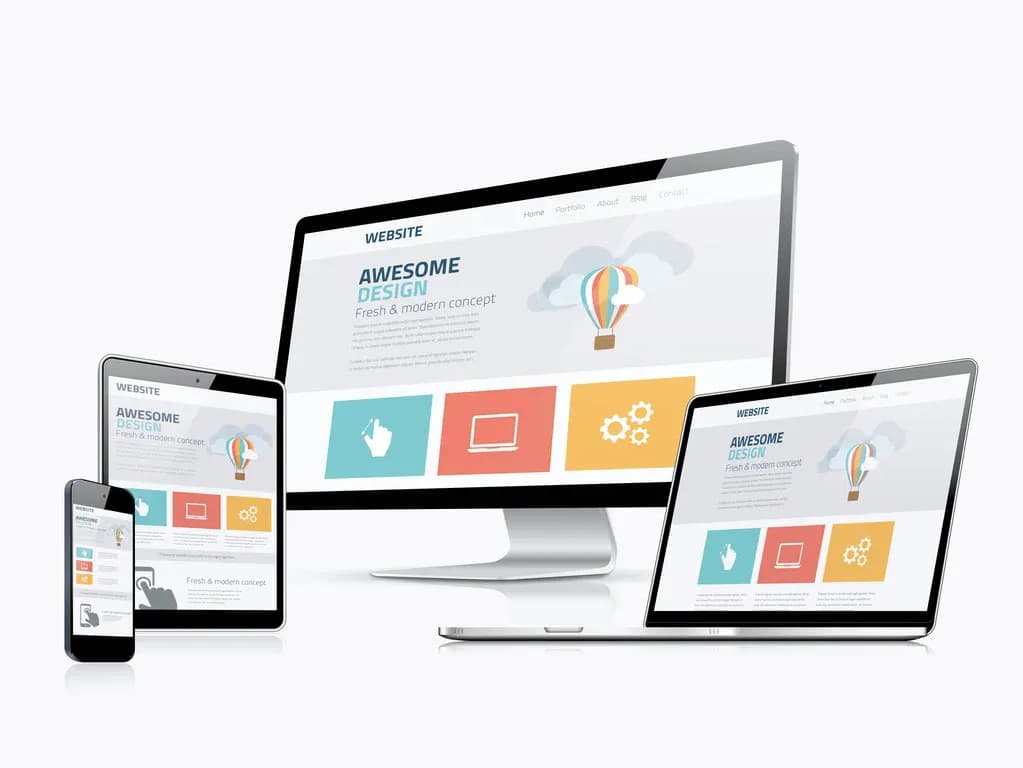
To enhance the mobile user experience, your website must load quickly and display correctly across all devices. This involves implementing responsive design techniques so that content automatically adjusts to fit various screen sizes and orientations without losing functionality or aesthetic appeal. Text should be readable without zooming, and navigation should be straightforward, with clickable elements spaced adequately to prevent accidental interactions.
Most Common Steps Suggested By Marketing Gurus:
Step 1: Design and Layout
- Use a responsive design that adapts to different screen sizes and devices
- Prioritize content and simplify layouts for smaller screens
- Use flexible grids and images that scale with the layout
Step 2: Navigation and Menu
- Simplify navigation with a clear and concise menu
- Use a hamburger menu or bottom navigation for easier access
- Ensure menu items are large enough for thumb-friendly tapping
Step 3: Content and Readability
- Use clear and concise language in your content
- Break up long paragraphs into shorter ones for easier reading
- Use headings, subheadings, and bullet points to organize content
Step 4: Images and Media
- Optimize images for web use by compressing them
- Use lazy loading for images to reduce load times
- Ensure videos are mobile-friendly and don’t autoplay
Step 5: Forms and Input
- Simplify forms with fewer fields and larger input areas
- Use auto-complete and auto-fill for easier form completion
- Ensure buttons are large enough for thumb-friendly tapping
Step 6: Performance and Speed
- Optimize website speed by compressing files and images
- Use caching and content delivery networks (CDNs) for faster loading
- Ensure website is optimized for 3G and 4G networks
Step 7: Testing and Iteration
- Test your website on various mobile devices and browsers
- Use mobile-friendly testing tools like Google’s Mobile-Friendly Test
- Iterate and improve your website based on testing results
Moreover, mobile optimization extends to site speed as well, as slow-loading pages can significantly increase bounce rates. Techniques like image compression, leveraging browser caching, and minimizing code can help increase load speed, if you are using wordpress, try researching for AMP version for the pages. Ensuring that interactive elements are easily accessible and functional can make the user journey on mobile as seamless and pleasant as on desktop, thus supporting a positive user experience and boosting your SEO efforts. For events, implementing reserved seating software can further enhance this experience by simplifying the ticket selection and purchase process on any device.
Local SEO for Local Events
If your event targets local attendees, local SEO is essential. Optimizing your online presence for local searches can significantly impact the visibility and success of events targeted at a regional audience. This strategy ensures that when potential attendees search for events or venues in their area, your event surfaces as a top contender. Here’s how to effectively harness this approach:
-
Geo-specific Keywords: Incorporate location-based keywords into your website’s content, titles, meta descriptions, and URLs. For example, terms like “art exhibitions in Atlanta” or “tech conferences in Silicon Valley” help to attract searches specific to those regions.
-
Google My Business: Set up a Google My Business account. This not only places your event on the map quite literally but also improves visibility in local search results and Google Maps. Regular updates with posts about upcoming events and promotions can keep your listing active and engaging.
-
Local Listings and Directories: Submit your event details to local event directories and listings. Websites such as Eventbrite and local Chamber of Commerce sites can boost your online footprint within the community.
-
Structured Data Markup: Use schema markup to provide search engines with specific information about your events, such as the event’s name, location, and date. This can enhance your appearance in search results with rich snippets that draw more attention.
-
Local Backlinks: Build relationships with local influencers, press, and other event organizers. Backlinks from respected local sources not only drive direct traffic but also bolster your site’s authority in local search rankings.
Implementing these tactics creates a robust foundation for attracting local web traffic and converting it into event attendees, leveraging the geographical relevance to meet the direct needs of your community.
Enhancing Content Quality
Content is king in both the realms of SEO and user experience. For event websites, providing high-quality, engaging content that resonates with your target audience is crucial. This includes detailed articles about the event, interviews with speakers, practical information about the venue, and articles that answer common attendee questions. High-quality content not only ranks better in search engines but also makes visitors more likely to return to your site and share your content.
Using Analytics to Improve UX and SEO
Data analytics play a crucial role in continuously improving both SEO and UX. By collecting and analyzing data on how visitors interact with your site, you can uncover invaluable insights into their behaviors and preferences. This data enables you to make informed decisions about how to optimize your website to better meet the needs of your audience.
Web analytics tools like Google Analytics provide detailed reports on metrics such as page views, bounce rates, and average session duration. These metrics reveal which pages captivate your audience and which may require further optimization. For example, a high bounce rate on a specific page might indicate that the content is not relevant to what users expected to find, or that the page loads too slowly.
Additionally, conversion rate tracking can identify whether users are completing desired actions on your site, such as filling out contact forms or signing up for events. By analyzing these interactions, you can adjust elements like call-to-action placement and page layout to enhance effectiveness.
Effectively applying these analytics insights allows for a cycle of continuous improvement, where each iteration of your website is more aligned with user needs and search engine criteria, leading to better engagement and higher rankings.
Security and User Trust
Security is a vital aspect of user experience. For event websites that handle personal information and payments, ensuring that your site is secure with HTTPS is non-negotiable. A secure site not only protects your visitors’ data but also reassures them that they are dealing with a reputable entity, thereby enhancing trust.
- Trust and credibility: A secure website (HTTPS) establishes trust with users, making them more likely to engage and share personal information.
- Protection from malware and viruses: Security measures like web application firewalls (WAFs) and malware scanning ensure users’ devices are safe from harm.
- Confidentiality and privacy: Encryption (HTTPS) and data protection policies safeguard user data, giving users peace of mind.
- Seamless browsing: Security features like SSL/TLS certificates and HTTP/2 enable faster and more reliable browsing experiences.
- Reduced anxiety: Visible security indicators like trust badges and security seals reassure users, reducing anxiety and increasing confidence.
- Compliance with regulations: Adhering to security standards like GDPR, HIPAA, and PCI-DSS demonstrates a commitment to user data protection.
- Protection from phishing and scams: Robust security measures help prevent phishing attacks and scams, keeping users safe.
- Improved search engine rankings: Google favors HTTPS sites, boosting search engine rankings and increasing visibility.
- Enhanced user engagement: A secure website encourages users to explore, interact, and share content without fear.
- Long-term loyalty: Prioritizing user security builds trust and loyalty, leading to repeat visits and positive word-of-mouth.
Search engines favor secure websites, so this also aids in your SEO efforts.
Feedback and Continuous Improvement
Finally, never underestimate the power of feedback. Engage with your users through surveys or feedback forms to understand their needs and experiences. This direct line of communication can provide invaluable insights into how well your site meets user expectations and what can be improved.
By prioritizing both SEO and UX, website developers can create online platforms that not only rank higher in search engines but also foster user loyalty, drive positive conversions, and ultimately, achieve business success.
Share
You may also like



Send me your site
I'll tell you honestly what's broken. If we can't help, I'll tell you who can.
Free · 45 min · no obligation