
Analyzing Website SEO Performance: If It Is Impacted By Google Update
Let’s talk about figuring out if a Google update actually hit your site or if something else is going on. It’s frustrating when you see your rankings drop, and while Google does say there’s no quick fix, you can at least try to understand what happened. Think about it like this – if your website […]
 Ahsan SoomroHead of SEO8 min read
Let’s talk about figuring out if a Google update actually hit your site or if something else is going on. It’s frustrating when you see your rankings drop, and while Google does say there’s no quick fix, you can at least try to understand what happened.
Think about it like this – if your website traffic suddenly drops, you’d want to know if it’s because of something you did (like accidentally blocking search engines or messing up your meta tags) versus a broader Google update affecting your whole industry. This knowledge helps you decide where to focus your efforts.
Even though Google says there aren’t specific fixes for update impacts, understanding if an update caused your ranking changes is valuable information. If you can confirm your traffic drop lines up with a Google update, at least you know you’re not going crazy and didn’t break something on your site. Plus, it helps you set realistic expectations for recovery, since update-related changes often take time to stabilize.
The tricky part is that Google updates can affect different sites in different ways, and sometimes multiple updates can roll out close together. That’s why it’s important to look at your site’s performance alongside industry news and discussions to piece together what might be happening.
Can You Really Tell If Your Site Was Hit By A Google Update?
Google’s core updates are indeed broad and complex, affecting multiple aspects of content quality. While Google doesn’t provide specific “fix it” guidance, dismissing the possibility of analyzing update impacts is oversimplifying things. If you’re active in SEO communities on Reddit or Twitter, you’ll notice patterns emerge after each update, with experienced SEOs sharing observations about what changed.
Here’s the real talk – ask yourself some honest questions. Were you just pushing out AI-generated content without adding value? Did you create hundreds of near-identical pages by just swapping out location names or product variants? These are exactly the kind of patterns that core updates often target, and knowing this helps you understand if you might have been affected.
I’ve spent time analyzing sites impacted by updates, and while Google keeps their cards close to their chest, there are reliable ways to confirm if an update hit you. You’re right – we don’t have to just throw our hands up and say “it’s complicated.” Let me show you some concrete examples with data from real websites that would help clear this up.
Site Was Hit By March 2024 Google Core Update Study of ventsmagazine.co.uk
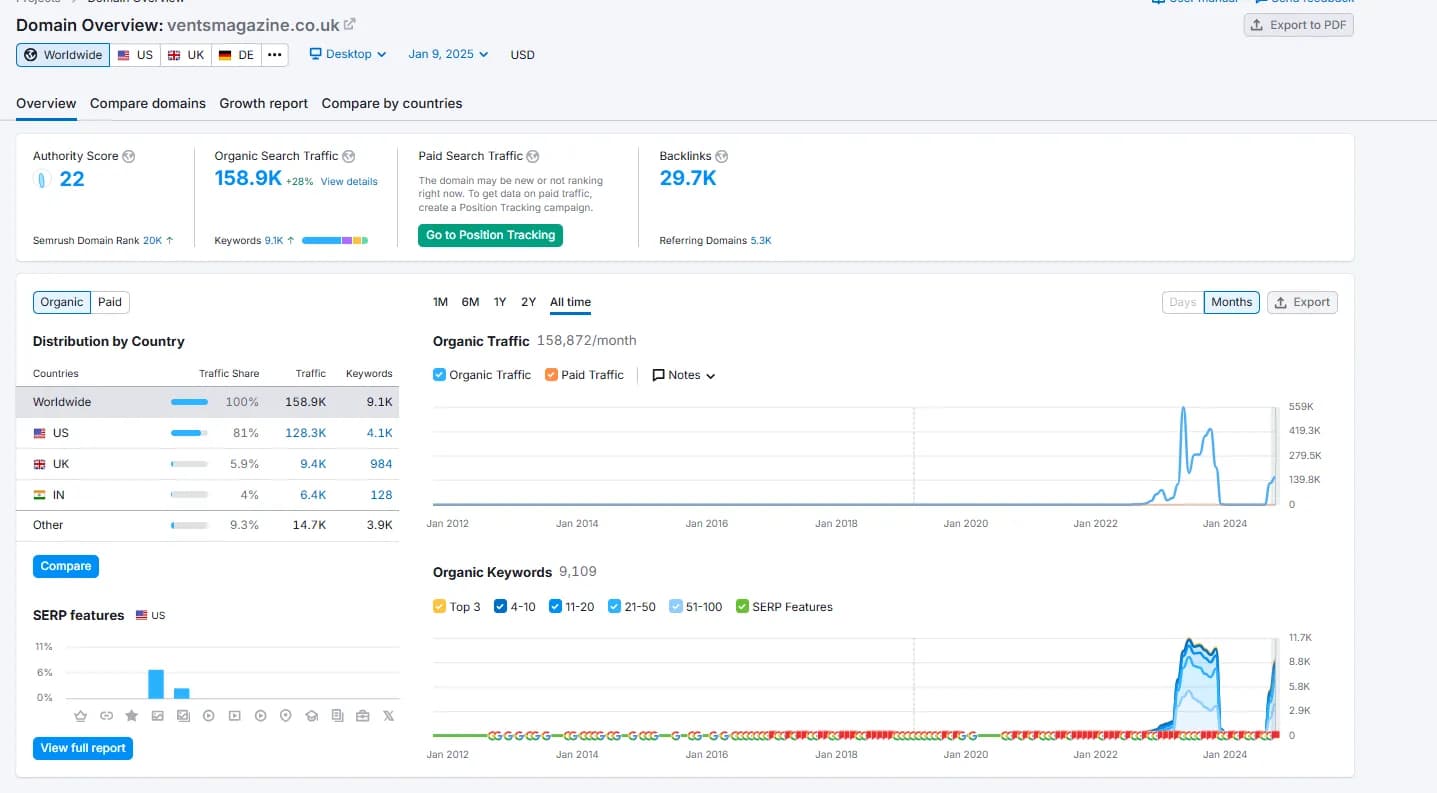
Looking at traffic patterns can be one of the most reliable ways to confirm if your site was affected by a Google update. Let’s analyze a real example using ventsmagazine.co.uk’s traffic data from Semrush.
From the traffic graph, we can see a dramatic pattern that perfectly aligns with Google’s March 2024 Core Update. The site was experiencing steady traffic of around 400-500K monthly visitors until early March 2024, when it saw a sharp decline. This wasn’t just a random fluctuation – the timing matches exactly with the March 6th core update rollout, and the drop was significant and sustained.
But here’s where it gets interesting – look at the recent uptick in traffic starting December 2024. This coincides with Google’s December Spam Update, suggesting that the site may have been incorrectly caught in the March update’s filters and subsequently recovered when Google made adjustments. This pattern of sudden drops followed by recovery during later updates is a classic signature of update impact.
What makes this case particularly interesting is the clear cause-and-effect relationship. We can see:
- Pre-update stable traffic around 400-500K visitors
- Sharp decline coinciding exactly with the March update
- Sustained lower traffic period
- Recovery aligning with the December update
To cross check the trarffic I used SimilarWeb and got same results, for yourr idea and better understanding you can also check any websites traffic and gain insights on this.
How to Check Any Website’s Traffic with SimilarWeb
SimilarWeb is an all-in-one tool that will make the analysis of website traffic so much easier. How it works:
- Website URL: Simply enter the URL of any target website into the search box at SimilarWeb and instantly get its traffic report.
- Overview of Traffic: The tool provides a summary of daily, monthly and yearly visitor trends.
- Sources of Traffic: Analyze sources of traffic, whether search engines, social media, referrals, or paid ads.
- Audience Insights: Gain an understanding of an audience’s demographics, browsing behaviors and geographical distribution.
- Compare with Competitors: Use the comparison feature in order to benchmark your website’s performance against industry competitors.
Spam Updates: The Sharp Cliff Pattern
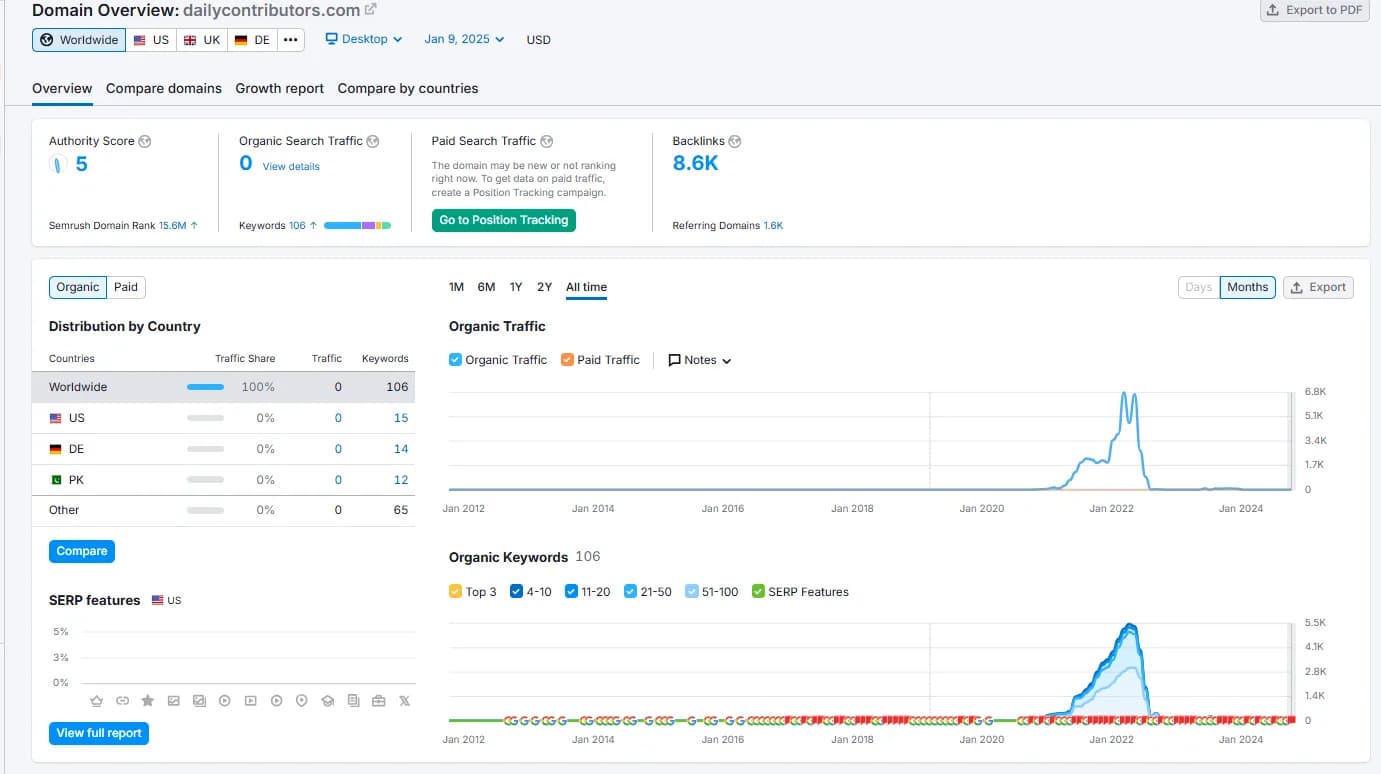
Now, looking at dailycontributors.com’s traffic pattern, we see a classic spam update signature. Notice how the traffic dropped almost vertically around the 2022 spam update? This is typical of spam updates – they’re more binary in nature. Unlike core updates that might cause gradual declines, spam updates often result in immediate, dramatic drops. The site went from peak traffic to almost nothing overnight, which is a telltale sign of a spam update impact.
When you see your traffic tank, don’t immediately blame your recent website changes. Your Google Analytics data will tell you a story – and it’s all in the timing and pattern. Open up your GA dashboard and look for these patterns:
A sustained drop that lines up perfectly with a known Google update date is rarely coincidental. The key is comparing your weekly and monthly data trends. If you were averaging 50,000 visitors consistently for months, then suddenly dropped to 10,000 right after an update announcement, you’re likely looking at update impact rather than a technical issue or seasonal fluctuation. This kind of data-driven analysis helps separate update impacts from other potential traffic problems.
Note: Website Traffic Analysis Matters Apart From Google Updates
But really, web traffic analysis involves understanding far more than the number of people who come onto your website. It serves as an avenue into just how site visitors use or interact with one’s website and what’s working from one’s efforts of reaching out to an audience. Key metrics to track are:
- Visitor Volume: By tracking the number of visitors, businesses can assess the effectiveness of campaigns, content and overall website performance.
- Sources of Traffic: Knowing how many visitors are coming through organic searches, social media sites, or paid advertising enables a business to target those areas that yield lower performance for optimization.
- Engagement Metrics: Such as bounce rates, session duration and pages per session, allow the assessment of the quality of the user experience and content relevance.
By digging deep into these metrics, businesses can see where they stand tall and which areas require repair, all while planning really effective strategies to cater even better to the audience in question.
Understanding Long-Term Core Update Impact: A Case Study of Wethrift.com
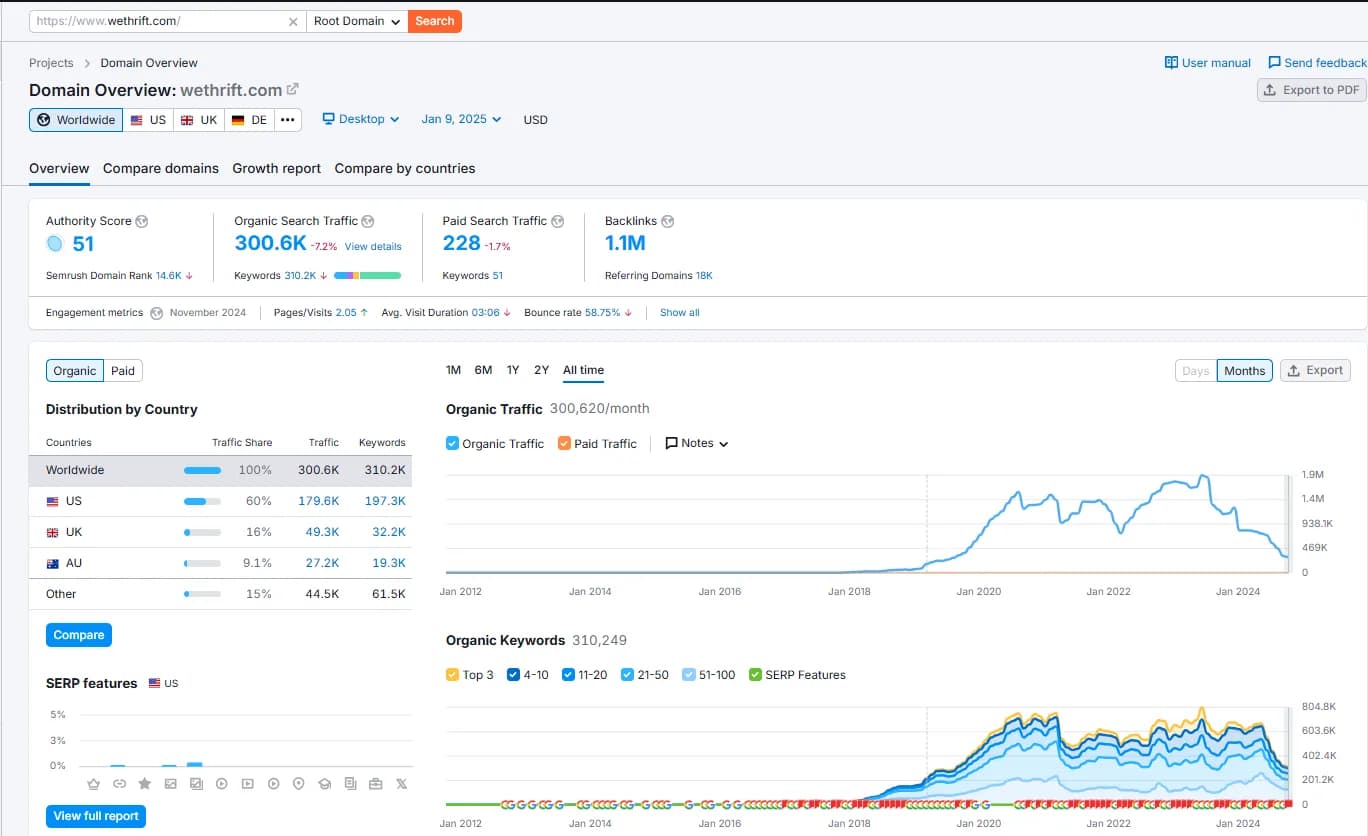
Looking at Wethrift.com’s traffic pattern reveals a classic core update impact – distinctly different from the sharp drops we see with spam updates. This case demonstrates how core updates often reflect fundamental changes in Google’s evaluation systems rather than penalties for specific violations.
The site’s traffic pattern tells an interesting story. Post-August 2024 core update, there’s a consistent downward trend in both traffic and keyword rankings. Unlike a spam update where sites lose visibility overnight, this gradual decline suggests Google’s core systems are viewing the site’s content differently. Even though the site continues to offer the same coupon code service (as verified through Web Archive), but the performance in search results has fundamentally changed.
What makes this particularly noteworthy is the nature of the decline. Look at the keyword visibility graph – we’re not seeing keywords vanish entirely (as we would with a spam update), but rather a steady decline in positions across the board. This suggests Google has adjusted how it evaluates and ranks this type of content, perhaps due to changes in their helpful content systems or quality rater guidelines.
Using Google Search Console to Confirm Update Impact
When analyzing whether a core update has affected your site, Google Search Console (GSC) becomes your most valuable tool. Here’s what to look for:
Monitor your average position metrics carefully – this is crucial for understanding the update’s impact. For instance, if your site’s average position moved from 12 to 22 after an update, while maintaining the same number of keywords, this clearly indicates a systematic ranking adjustment rather than a penalty. GSC’s Performance report gives you this granular view of how Google’s core systems are now evaluating your content’s relevance and quality compared to competitors.
Remember to compare your average position data for at least a month before and after the update. This helps distinguish between normal fluctuations and update-related changes, giving you a clearer picture of how Google’s core system changes have affected your site’s perceived value in search results.
Leveraging Traffic Data for SEO and Marketing
- SEO Optimization: In case these organic visitors are not coming onto the site as expected, then the business can apply more focus on keyword Strategy improvement, enhancement in grade of content and back-links.
- Content Strategy Refinement: Traffic data underlines what kind of content is really appealing to your audience; hence, efforts shall be focused on the format and topics, raising more engagement.
- Paid Advertising Adjustments: For firms using paid advertising, this traffic data will show what campaigns provide the best returns. Refine targeting and messaging to boost performance.
- CRO: High bounce rates can be improved and the landing page can be optimized to provide a better user experience that will increase conversions.
These strategies ensure that every aspect of your digital marketing efforts is informed by concrete data and tailored to achieve specific goals.
Key Metrics to Monitor for Growth & Difference
Google updates might not impact following:
- Referral Traffic: The size of your external partnerships, guest posts, newsletter traffic or backlinks that drive visitors to your website.
- Social Media Traffic: Social platforms are indispensable for engagement; it helps while tracking this metric to indicate which channels drive maximum value.
Conclusion
Website traffic is no longer optional to understand but a necessity for business success online. SimilarWeb and other tools go a long way in empowering businesses to check website traffic for any website and turn raw data into actionable strategies. Traffic analysis, bench-marketing efforts and staying ahead of the competition are some of the sure ways to ensure business growth and long-term success in this ever-evolving digital marketplace. Be it a market researcher, digital marketer, or entrepreneur, investing in insights about traffic will help you achieve your full brand potential.
Share
You may also like


Send me your site
I'll tell you honestly what's broken. If we can't help, I'll tell you who can.
Free · 45 min · no obligation