Ways To Increase Website Traffic – Real Methods Working In 2024
Have you started thinking about the ways how can you increase the website traffic, is it by quality content, but you are already doing it? Also using long-tail keywords and focusing on providing concise, direct answers but still no idea what is happening? Well, this post is for you. When you hear “k
 Ahsan SoomroHead of SEO16 min read
Have you started thinking about the ways how can you increase the website traffic, is it by quality content, but you are already doing it? Also using long-tail keywords and focusing on providing concise, direct answers but still no idea what is happening? Well, this post is for you.
- Keyword Optimization
When you hear “keyword optimization,” you might picture stuffing your page with as many keywords as possible, shoving them into every heading, title tag, and meta description. And hey, back in the day, that kind of approach could certainly move the needle on your search rankings. We all know Keyword optimization is an essential part of SEO, but not the way earlier it was.
The thing is – search engines have gotten a lot smarter over the years. They’re not just looking for pages with the right keywords anymore. They’re looking for pages that comprehensively address a topic, providing real value to searchers. So in 2024, keyword optimization isn’t about keyword stuffing.
Continue reading to know more about this concept in 2024.
First, do not just edit the keywords that are already present on your webpage; you might not even need them. Instead, focus on strategic, thoughtful keyword usage that prioritizes relevance and user experience. Check your website and see if you are making the same mistake. Trust me, we found that our website’s main homepage was overusing service keywords, and we fixed that.
One common question is about the necessity of exact keyword matches in the title. Well, it’s not compulsory.
For your satisfaction let’s have a look at the example
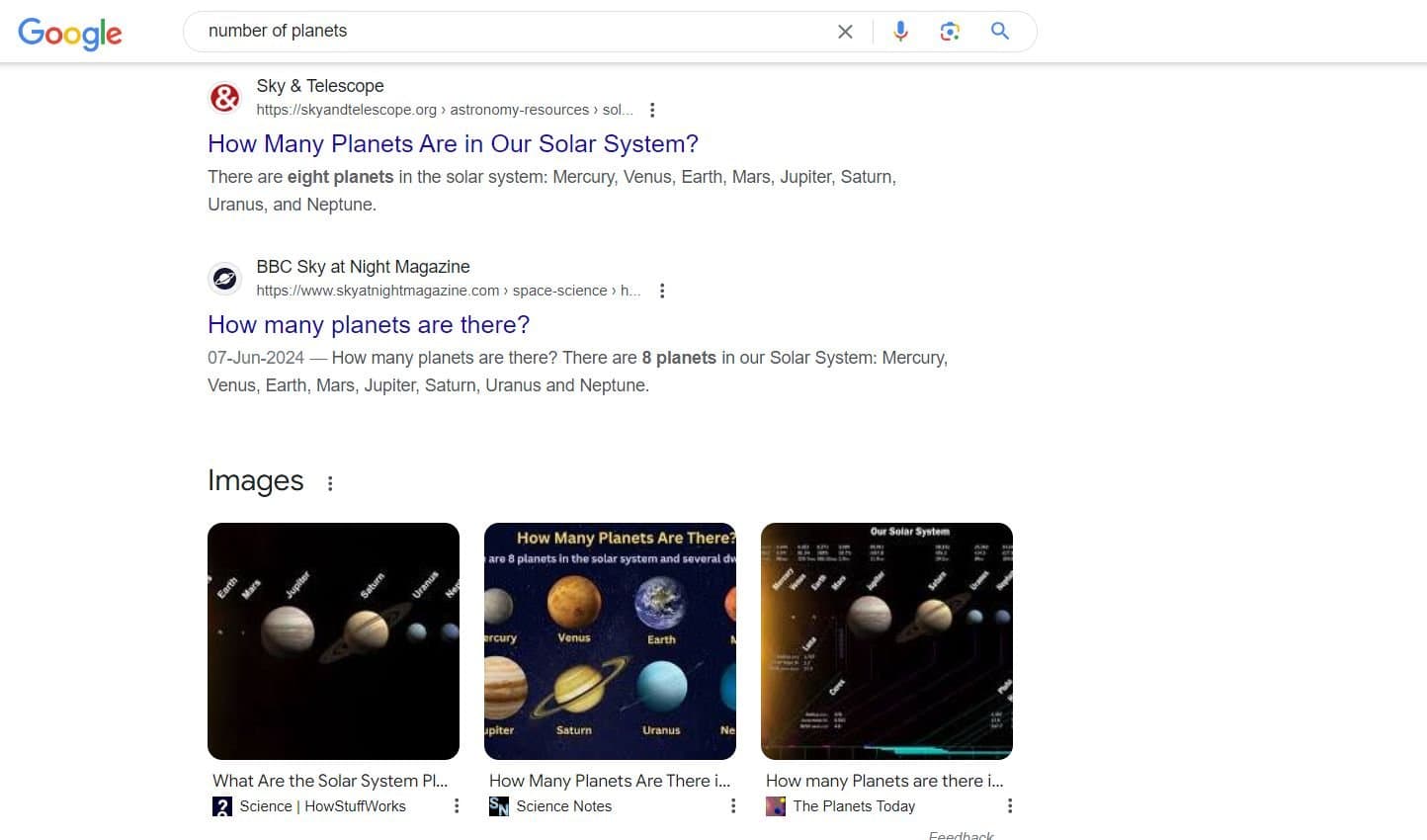
This is a search query for a number of planets in the solar system, did you see that both ranking pages haven’t used the exact use of keywords in the title or meta description?
Now, Let’s say you’re working on a website that sells organic dog food. Your main keyword might be “organic dog food,” but as we are saying, targeting only is not going to work, this term target isn’t the most effective approach.
Instead, consider long-tail keywords that are more specific to your products and your audience’s needs. For example, “organic grain-free dog food for senior dogs” or “best organic puppy food for large breeds.” These keywords might have a lower search volume, but they’re more likely to attract customers who are ready to make a purchase.
To find these long-tail keywords, you can use tools like Google’s Keyword Planner, SEMrush, or Ahrefs. These tools can help you identify keywords that are relevant to your business and have a good balance of search volume and competition.
Once you have your keywords, it’s important to use them strategically on your site. Of course, include them in your page titles, headings, and meta descriptions. But also look for opportunities to use them naturally in your content. For example, you might have a blog post titled “5 Benefits of Organic Grain-Free Dog Food for Senior Dogs,” which allows you to use your long-tail keyword in a way that provides value to your readers.
In addition to your exact keywords, incorporate synonyms and related keywords throughout your content. For our organic dog food example, you might use phrases like “natural dog food,” “healthy dog food,” or “dog food without artificial preservatives.” This helps search engines better understand the context of your page and can also help your page rank for a wider variety of searches.
But it’s not just about choosing the right keywords. It’s about using them in the right places and in the right ways. Sure, include your primary keyword in your H1 and your title tag. But also think about synonyms and related keywords that can help search engines better understand the context of your page. Sprinkle them naturally throughout your content, in your subheadings, in your image alt text. No forceful addition.
And don’t forget about the power of internal linking. When you link to other relevant pages on your site using descriptive anchor text, you’re not only helping users navigate your site – you’re also sending signals to search engines about the topics your site covers. I know you might be thinking why I mentioned internal links here _because if you are optimizing keywords in your content, you need to create some space for the keywords upon which you will be hyperlinking your internal lin_k.
Ultimately, the goal of keyword optimization in 2024 is to create content that comprehensively addresses a searcher’s query. It’s not about gaming the system or chasing algorithms. It’s about understanding what your audience is looking for and delivering it in a way that’s easy to find and enjoyable to consume.
Businesses can increase the targeted traffic to their websites by organically by optimizing for proper keywords. When ranking webpages, search engines like Google use algorithms that take term relevancy into account. As a result, a website that is optimized and contains relevant keywords has a higher chance of showing up higher in SERPs. Nonetheless, it’s imperative to stay away from keyword stuffing as it can result in search engine penalties. Using keywords intelligently and appropriately in high-quality content is the aim.
- Quality Content Creation
If you are in the digital marketing industry you must have heard this term thousands of times. Yes, the most essential part of this digital world is producing content that is of the highest quality. Search engines for sure rank websites that offer consumers useful and pertinent information priority.
“Just create quality content,” they say as if it’s as simple as whipping up a batch of chocolate chip cookies.
Think about the big players in your industry. The websites you actually enjoy reading, are the ones you trust and keep coming back to. Chances are, they’re not just churning out generic, half-baked blog posts. They’re investing time and resources into creating truly valuable content.
This could mean in-depth, well-researched articles that tackle complex topics in your industry. It could mean visually stunning infographics that make data easy to digest. It could mean engaging videos that showcase your products or services in action. The point is, that quality content creation is about going beyond the bare minimum and creating something that truly stands out.
But here’s the thing – it’s not just about the format of the content. It’s also about the substance. Quality content should be:
- Relevant to your audience’s needs and interests
- Informative and valuable, teaching them something new or helping them solve a problem
- Engaging and easy to consume, whether that’s through storytelling, humor, or visual aids
- Consistent with your brand voice and values
- Optimized for search engines, but not at the expense of readability and value
Creating this kind of content takes time, effort, and often, a team of skilled creators. That’s why many big websites have dedicated content teams, with writers, editors, designers, and videographers all working together to create top-notch content.
But even if you don’t have those kinds of resources, you can still prioritize quality content creation. It might mean spending more time on each piece of content, really digging into the research and crafting something you’re proud of. It might mean collaborating with other creators or experts in your field to bring more depth and diverse perspectives to your content.
Let’s say you have a website that sells organic skincare products. In the past, your content strategy might have been to churn out blog posts like “5 Benefits of Organic Skincare” or “Why You Should Switch to Organic Beauty Products.” And while these posts might have been well-written and informative, they’re also pretty generic and similar to what a lot of other organic skincare brands are putting out.
To really level up your Quality Content Creation, you might need to think beyond just text-based blog posts. For example, you could create a step-by-step video tutorial showing how to use your products to create a specific look, like a “Natural Glowy Makeup Tutorial Using Organic Products.” This type of content not only showcases your products in action, but it also provides real value to your audience by teaching them a new skill.
Or, let’s say you want to create a piece of content about the importance of SPF in skincare. Instead of just writing a text-based article, you could create an infographic that visually explains the different types of UV rays, how they affect the skin, and how your organic SPF products provide protection. This makes the information more engaging and easy to understand.
But Quality Content Creation goes beyond just incorporating visuals. It’s also about tailoring your content to your specific audience’s needs and questions. For example, if you know that a lot of your customers are interested in sustainability and eco-friendliness, you could create a series of blog posts or videos that dive deep into your company’s sustainable practices, from sourcing ingredients to packaging choices.
Or, if you get a lot of questions about how to choose the right products for specific skin concerns, you could create an interactive quiz that helps customers find the perfect products for their needs. This type of content not only provides value, but it also directly addresses your audience’s pain points.
The key here is to think beyond just “we need a blog post” and instead focus on “what type of content will actually serve our audience best?” Sometimes that might be a text-based article, but other times it might be a video, an infographic, a quiz, a downloadable guide, or even a podcast episode.
And remember, Quality Content Creation isn’t just about the format. It’s about the substance, too. Every piece of content you create should be well-researched, informative, and in line with your brand voice and values. It should aim to genuinely help or entertain your audience, not just promote your products.
So take a look at your current content strategy. Are you just churning out generic blog posts, or are you really thinking about what your specific audience needs and wants? Are you incorporating different formats and media to make your content more engaging? Are you going beyond the surface level to provide real, in-depth value?
If not, it might be time to rethink your approach to Quality Content Creation. Put yourself in your audience’s shoes, figure out what they really need from you, and then create content that delivers on that need in the most engaging, valuable way possible. That’s the true essence of Quality Content Creation.
Quality content Creation is about creating content that truly serves your audience. Content that they’ll actually want to read, watch, or listen to. Content that will make them think, “Wow, this brand really gets me and what I need.” It’s not just about adding new information regularly, such as blog entries, articles, and guides, if you are doing this if you read somewhere post regularly, ok cool but what about the quality here are you able to cover that as well?
- Focus On Metrics Like User Experience and Engagement
When ranking websites, search engines take user interaction and experience into account. A website with a better user experience will probably rank higher.
Things in this case are pretty basic by user experience we mainly mean is:
- Clear Navigation and Information Architecture:
- Simple and consistent menu and navigation.
- Easy-to-find and relevant content.
- Clear hierarchy of information.
- Responsive and Mobile-Friendly Design:
- Website adapts to different screen sizes and devices.
- Fast loading times and minimal scrolling.
- Easy-to-use interfaces and buttons.
- Content Quality and Relevance:
- Valuable, informative, and engaging content.
- Content is regularly updated and fresh.
- Content is optimized for SEO.
- Visual Design and Aesthetics:
- Attractive and modern design.
- Consistent color scheme and branding.
- Appropriate use of images and graphics.
- Page Speed and Performance:
- Fast loading times (less than 3 seconds).
- Optimized images and files.
- Browser caching and minification.
- Accessibility and Inclusivity:
- The website is accessible to people with disabilities.
- Clear and consistent labeling and instructions.
- Compatibility with assistive technologies.
- Error Handling and Feedback:
- Clear and helpful error messages.
- Feedback on user actions and interactions.
- Minimal errors and bugs.
- Personalization and Customization:
- Content and recommendations tailored to user interests.
- User preferences and settings saved.
- Personalized communication and offers.
One thing to keep in mind, not all the things apply to your site, sometimes you don’t need focus on every detail that you might not even need to.
User Engagement is the secret sauce that keeps people coming back for more. It’s not just about getting people to click on your link – it’s about keeping them interested, engaged, and interacting with your site.
So what User Engagement? Here are some key strategies:
- Monitor your bounce rate: Your bounce rate is the percentage of visitors who leave your site after only viewing one page. A high bounce rate could indicate that your content isn’t resonating with your audience or that your site is difficult to navigate. Keep an eye on this metric and work to lower it by improving your content and user experience. If you see a page is providing regular traffic but the bounce rate is higher, try improving the page.
- Encourage comments and discussion: Invite your readers to share their thoughts and opinions in the comments section of your blog posts. Respond to their comments to show that you value their input and to keep the conversation going. This helps create a sense of community around your brand. You must enable to the comments section it will also give you an idea of how readers are willing to respond.
- Use interactive elements: Incorporate polls, quizzes, and other interactive features into your content. This encourages users to actively engage with your site rather than passively consuming content.
- Optimize for mobile: With more and more people browsing the web on their smartphones, it’s crucial that your site is mobile-friendly. Ensure that your site loads quickly and is easy to navigate on a mobile device to keep users engaged.
- Create a compelling call-to-action (CTA): Every piece of content should have a clear CTA, whether it’s to subscribe to your newsletter, download a freebie, or make a purchase. A compelling CTA encourages users to take action and interact with your site.
- Analyze user behavior: Use tools like Google Analytics to track how users interact with your site. This can give you insights into which pages are most popular, how long users are staying on your site, and where they’re dropping off. Use this data to inform your content and user experience strategies.
- Provide value: At the end of the day, the best way to keep users engaged is to consistently provide value. Whether it’s through informative blog posts, entertaining videos, or helpful resources, give your audience a reason to keep coming back to your site.
Remember, User Engagement is an ongoing process. It’s not a one-and-done deal. Continuously monitor your metrics, listen to your audience’s feedback, and adjust your strategies as needed.
Confidential documents have revealed that Google’s ranking algorithms prioritize user engagement metrics, including click-through rates, bounce rates, and time on page, contradicting Google’s previous claims. This means that websites must focus on attracting and engaging visitors to boost their search engine rankings, making user experience a critical factor in SEO strategy.
- Use Of Social Media & Other Platforms Is Must
I am not talking about posting on Social Media will improve your SERP ranking like you posted your article/product link on facebook or twitter post, and you see.
Let’s say you’ve written an amazing SEO post on your website blog, but it’s just not ranking on Google. Don’t despair! You can leverage the power of LinkedIn Pulse to get your content in front of a whole new audience. LinkedIn Pulse is a platform where you can publish articles directly on LinkedIn, tapping into the platform’s massive professional user base. By repurposing your SEO post for LinkedIn Pulse, you can drive traffic back to your site and establish yourself as a thought leader in your industry.
Or maybe you’re a beauty store posting mehndi design ideas, but you’re struggling to rank on search engines. Pinterest to the rescue! Pinterest is a visual search engine that’s perfect for showcasing beautiful, inspiring images. By creating engaging Pinterest pins that link back to your website, you can drive a ton of targeted traffic to your mehndi design content.
If you’re a graphic designer looking to showcase your work, Behance is the place to be. Behance is a platform where creatives can showcase their portfolios and discover new inspiration. By posting your “10 Best Small Business Logo Design Ideas” on Behance, you can not only drive traffic to your website but also attract potential clients who are actively searching for design inspiration.
And don’t forget about the power of social media for brand-building and customer engagement. Let’s say you’re a shopping deal website, and you know that people often search for “Domino’s coupon” on Facebook. By creating Facebook posts and stories around the best Domino’s deals and coupons, you can attract a highly targeted audience to your website.
Or maybe you’re a travel brand looking to inspire wanderlust. Instagram is the perfect platform for showcasing stunning travel photos and stories. By creating Instagram posts and stories around the best travel places in Istanbul, using relevant hashtags, and engaging with your followers, you can build a loyal audience that’s eager to visit your website for more travel inspiration.
The key here is to think beyond just posting links and hoping for traffic. Instead, create valuable, engaging content that’s tailored to each platform and its unique audience. Use eye-catching visuals, compelling headlines, and strong calls-to-action to encourage users to click through to your website.
And don’t forget about the power of platforms like Reddit, Quora, and Medium. These platforms are loved by Google and can be a goldmine for driving targeted traffic to your site. By posting helpful, informative content and engaging with the community on these platforms, you can build your brand authority and drive a steady stream of traffic to your website.
When it comes to driving traffic to your website, social media and other platforms can be your secret weapon. But I’m not talking about the traditional advice of just posting your article or product link on Facebook or Twitter and hoping for the best. No, I’m talking about a smarter, more strategic approach.Note that I’m not suggesting “parasite SEO” tactics, where you replicate content across platforms without adding value. Instead, focus on creating high-quality content on social media handles, and Google will take notice. It’s not about manipulating search engines, but about building your brand’s online presence.
In fact, by leveraging these platforms strategically, you’re actually diversifying your traffic sources and building a more robust online presence.
So don’t be afraid to think outside the box when it comes to driving traffic to your website.
- Continuous Improvement & Changes As Per Serp Algorithms
Look, SEO is a wild and unpredictable beast. The strategies that are driving traffic to your site today might be old news faster than you can say “Google algorithm update.”
But here’s the thing – you can’t just throw your hands up and say, “Well, I guess that’s just how it is!” Nope, you’ve gotta be proactive. You’ve gotta stay on your toes and be ready to pivot your strategy at a moment’s notice.
One way to do this is to keep a close eye on your competitors. What kind of content are they creating that’s getting a lot of traction? What platforms are they leveraging to drive traffic? Don’t just copycat what they’re doing, but use it as inspiration to inform your own unique strategy.
Take Reddit, for example. If the current algorithm is favoring Reddit content, shouldn’t you be leveraging that to your advantage? If Reddit posts are suddenly dominating the search results for keywords in your niche. Do you stick stubbornly to your tried-and-true strategy of blog comments and forum posting? Heck no! You get your butt over to Reddit and start engaging with that community, pronto.
Another key aspect of continuously improving your SEO strategy is to stay up-to-date on the latest technological developments. As voice search and artificial intelligence continue to evolve, they’re going to have a big impact on how people search and discover content online.
Similarly, if your competitor is generating sales from Facebook posts or referral traffic from Pinterest, it’s likely due to changes in the SERP algorithm. Don’t get left behind! Embrace the change and explore new opportunities.
Google Analytics and Google Search Console are two tools that offer useful information about user behavior, website traffic, and search engine results. Businesses can find areas for development and modify their SEO tactics by routinely analyzing these numbers.
Bottom Line
The days of relying solely on creating dofollow blog comments and just product page rankings are behind us. It’s time to diversify your approach and stay agile in the face of algorithm updates. Remember, the goal is to stay ahead of the curve, not to get left in the dust.
The bottom line is this: SEO success belongs to the adaptable, the innovative, and the relentlessly curious. You can’t just set a strategy and put it on autopilot. You’ve got to be in the battle ground, constantly learning, testing, and refining your approach.
Share
You may also like

Send me your site
I'll tell you honestly what's broken. If we can't help, I'll tell you who can.
Free · 45 min · no obligation